San Antonio is known for its rich history and vibrant culture, but for homeowners and buyers, it is also known for something less pleasant: high humidity. In the Texas Hill Country, moisture is a constant battle. When humidity levels rise, the risk of mold growth escalates, turning a minor leak into a structural and health catastrophe.
Whether you are buying a home in Boerne or selling a property in San Antonio, a mold inspection is often a non-negotiable step in due diligence. However, not all inspections are created equal. Many property owners fall into common traps that lead to wasted money, overlooked hazards, and delayed real estate transactions.
To protect your investment and your health, you must avoid these critical mold inspection mistakes.
1. Relying on Hardware Store DIY Mold Kits
One of the most frequent errors homeowners make is purchasing a "do-it-yourself" mold testing kit from a local big-box store. While these kits appear cost-effective, they are notoriously unreliable and often provide misleading results.
The Reality of DIY Kits:
- False Positives: Mold spores are naturally present in almost every environment. A DIY "settle plate" will almost always grow mold, regardless of whether you have an active problem.
- Lack of Context: These kits do not tell you the concentration of spores or compare indoor levels to outdoor baseline levels.
- No Source Identification: A petri dish in the middle of a room cannot tell you that there is a slow leak behind your dishwasher or high humidity in your attic.
Professional mold inspection San Antonio services utilize calibrated air pumps and surface swabs that are analyzed by accredited laboratories. This data provides a definitive "yes" or "no" regarding elevated spore counts, giving you the clarity needed to make informed decisions.
2. Failing to Identify the Moisture Source
Mold is a symptom; moisture is the disease. A major mistake is focusing entirely on the presence of mold without investigating why it is there. If you remediate mold without fixing the underlying water issue, the mold will return within 24 to 48 hours.
In San Antonio, common moisture sources include:
- Cracked foundations allowing ground moisture to seep in.
- Clogged AC condensate lines backing up into the ceiling.
- Leaking water heaters in garage or attic spaces.
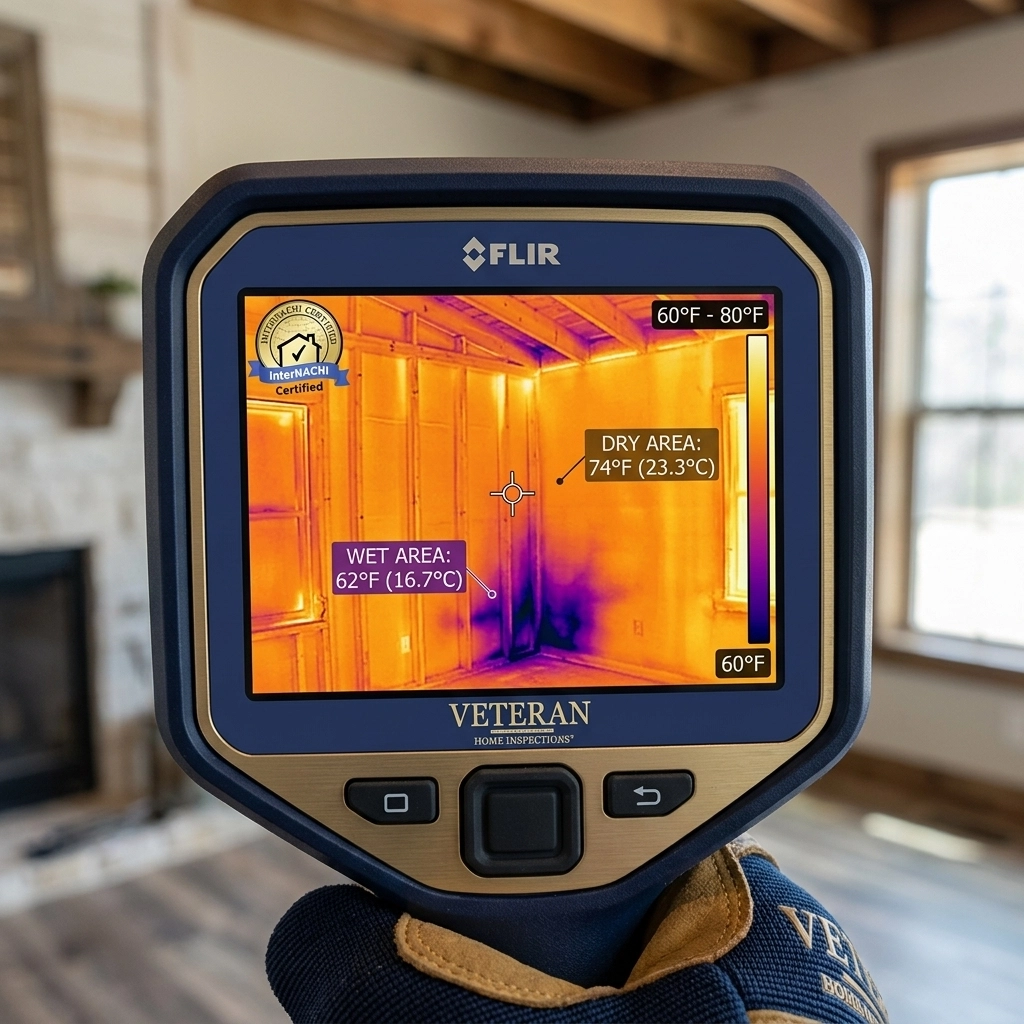
At Veteran Home Inspections, we utilize advanced thermal imaging inspections to see what the naked eye cannot. Infrared technology identifies "cold spots" behind walls, which often indicate hidden leaks or missing insulation where condensation forms. Identifying the source is the only way to prevent future damage and ensure a long-term solution.
3. Testing When Mold is Already Visible
It may sound counterintuitive, but if you can already see significant mold growth, you might not need a mold test: you need a mold remediation plan.
The EPA and industry standards generally agree that if mold is visible on a surface (like a large patch on drywall), the priority should be removal and moisture control. Testing for the specific "strain" of mold is often unnecessary because all mold should be treated with the same level of caution.
When you should still call a professional:
- To determine the extent of the growth (how far it has spread into the wall cavity).
- To ensure the mold has not entered the HVAC system.
- To provide "clearance testing" after remediation to prove the air is safe.
If you are a seller, having a professional document the situation and the successful cleanup is vital for your Texas mold disclosure requirements.
4. Hiring an Inspector Without Expert Credentials
Not every home inspector is qualified to perform a specialized mold assessment. Many general inspectors may offer mold "checks" as an add-on, but they lack the deeper construction knowledge required to find hidden issues.
When searching for a mold inspection San Antonio expert, look for the Certified Master Inspector (CMI) designation. This is the highest level of certification in the industry, requiring years of experience and thousands of inspections.
As a veteran-owned business led by a Certified Master Inspector, Veteran Home Inspections brings a background in construction management to every job. We don't just find the mold; we understand the building science behind why it occurred, providing you with a deeper level of insight into potential repairs and renovations.
5. Neglecting the HVAC System and Ductwork
In the San Antonio heat, your HVAC system is the lungs of your home. A common mistake is inspecting the walls and floors while completely ignoring the air handler and ducts.
If mold spores take root in your cooling coils or inside your ductwork, every time your AC kicks on, you are effectively "seeding" the rest of the house with spores. This can lead to persistent respiratory issues and a musty smell that never goes away, regardless of how much you clean.
Our standard practice involves:
- Checking the evaporator coils for organic growth.
- Inspecting the plenums for proper sealing to prevent humid air intake.
- Verifying that the system is properly sized to dehumidify the home effectively.
6. Ignoring "Low-Traffic" Areas Like Attics and Crawlspaces
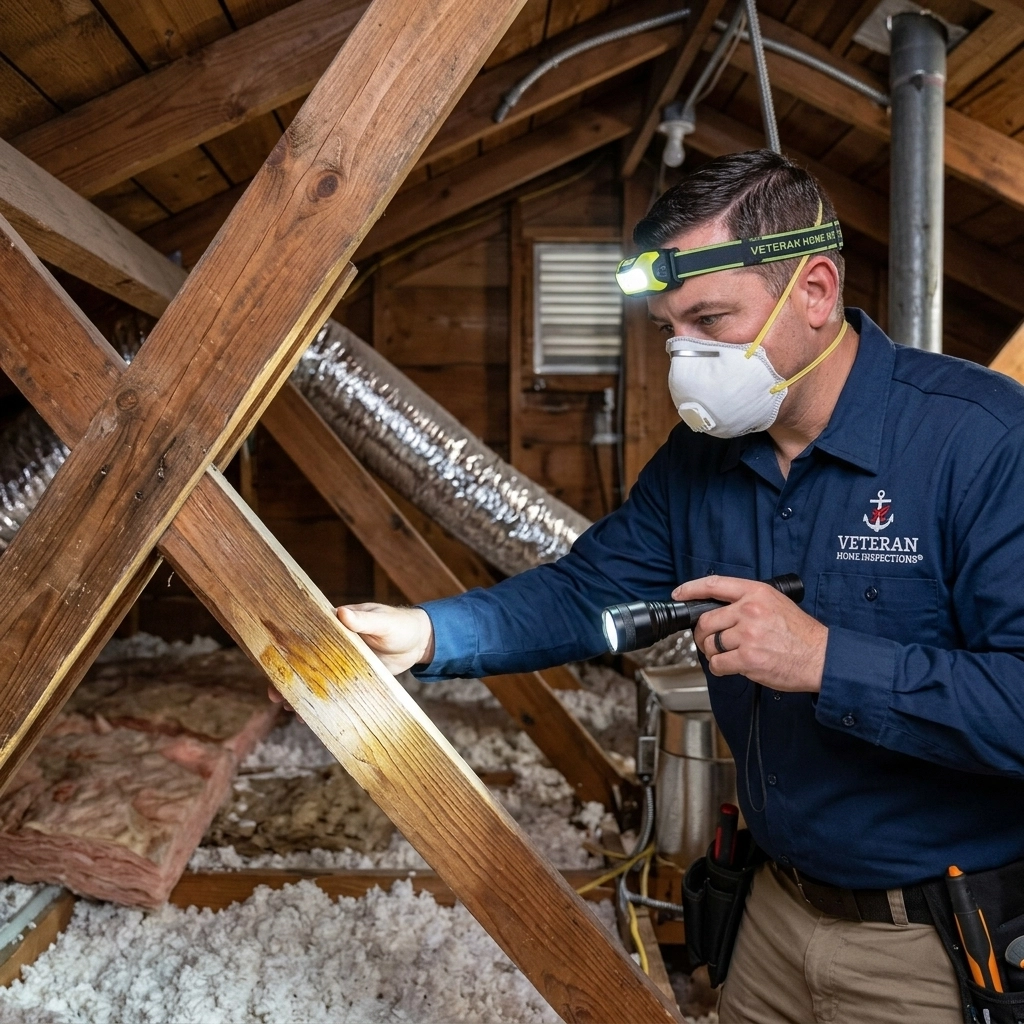
Most mold issues in the Texas Hill Country start where you rarely look. Attics and crawlspaces are prime real estate for mold because of their high heat and potential for undetected leaks.
For buyers, skipping a septic inspection or a crawlspace check is a gamble. Moisture from a failing septic line or poor drainage around the foundation can create a damp environment under the home that promotes wood-destroying fungi.
A thorough inspector will put on the gear and crawl into these uncomfortable spaces. If your inspector stays on the ladder instead of entering the attic, they are likely missing the most critical part of the report.
7. Not Reviewing the Full Inspection Report
A mold inspection is only as good as the documentation it produces. A common mistake is receiving a verbal "all clear" and not insisting on a detailed, written report.
In a real estate transaction, you need a professional report to negotiate repairs or to prove to a lender that the home is sound. At Veteran Home Inspections, we provide comprehensive property inspection services with detailed reports delivered quick.
Your report should include:
- Moisture Readings: Quantitative data from moisture meters.
- Lab Results: If air or surface samples were taken.
- Photo Evidence: Clear images of the problem areas and thermal scans.
- Actionable Advice: Specific recommendations for repairs or further evaluation by a licensed remediator.

Take Command of Your Home’s Health
Mold is a formidable opponent, but it is manageable when you have the right intelligence. Avoiding these common mistakes: from DIY kits to hiring uncertified inspectors: will save you thousands of dollars in future repairs and protect your family's health.
Whether you are in Boerne, San Antonio, Bandera, or Kerrville, you deserve an inspection that is as thorough as it is professional. Leverage our veteran-owned discipline and Certified Master Inspector expertise to gain a clear understanding of your property’s condition.
Don't leave your investment to chance.

No comments:
Post a Comment