Owning a home in Boerne or the surrounding Texas Hill Country is a dream for many. Between the rolling hills, the historic charm of Main Street, and the rugged beauty of the landscape, there is a lot to love. However, that very landscape: the ground beneath your feet: presents a unique set of challenges for your home’s structural integrity.
When you are buying or maintaining a property in this region, the foundation isn't just another part of the house; it is the most critical component. At Veteran Home Inspections, we have seen how the "Hill Country Hump" and the shifting seasons can take a toll on even the sturdiest slabs. Understanding why your foundation needs a regular checkup from a qualified home inspector Boerne, TX can save you thousands of dollars and provide the peace of mind you deserve.
The "Hill Country Hump": Understanding Our Unique Soil
To understand why foundation issues are so common here, you have to look at what’s under the grass. Boerne sits on a complex mix of shallow limestone and pockets of expansive clay. While limestone is generally a stable building platform, it is rarely a uniform surface.
Limestone vs. Expansive Clay
Most of our region is famous for its "white rock" or limestone. This is generally good news for homeowners because rock doesn't shrink or swell like the heavy clays found in San Antonio or Dallas. However, Boerne is also home to "pockets" of dark, plastic clay: especially in creek bottoms, low-lying areas, and lots where builders have brought in "fill" soil to level a sloped site.
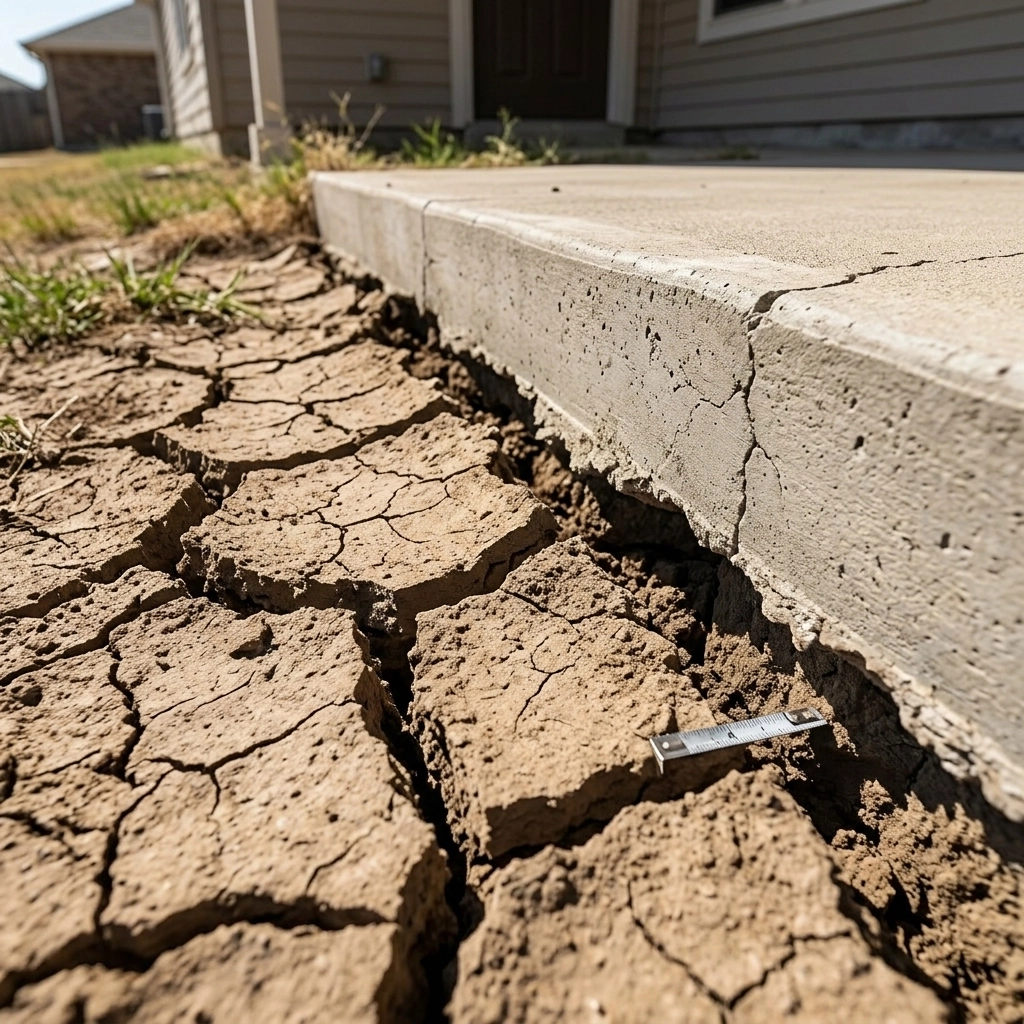
When this clay gets wet, it expands with incredible force. When it dries out during our frequent Texas droughts, it shrinks, leaving gaps beneath your slab. This constant "push and pull" is what leads to foundation movement. Because your home may be sitting half on rock and half on clay, it can experience "differential settlement," where one side of the house moves while the other stays still. This is exactly why we focus so heavily on the site conditions during our Boerne home inspections.

Red Flags: Signs Your Foundation Is Moving
You don't need to be a structural engineer to spot the early warning signs of foundation distress. By keeping a close eye on your home, you can catch minor shifts before they become major structural failures. We recommend performing a "perimeter walk" at least twice a year to look for the following issues.
Exterior Warning Signs
- Stair-Step Cracks: Look at your exterior masonry. If you see cracks that follow the mortar lines in a zigzag pattern, this is a classic sign of settlement.
- Separation Around Windows and Doors: Are there gaps where the window frames meet the brick? If you see daylight or a widening gap that has been repeatedly caulked, the wall is likely pulling away.
- Fascia and Soffit Gaps: Check the roofline. Gaps between the roof trim and the top of the wall often indicate that a corner of the foundation is dropping.
Interior Warning Signs
- The "Sticky" Door: If a door that used to swing freely now rubs against the frame or won't latch properly, the house has likely shifted out of square.
- Diagonal Cracks in Sheetrock: Look at the corners of your interior door frames and windows. Small hairline cracks are common, but diagonal cracks that are wide enough to fit a nickel are a cause for concern.
- Sloping Floors: Do you feel like you are walking "downhill" in certain rooms? Or do your kids' marbles always roll to the same corner? This indicates a significant elevation change in the slab.

The Water Factor: Managing Moisture for Stability
In the Texas Hill Country, water is the primary driver of foundation movement. Whether it’s a flash flood or a six-month drought, extreme changes in soil moisture lead to structural stress. Proper moisture management is the single most important thing you can do to protect your investment.
The Importance of Grading
The ground around your home should always slope away from the foundation. We look for at least a six-inch drop over the first ten feet. If the ground is flat or, worse, slopes toward the house, water will "pond" against the slab. This saturates the soil, causing it to lose its bearing capacity and allowing the foundation to sink.
Gutters and Downspouts
A standard roof can shed thousands of gallons of water during a heavy Boerne downpour. Without gutters, all that water falls directly at the base of your foundation walls. We strongly recommend installing gutters on all sides of the home and ensuring that downspouts discharge at least five to ten feet away from the house. Dumping water right at the corner of the slab is a recipe for a "settlement" disaster.
The Role of Landscaping
We love our Texas oak trees, but they are incredibly thirsty. A large tree can pull hundreds of gallons of water out of the soil every day. If a tree is too close to your home, it can dehydrate the soil on that side of the house, causing the foundation to drop while the rest of the house stays level. As your home inspector Boerne, TX, we evaluate the proximity of large vegetation to ensure it isn't sucking the life: and the stability: out of your soil.
Professional Maintenance: Your Foundation Checklist
Maintenance isn't just about fixing things when they break; it’s about prevention. To keep your Boerne home stable, we suggest following this checklist:
- Inspect Your Gutters Regularly: Ensure they are clear of leaves and debris. An overflowing gutter is just as bad as having no gutters at all.
- Monitor Soil Levels: Make sure you can see at least four to six inches of the concrete slab above the soil line. If mulch or dirt is piled up against the siding, it not only hides foundation cracks but also invites termites and rot.
- Use Soaker Hoses Wisely: During extreme droughts, the clay pockets in Boerne will pull away from the slab. You can use a soaker hose placed about 18 inches away from the foundation to keep the moisture level consistent. The goal isn't to make the ground muddy, but to keep it from cracking.
- Check Your Sprinkler Heads: Ensure your irrigation system isn't spraying directly against the house. Constant saturation in one spot can lead to localized "heaving."
Why You Need a Local Expert
While any inspector can find a crack, it takes a local expert to understand the context of that crack. The inspectors at Veteran Home Inspections have years of experience walking lots in Boerne, Fair Oaks Ranch, and Bergheim. We know the difference between a minor cosmetic shrinkage crack in the concrete and a structural failure caused by poor drainage on a Hill Country slope.
When we perform a standard home inspection, we don't just look at the house; we look at the entire environment. We assess the "lay of the land," the soil type, and the history of the area to give you a complete picture of the property's health. We provide detailed, digital reports within 24 hours so you can make informed decisions quickly.

Conclusion: Protect Your Foundation, Protect Your Home
Your home’s foundation is its literal and figurative anchor. In the unique environment of the Texas Hill Country, you cannot afford to ignore the signs of movement or the importance of proper drainage. Whether you are a first-time homebuyer looking to make a smart investment or a long-time homeowner wanting to ensure your property stands the test of time, a professional foundation checkup is essential.
At Veteran Home Inspections, we take pride in our "boots on the ground" approach. As a veteran-owned business and Certified Master Inspectors, we bring a level of discipline and detail to every job that is unmatched in the industry. We offer military discounts and are committed to serving the Boerne community with integrity.
Don't wait until the doors won't close and the cracks are an inch wide. Schedule your inspection today and let us help you keep your home on solid ground.
Contact Veteran Home Inspections today at 210-202-1974 or request an inspection online to ensure your Boerne home is safe, stable, and secure.