Friday, May 22, 2026

Old Homes, New Problems: Why Lead Paint Testing in San Antonio is Non-Negotiable


Historic San Antonio Home

San Antonio is a city defined by its rich history and stunning architecture. From the stately Victorian mansions of the King William Historic District to the charming Craftsman bungalows in Monte Vista and Alta Vista, our historic homes are more than just residences, they are cultural landmarks. However, for those who own or are looking to purchase these beautiful older properties, a hidden legacy often lingers beneath layers of modern aesthetics: lead-based paint.

While the character of an century-old home is undeniable, the safety of its environment must be the priority. At Veteran Home Inspections, we understand that preserving the past shouldn't come at the cost of your family's future. Understanding the risks associated with lead exposure and the technical requirements for lead paint testing in San Antonio is not just a recommendation; for homes built before 1978, it is a critical necessity.

The 1978 Threshold: Why Age Matters

The year 1978 serves as a definitive line in the sand for residential safety in the United States. This was the year the federal government officially banned the use of lead-based paint in residential housing due to its documented toxicity. If your home was constructed prior to this date, there is a statistically high probability that lead paint is present.

According to data from the Environmental Protection Agency (EPA), the prevalence of lead paint correlates directly with the age of the structure:

  • 87% of homes built before 1940 contain lead-based paint.
  • 69% of homes built between 1940 and 1959 contain lead-based paint.
  • 24% of homes built between 1960 and 1978 still contain lead-based paint.

In a historic city like San Antonio, where thousands of homes pre-date World War II, these statistics are not just abstract numbers, they represent the reality for many local homeowners. Lead was originally added to paint to increase durability, speed up drying time, and resist moisture. While effective for preserving wood, its impact on human health is devastating.

The Hidden Danger: How Lead Exposure Occurs

Close-up of deteriorating lead paint

The primary misconception many homeowners have is that lead paint is only dangerous if a child physically eats a paint chip. While "pica" (the ingestion of non-food items) is a serious concern, the most common route of exposure is actually through microscopic lead dust.

As lead-based paint ages, it undergoes a process called "chalking." Friction surfaces, such as window sashes rubbing against frames or doors closing in their jambs, constantly grind down these old layers of paint, releasing invisible, heavy lead dust into the air and onto floors. This dust is easily inhaled or ingested through normal hand-to-mouth contact.

Furthermore, even if the lead paint is currently covered by modern latex paint, any renovation project that involves sanding, scraping, or demolition will disturb these deep layers. Without professional lead paint testing in San Antonio, a simple weekend DIY project can inadvertently contaminate an entire home with toxic dust that is nearly impossible to clean with standard household vacuums.

The Health Implications: Protecting Your Family

Lead is a potent neurotoxin that accumulates in the body over time. Because it mimics calcium, the body absorbs it into the bones and blood, where it can cause permanent damage.

Vulnerable Populations:

  1. Children Under Six: Children are at the highest risk because their brains and nervous systems are still developing. Lead exposure can result in permanent lower IQ, behavioral problems, learning disabilities, and slowed growth.
  2. Pregnant Women: Lead can cross the placental barrier, exposing the fetus to the toxin. This can lead to premature birth, low birth weight, and developmental delays.
  3. Adults: While adults are more resilient, high levels of lead exposure can lead to hypertension, kidney damage, and reproductive issues.

Given these stakes, we believe that "guessing" is not an option. Professional testing provides the data needed to make informed decisions about your living environment.

The Science of XRF Testing: Accuracy Without Destruction

Inspector using XRF analyzer

When you choose Veteran Home Inspections for your lead-based paint testing, we utilize the industry’s most advanced technology: X-Ray Fluorescence (XRF).

Unlike DIY swab kits, which are notoriously unreliable and only test the very top surface, XRF technology allows us to see through every layer of paint on a wall or trim piece. Here is why XRF testing is the gold standard for lead paint testing in San Antonio:

  • Non-Destructive: We do not need to scrape or damage your walls. The XRF analyzer uses high-energy radiation to excite the atoms in the paint, which then emit an energy signature that identifies lead content.
  • Instant Results: You don’t have to wait for a lab to process samples. The device provides a direct readout of lead concentration in milligrams per square centimeter (mg/cm2).
  • Depth Penetration: Lead paint can often be buried under 10 or 20 layers of modern paint. The XRF scanner reads through all of them, ensuring that a "safe" top layer isn't hiding a toxic history beneath.
  • Comprehensive Documentation: Every reading is logged, allowing us to provide a detailed report of exactly where lead exists and, just as importantly, where it does not.

For homeowners in neighborhoods like Olmos Park or King William, this level of precision is vital for planning renovations or negotiating a property purchase.

Texas Regulations and Compliance (TELRR)

In the state of Texas, lead paint activities are governed by the Texas Environmental Lead Reduction Rules (TELRR). These regulations are designed to protect the public by ensuring that lead-based paint activities are conducted by properly trained and certified individuals.

For owners of "target housing" (homes built before 1978) or child-occupied facilities, compliance with these rules is essential during renovations. Using a certified inspector from Veteran Home Inspections ensures that your property is evaluated according to state standards, providing you with a defensible report that can be used for legal disclosure or insurance purposes.

Failure to identify lead paint before disturbing it can lead to massive cleanup costs and potential legal liability. A proactive inspection is the most cost-effective way to manage these risks.

Why Experience Matters: The Certified Master Inspector Advantage
Certified Master Inspector Badge

At Veteran Home Inspections, we bring more than just equipment to the job site; we bring elite-level expertise. As Certified Master Inspectors, we have performed thousands of inspections across the Texas Hill Country, including San Antonio, Boerne, and Kerrville.

Being a veteran-owned business means we operate with a level of discipline, integrity, and attention to detail that is unmatched. We don't just "check the boxes." We provide a comprehensive analysis of your property’s condition, identifying not just the presence of lead, but the factors that might make it hazardous, such as moisture intrusion that causes paint to peel or structural shifts that create friction on lead-painted surfaces.

Our background allows us to offer deeper insights into how lead paint interacts with your home's systems. If we find lead, we don't just hand you a "yes/no" result; we explain what that means for your specific property and how to prioritize maintenance or remediation.

Creating a Safe Environment: Your Next Steps

If you live in or are buying a home built before 1978, you have a responsibility to yourself and your family to know the facts. Lead paint testing in San Antonio should be your first step before any of the following:

  1. Purchasing a Home: Don't rely on the seller’s disclosure alone. Most sellers simply "don't know" if lead paint is present. Verify it for yourself.
  2. Renovating or Painting: Before you sand that beautiful old trim or tear down a wall, know what's inside.
  3. Welcoming a New Child: Ensure your nursery and play areas are lead-free.
  4. Noticing Peeling Paint: If your historic windows or siding are showing signs of wear, test them immediately to prevent lead dust contamination.

At Veteran Home Inspections, we provide the clarity you need to enjoy the beauty of your historic home without the worry of hidden toxins. Our reports are detailed, easy to understand, and delivered within 24 hours of the inspection.

Schedule Your Inspection Today

Don't let the charm of an old home mask a serious health hazard. Trust the experts at Veteran Home Inspections to provide the professional XRF testing you need. Whether you are in San Antonio, Boerne, or Kerrville, we are here to ensure your home is as safe as it is beautiful.

Contact us today at 210-202-1974 to schedule your lead paint inspection and gain the peace of mind that comes with professional, veteran-led expertise.

Thursday, May 21, 2026

The Seller’s Secret Weapon: Why a Pre-Listing Inspection in San Antonio is a Game Changer


A professional home inspection report and digital tablet on a table in front of a San Antonio home at sunset.

Selling a home in the competitive San Antonio real estate market requires more than just a fresh coat of paint and professional staging. In a landscape where buyers are increasingly savvy and cautious, you need every possible advantage to ensure a smooth, profitable transaction. Most sellers wait for the buyer to initiate an inspection, but this reactive approach often leads to lost time, reduced profits, and unnecessary stress.

At Veteran Home Inspections, we recommend a more proactive strategy: the pre-listing inspection. By having your property evaluated before it ever hits the market, you gain total control over the sales process. This "secret weapon" allows you to identify potential deal-killers, address necessary repairs on your own terms, and present a transparent, high-quality product to prospective buyers.

What is a Pre-Listing Inspection?

A pre-listing inspection in San Antonio is a comprehensive evaluation of a home’s condition, performed specifically for the seller before the property is listed for sale. It covers the same critical components as a traditional buyer’s inspection: including the roof, foundation, HVAC systems, plumbing, and electrical: but the findings are delivered directly to you, the homeowner.

This professional assessment provides a clear roadmap of your home’s current health. Instead of wondering what a buyer’s inspector might find, you have a detailed report in hand, allowing you to make informed decisions about pricing and repairs.

Eliminating the "Surprise Factor"

The most significant risk in any real estate transaction is the unknown. When a buyer discovers a major defect during their inspection period, it often triggers a "panic response." They may suddenly demand a massive price reduction, insist on expensive last-minute repairs, or even walk away from the deal entirely.

By opting for a pre-listing inspection, you eliminate these surprises. We provide you with a factual, objective look at your property’s condition. If we find a 15-year-old HVAC system that is nearing the end of its life or a plumbing leak in the crawlspace, you know about it first. This knowledge allows you to disclose these items upfront, which prevents the buyer from using them as leverage to renegotiate the price later in the process.

A professional inspector using a thermal imaging camera to check an HVAC system.

Maximizing Your Return on Repairs

When a buyer’s inspection report comes back with a list of deficiencies, you are often forced into a high-pressure situation. You usually have only a few days to find contractors, get quotes, and complete repairs before the closing date. This lack of time almost always results in paying a premium for labor.

Furthermore, buyers often overestimate the cost of repairs. A $500 electrical fix in their minds might translate to a $2,000 credit request. When you have a pre-listing inspection, you can handle repairs on your own schedule. You have the time to:

  • Solicit multiple quotes: Ensure you are getting a fair price from reputable San Antonio contractors.
  • Choose the scope of work: Decide whether to fix an item, replace it, or simply disclose it and adjust the asking price accordingly.
  • Verify the work: You can ensure the repairs are done correctly, preventing any issues during the final walkthrough.

Strengthening Your Negotiating Position

Information is the ultimate currency in real estate negotiations. When you provide a professional inspection report from Veteran Home Inspections to a prospective buyer, you are setting the tone for the entire transaction. You are demonstrating that you are an honest, transparent seller who has maintained the property diligently.

This transparency effectively "disarms" the buyer. It is much harder for a buyer to negotiate aggressively on price when all known issues have already been disclosed and accounted for in the listing price. In many cases, a pre-listing inspection can lead to "as-is" offers, as the buyer feels confident that they already know exactly what they are purchasing.

Building Instant Buyer Confidence

In the Texas Hill Country, trust is everything. Buyers are often hesitant to make a high-value offer on a home if they feel the seller is hiding something. A pre-listing inspection serves as a powerful marketing tool that builds immediate rapport.

When a buyer sees a Certified Master Inspector (CMI) badge on your disclosure packet, they know they are looking at a report from one of the top inspectors in the industry. It signals that the home has been vetted by an expert who understands the unique environmental challenges of the San Antonio area, from foundation shifts in expansive clay soils to the impact of high humidity on HVAC systems.

Certified Master Inspector Badge signifying elite industry expertise.

Faster Closing and Reduced Liability

A pre-listing inspection streamlines the path to the closing table. Many real estate deals fall through during the option period because of inspection disputes. By addressing these issues beforehand, you significantly reduce the likelihood of the deal collapsing.

Additionally, providing a comprehensive inspection report can help protect you from future liability. Under Texas law, sellers must disclose known defects. By having a professional inspection and sharing the results, you are creating a paper trail of full disclosure, which can be invaluable if a buyer later claims you withheld information about the property’s condition.

Why Choose Veteran Home Inspections?

When you are preparing your home for the market, you need a partner who values accuracy, speed, and integrity. We bring a disciplined, detailed approach to every property we evaluate. As a veteran-owned business, we understand the importance of clear communication and mission success: which, in this case, is getting your home sold.

We offer several key advantages for San Antonio sellers:

  • 24-Hour Digital Reports: We deliver our comprehensive, easy-to-read reports within 24 hours of the inspection, so you can move forward with your listing immediately.
  • Certified Master Inspector Credentials: Our inspectors hold the highest designation in the industry, ensuring that no detail is overlooked.
  • Comprehensive Services: Beyond our Standard Home Inspections, we can provide specialized testing for septic systems, sewer lines, and mold, giving your buyers total peace of mind.

A professional home inspection report on a desk with keys, ready for a sale.

Practical Steps for Sellers

If you are planning to list your home in San Antonio, Boerne, or the surrounding areas, follow these steps to maximize the value of your pre-listing inspection:

  1. Schedule Early: Aim to have the inspection completed at least two weeks before your home goes live on the MLS. This gives you ample time to address any findings.
  2. Review the Report with Your Realtor: Work with your real estate agent to determine which repairs are essential for sale and which ones can be disclosed as-is.
  3. Keep Receipts: If you perform repairs based on our findings, keep all invoices and warranties. These are excellent "value-add" items to show potential buyers.
  4. Make the Report Available: Include the inspection summary in your marketing materials or keep a full copy on the kitchen counter during showings.

The Bottom Line

A pre-listing inspection in San Antonio is not an expense; it is a strategic investment in the success of your sale. It provides you with the clarity needed to price your home accurately, the time needed to make cost-effective repairs, and the transparency needed to win buyer trust. In a market where timing and confidence are everything, don't leave your most valuable asset to chance.

Ready to take control of your home sale? Contact Veteran Home Inspections today to schedule your pre-listing assessment. We serve clients across the San Antonio area, including Boerne, Bandera, and Kerrville.

Call us at 210-202-1974 or schedule your inspection online to get started. Let us help you turn your "For Sale" sign into a "Sold" sign with confidence and ease.

Wednesday, May 20, 2026

Struggling With Septic? 5 Common Failures Our Boerne Home Inspectors Find Every Week


A professional home inspector evaluating a septic tank in the Texas Hill Country

For many homeowners moving to Boerne, Fair Oaks Ranch, or the surrounding Texas Hill Country, the transition from city sewer services to a private septic system can be a significant adjustment. While a well-maintained septic system is efficient and environmentally friendly, the unique geology of our region presents specific challenges that can lead to costly failures if not identified early.

At Veteran Home Inspections, we perform comprehensive property evaluations throughout the San Antonio area. Every week, our team identifies critical septic issues that could have been avoided with regular maintenance or discovered sooner with a professional septic inspection San Antonio buyers trust. Understanding these common failures is the first step in protecting your investment and ensuring the long-term health of your property.

The Hill Country Challenge: Why Aerobic Systems Dominate

Before diving into common failures, it is essential to understand why most homes in Boerne and northern San Antonio utilize aerobic treatment units (ATUs) rather than traditional gravity-fed systems. The Texas Hill Country is famous for its "hard rock": specifically, massive layers of limestone and karst features covered by a very thin layer of topsoil.

Because traditional leach fields require deep, porous soil to filter wastewater, they are often impractical in our rocky terrain. Aerobic systems solve this by using oxygen to accelerate the breakdown of waste, essentially acting as a miniature wastewater treatment plant on your property. However, because these systems are mechanical, they have more moving parts that can fail.

Cross-section of Texas Hill Country soil showing limestone bedrock and a septic tank

1. Aerator and Air Pump Breakdown

The aerator is the "heart" of an aerobic septic system. Its primary job is to bubble oxygen into the treatment tank, which sustains the aerobic bacteria responsible for consuming waste. Without a constant supply of oxygen, these beneficial bacteria die off, and the system reverts to an anaerobic state.

The Failure: We frequently find air pumps that have burnt out or diaphragm kits that have ruptured. When this happens, the waste is no longer being treated effectively.
The Consequence: You will likely notice a foul "rotten egg" smell near the tank or the spray field. More importantly, untreated effluent is being discharged onto your lawn, which is a significant health hazard and a violation of local health codes.
The Professional Insight: During our inspections, we verify the mechanical operation of the aerator to ensure it is operating and providing sufficient airflow.

2. Float Switch and Control Panel Malfunctions

Because aerobic systems rely on electricity to move water and air, the electrical components are frequent points of failure. The system uses a series of "float switches" inside the tanks to tell the pump when to turn on and when to trigger an alarm.

The Failure: Float switches can become tangled, coated in grease, or simply wear out over time. Similarly, the control panel: the "brain" of the system: can suffer from corroded wiring or blown fuses, especially after the frequent lightning storms we experience in the San Antonio area.
The Consequence: If the "high water" float fails to trigger the pump, the tank will overflow. Conversely, if the float gets stuck in the "on" position, the pump will run dry and burn out.
The Professional Insight: We test the alarm circuits and manually trigger the floats to ensure the system responds correctly to rising water levels.

Septic control panel with a red alarm light illuminated

3. Clogged Spray Heads and Distribution Issues

Unlike traditional systems that hide the effluent underground, aerobic systems in Boerne typically distribute treated water through a series of spray heads (sprinklers) in a designated "spray field."

The Failure: These spray heads are easily damaged by lawnmowers, stepped on by livestock, or clogged by biological "sludge" if the system isn't filtering waste properly.
The Consequence: When a spray head is clogged or broken, the pressure in the distribution line becomes unbalanced. You may see pooling water in one area while other parts of the field remain dry. Over time, this localized flooding can lead to soil saturation and "surfacing" of sewage.
The Professional Insight: We look for "lush green patches" that are out of place. While a green lawn is usually a good thing, a specific spot that is significantly greener and soggier than the rest of the yard is a classic red flag for a septic distribution leak.

A malfunctioning septic spray head causing pooling water in a backyard

4. Excessive Solids Buildup (Neglected Pumping)

One of the most common misconceptions about septic systems is that they never need to be pumped if you use "additives." This is a dangerous myth. Every system eventually accumulates "sludge" (solids that settle at the bottom) and "scum" (fats and oils that float at the top).

The Failure: When the primary trash tank or treatment tank becomes too full of solids, there is no longer enough room for the water to settle. These solids then get carried over into the pump chamber.
The Consequence: Once solids enter the pump chamber, they clog the intake, damage the pump impellers, and eventually make their way into the spray heads. Replacing a pump and cleaning out the entire distribution line is exponentially more expensive than a routine pump-out.
The Professional Insight: As part of a thorough evaluation, we recommend checking the sludge levels. If you are buying a home, we always advise having the tank pumped and inspected by a licensed septic professional to verify the structural integrity of the tank walls.

5. Structural Damage and Soil Stress

The Texas Hill Country's clay soil is expansive, meaning it swells when wet and shrinks when dry. This constant movement puts immense pressure on buried concrete or plastic tanks. Furthermore, the shallow limestone bedrock means that any shifting in the earth can cause tanks to crack or pipes to shear off.

The Failure: We often find "root intrusion" where nearby trees have sent roots into small cracks in the tank or piping. These roots grow rapidly in the nutrient-rich environment, eventually blocking the flow or shattering the pipes.
The Consequence: Structural cracks allow groundwater to leak into the system during heavy rains, which "overwhelms" the system and causes it to run constantly. Conversely, in dry seasons, sewage can leak out into the surrounding limestone, potentially contaminating local groundwater.
The Professional Insight: We evaluate the proximity of trees and large vegetation to the septic components and look for signs of "infiltration" that indicate the tank's seal has been compromised.

The Financial Reality: Why Inspection is Mandatory

In Texas, a failing septic system is not just a nuisance; it is a legal liability. The Texas Commission on Environmental Quality (TCEQ) and local health departments can issue fines of up to $10,000 per day for non-compliant systems that are discharging untreated waste.

For a homebuyer, a septic failure discovered after closing can result in a repair bill ranging from $3,000 for a pump replacement to well over $20,000 for a full system replacement. This is why a dedicated septic inspection San Antonio service is a non-negotiable part of the due diligence process.

Why Choose Veteran Home Inspections?

At Veteran Home Inspections, we bring a level of detail and discipline to every property. As Certified Master Inspectors, we understand the complexities of Hill Country real estate: from well water testing to the intricacies of aerobic septic systems.

We provide:

  • Detailed 24-Hour Reports: You receive a clear, photographic record of the system's condition so you can make informed decisions quickly.
  • Expert Guidance: We don't just find problems; we explain the "why" behind them and the potential long-term impact on your property value.
  • Veteran Reliability: Our background ensures that we leave no stone unturned (literally, in the case of Boerne limestone).

Certified Master Inspector Badge

Take Action Before You Buy

If you are considering a property in Boerne, San Antonio, Bandera, or Kerrville, do not leave your septic system to chance. A standard home inspection is a great start, but ensuring your septic system is functioning at peak efficiency is vital for your health and your wallet.

Contact Veteran Home Inspections today at 210-202-1974 or visit our services page to schedule your comprehensive property evaluation. Let us give you the peace of mind you deserve.


For more tips on preparing for your next property purchase, check out our guide on questions to ask when hiring a home inspector.

Tuesday, May 19, 2026

Mold Inspection San Antonio: 5 Things You Should Know About Texas’s New Regulatory Changes


A professional mold inspector using a moisture meter in a bright San Antonio home.

San Antonio is known for many things: the historic River Walk, the vibrant culture, and unfortunately, a climate that is practically a petri dish for mold growth. With our high humidity levels and intense summer heat, moisture intrusion in Texas homes is not a matter of "if," but "when." Whether it is a slow leak under a kitchen sink or a failing HVAC system in a humid attic, mold can quickly become a silent threat to both your property’s structural integrity and your family’s health.

Recently, the regulatory landscape regarding mold in Texas underwent a significant shift. On September 1, 2025, Senate Bill 1255 (SB 1255) officially went into effect, bringing sweeping changes to how mold inspections and remediations are handled across the state. If you are a homeowner or a buyer looking for a mold inspection in San Antonio, these changes directly impact who you hire and the level of protection you receive.

At Veteran Home Inspections, we believe that an informed client is a protected client. We have analyzed these new regulations to explain exactly how they affect you. Here are five things you need to know about the new Texas mold regulatory changes and why they matter for your San Antonio property.

1. Mandatory Individual Licensing for All Workers

The most significant change introduced by SB 1255 is the end of the "supervision exemption." In the past, a mold remediation or assessment company could operate with one licensed supervisor overseeing several unlicensed workers. This often led to inconsistencies in quality and accountability, as the individuals actually performing the work in your home might not have undergone formal training or background checks.

What has changed: As of September 2025, every single individual who performs mold assessment or remediation activities must hold their own valid license or registration from the Texas Department of Licensing and Regulation (TDLR). There are no more shortcuts.

Why this matters to you: This change ensures a much higher baseline of expertise. When you hire the inspectors at Veteran Home Inspections, you are guaranteed that the professional entering your home has met the state’s rigorous standards for education and ethical conduct. Individual licensing promotes accountability; it prevents "fly-by-night" operations from using untrained labor to cut costs, which ultimately protects the air you breathe.

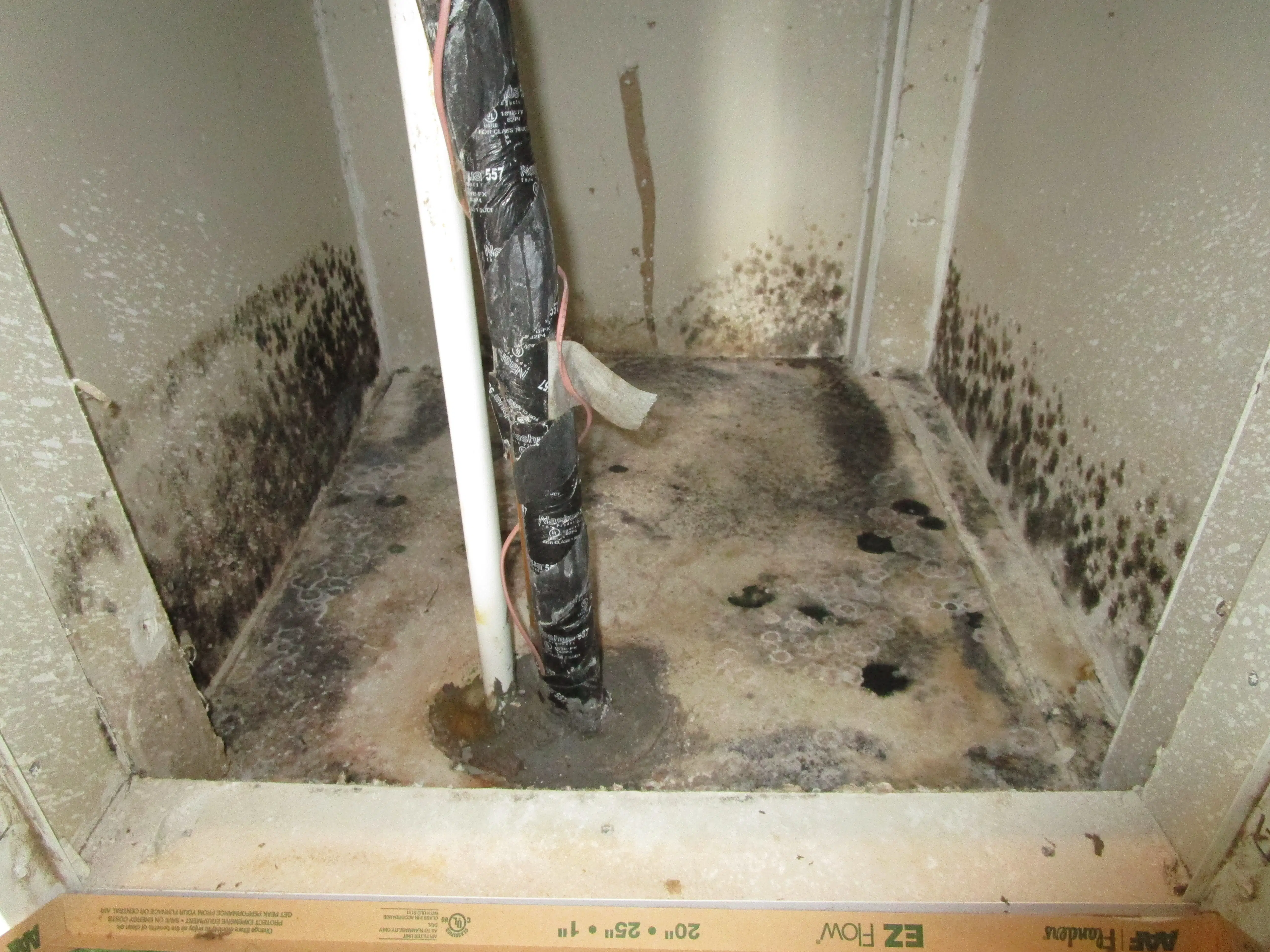
Evidence of mold contamination in an HVAC closet, a common finding during professional inspections.

2. Updated Definitions and the Removal of Mycotoxins

Regulatory language often sounds like "legalese," but the definitions determine what is legally considered a hazard. SB 1255 removed "mycotoxins" from the official state definition of mold in §1958.001(4) of the Occupations Code.

What has changed: While this might seem like a technicality, it narrows the scope of what the TDLR regulates. The state is focusing its regulatory oversight on the physical presence of mold spores and fungal growth rather than the chemical byproducts (mycotoxins) they may release.

Why this matters to you: This change places a heavier emphasis on the physical inspection and air sampling process. It means that your mold inspection must be thorough enough to identify the source of moisture and the presence of spores. At Veteran Home Inspections, we use advanced tools like thermal imaging to find hidden moisture behind walls that traditional "visual-only" inspections might miss. Even if the state definition has shifted, our commitment to identifying the root cause of your air quality issues remains unchanged.

3. The "Judge and Jury" Rule: Assessment vs. Remediation

A critical component of Texas mold law that remains strictly enforced (and further clarified by the new rules) is the separation of duties. Under Texas law, the company that performs the Mold Assessment (the inspection and testing) cannot be the same company that performs the Mold Remediation (the actual cleanup) on the same project.

The conflict of interest: If a company tells you that you have a mold problem and then offers to fix it for $5,000, they have a massive financial incentive to find "problems" that might not exist. This is a clear conflict of interest. Unfortunately, we still find companies doing exactly this, sometimes by using a different "Doing Business As" name to try to hide the affiliation between the assessor an remediator.

How we protect you: Veteran Home Inspections is an independent assessment firm. We do not perform remediation. This independence is your greatest asset. We provide an unbiased, third-party evaluation of your property. If we find an issue, we provide a detailed Mold Remediation Protocol that you can take to any licensed remediator. This ensures you only pay for the work that is truly necessary, saving you thousands of dollars in unneeded repairs.


4. The Critical Role of the Certificate of Mold Damage Remediation (CMDR)

In San Antonio's competitive real estate market, property value is everything. If your home has ever had a mold issue that required remediation, state law requires a Certificate of Mold Damage Remediation (CMDR) to be issued.

The regulatory requirement: To receive a CMDR, a licensed Mold Assessment Consultant must perform a "clearance inspection" after the remediation is finished to verify that the area is safe and the moisture source has been corrected.

Why this matters to you:

  • Property Value: When you go to sell your home, you are legally required to disclose past mold issues. A CMDR is your "get out of jail free" card. It proves to the buyer (and their lender) that the problem was handled professionally and verified by a third party.
  • Insurance: Most insurance companies in Texas will not provide coverage for a home that has a history of mold unless a CMDR is on file.
  • Peace of Mind: Knowing that a Certified Master Inspector has cleared your home gives you the confidence that the air in your home is safe for your family.

Certified Master Inspector badge representing the highest level of expertise in the industry.

5. The San Antonio Humidity Factor and Maintenance

While the laws have changed, the San Antonio climate has not. Our region’s humidity often exceeds 60%, which is the "danger zone" for mold growth. The new regulations emphasize that property owners must take proactive steps to maintain their structures to prevent regulated mold conditions from occurring.

Actionable Advice for San Antonio Homeowners:

  • Monitor Humidity: Keep your indoor relative humidity below 50%. Use a hygrometer to track this, especially in laundry rooms and basements.
  • Inspect HVAC Units: Your air conditioner is your primary dehumidifier. If it isn't cooling or draining correctly, it becomes a mold factory. We often find significant mold growth in HVAC closets during our standard home inspections.
  • Address Leaks Immediately: In the Texas heat, mold can begin to colonize in as little as 24 to 48 hours after a water event.

By following a proactive maintenance schedule and utilizing professional inspections, you can avoid the costly and stressful remediation process altogether.

Why Choose Veteran Home Inspections?

Navigating the new SB 1255 regulations can be confusing, but you don't have to do it alone. At Veteran Home Inspections, we bring a level of discipline and attention to detail that only a veteran-owned business can provide. We are not just looking for spots on a wall; we are evaluating the entire ecosystem of your home to ensure it is a safe, healthy environment.

We provide comprehensive reports within 24 hours, giving you the data you need to make informed decisions quickly. Whether you are buying a new home in Boerne, selling a property in San Antonio, or managing a commercial building in the Hill Country, we have the credentials and the local expertise to protect your interests.

Don’t leave your health or your property value to chance. If you suspect moisture issues or want to ensure your prospective new home is mold-free, contact the experts at Veteran Home Inspections today.

Call us at 210-202-1974 or visit our Contact Page to schedule your professional mold inspection in San Antonio.

Evidence of water intrusion and mold growth on a ceiling, highlighting the need for expert assessment.

Monday, May 18, 2026

7 Mistakes You’re Making with Sewer Lines: Why San Antonio Buyers Need a Scope Now


A professional home inspector from Veteran Home Inspections performing a sewer scope inspection on a San Antonio residential property.

Buying a home in the San Antonio area is a significant investment, often the largest one you will ever make. Whether you are eyeing a charming mid-century bungalow in Alamo Heights or a sprawling new build in Boerne, you likely have a checklist of things to inspect: the roof, the HVAC, the foundation, and the electrical panel. However, many buyers overlook the one system that can cause the most financial and structural damage if it fails: the sewer line.

At Veteran Home Inspections, we frequently see buyers skip the sewer scope because the home "looks fine" or "drains well." This is a critical error. In the unique environment of the Texas Hill Country, underground plumbing faces challenges that standard visual inspections simply cannot detect.

Below are the seven most common mistakes homebuyers make with sewer lines and why you need a professional sewer scope inspection before you sign on the dotted line.


1. Ignoring the "Gurgle" and Slow Drains

Many homeowners and buyers treat a slow-draining sink or a gurgling toilet as a minor annoyance that a bottle of Drano can fix. In reality, these are often the first warning signs of a significant blockage or a collapsing pipe.

When you hear a gurgling sound coming from your drains, it often means air is being trapped by an obstruction in the main line. If multiple fixtures are draining slowly, the problem is rarely localized to one pipe; it is likely deep in the main sewer lateral. Ignoring these signs can lead to a raw sewage backup into your home, resulting in thousands of dollars in water damage and mold remediation costs.

2. Skipping the Scope on New Construction

One of the most common myths we encounter is that "new homes don't need sewer scopes." We have performed many standard home inspections on brand-new properties only to find that the sewer lines were improperly installed.

Construction debris, such as rocks, wood scraps, or even excess PVC cement, can find its way into the lines during the build process. Furthermore, heavy machinery driving over the yard can crush or misalign pipes before the home is even finished. In San Antonio’s fast-paced housing market, mistakes happen. A sewer scope on a new build ensures you aren't inheriting a contractor’s oversight.

A rugged sewer camera monitor showing a thick mass of tree roots obstructing a pipe in a San Antonio backyard.

3. Falling for the "Flush Test" Fallacy

A common tactic during a standard home inspection is to flush all the toilets and run the sinks simultaneously to see if they drain. While this is a standard part of our process at Veteran Home Inspections, it is not a substitute for a camera scope.

A sewer line can be 80% blocked by tree roots or grease and still pass a "flush test" because the remaining 20% allows enough water to pass through temporarily. However, the moment you move in and start doing three loads of laundry a day, that pipe will reach its breaking point. A camera scope is the only way to see the actual interior condition of the pipe and identify potential failures before they become emergencies.

4. Underestimating San Antonio’s Expansive Clay Soil

The geography of San Antonio and the surrounding Hill Country, including Bandera and Kerrville, is dominated by expansive clay soil. This soil acts like a sponge: it swells when it rains and shrinks during our frequent Texas droughts.

This constant movement creates immense pressure on underground utilities. As the ground shifts, sewer pipes: especially older ones: can "belly" (sag), crack, or completely disconnect at the joints. These offsets allow sewage to leak into the soil, which can eventually lead to foundation instability. Without a sewer scope, these subterranean shifts remain invisible until they cause a structural nightmare.

Diagram showing how San Antonio's expansive clay soil causes older clay pipes to shift and disconnect.

5. Overlooking the Impact of Mature Oak Trees

We all love the majestic Live Oaks that define the San Antonio landscape. However, those trees have vast, aggressive root systems that are constantly seeking moisture. During dry spells, your sewer line: which carries nutrient-rich water: becomes a primary target for roots.

Tiny root hairs can enter the smallest crack or loose joint in a pipe. Once inside, they grow rapidly, creating a "root ball" that catches toilet paper and solid waste, leading to a total blockage. If left unaddressed, the roots will eventually crack the pipe entirely. If the home you are eyeing has large trees near the sewer path, a sewer scope is non-negotiable.

6. Assuming the City is Responsible for the Lateral Line

A common misconception among buyers is that the city (such as SAWS in San Antonio) is responsible for any sewer problems that occur outside the house. This is incorrect.

In almost every municipality in the Texas Hill Country, the homeowner is responsible for the "lateral line": the portion of the sewer pipe that runs from the house all the way to the connection at the city main, often located under the street or in the alley. If there is a collapse under your sidewalk or driveway, the repair bill (which can easily exceed $10,000) belongs to you. Knowing the condition of that lateral line before you buy is essential for your financial protection.

A beautiful San Antonio neighborhood with mature trees, highlighting the areas where we provide expert inspection services.

7. Trusting "Average" over a Certified Master Inspector

Not all sewer scopes are created equal. Some companies use outdated equipment that produces grainy, black-and-white images, making it difficult to distinguish between a minor crack and a major structural failure.

At Veteran Home Inspections, we leverage our status as a Certified Master Inspector (CMI) to provide a level of detail that goes beyond the industry standard. We use high-definition cameras and provide you with a comprehensive report within 24 hours, including video footage and clear explanations of any issues found. Choosing a veteran-owned business means you are getting a disciplined, detail-oriented approach to your property’s health.


Why Proactive Inspection is the Only Solution

The psychological stress of a sewage backup is immense. Beyond the foul odors and health risks associated with raw waste, the financial burden of emergency plumbing repairs can ruin the joy of a new home. By investing in a sewer scope during your option period, you gain the leverage to ask the seller for repairs or a price reduction: or the peace of mind to walk away from a "money pit."

We serve the entire San Antonio and Hill Country area, including:

  • Boerne
  • San Antonio
  • Bandera
  • Kerrville

Protect Your Investment Today

Don't let what you can't see hurt you. Ensure your future home is safe from the ground up: and below it. Whether you need a standard inspection, septic evaluation, or a high-definition sewer scope, our team is ready to provide the clarity you need.

Certified Master Inspector Seal

Contact Veteran Home Inspections today at 210-202-1974 or visit vhillc.com to schedule your inspection. We offer military discounts and 24-hour report turnarounds to keep your home-buying process moving forward with confidence.

Saturday, May 16, 2026

Eyes in the Sky: What Drones (And Don't) Mean for Your San Antonio Home Inspection


Modern inspection drone hovering over a Texas Hill Country home with a clay tile roof

The landscape of the real estate industry is shifting, and technology is at the forefront of that change. For years, a home inspection in San Antonio followed a predictable pattern: an inspector would pull a ladder off their truck, lean it against your gutters, and climb up to get a bird’s-eye view of your roof. While this traditional method is still a staple of the industry, there is a new tool in our arsenal that is revolutionizing how we evaluate property conditions: the drone.

At Veteran Home Inspections, we pride ourselves on being tech-forward and detail-oriented. We understand that your home is likely the largest investment you will ever make, and we leverage every tool available to ensure that investment is sound. However, there is often confusion about what drones can and cannot do during an inspection. In this guide, we will break down the advantages, the limitations, and the legal requirements of using "eyes in the sky" to protect your future home.

The Superior Advantage: Safety and Specialized Access

The most immediate benefit of using drones is safety: both for the inspector and for the property itself. Many homes in the San Antonio and Boerne areas feature architectural elements that make a manual roof inspection difficult or even dangerous.

Inspecting Steep and Fragile Roofs

Texas Hill Country architecture often includes beautiful but delicate roofing materials. Clay tiles, slate, and certain high-end metal roofs are notoriously fragile. Walking on a clay tile roof can cause hairline cracks that lead to leaks months or years down the line. By using a drone, a home inspector in Boerne, TX can capture high-resolution imagery of the roof covering without ever setting foot on the surface. This preserves the integrity of the roof while providing a 4K view of its condition.

Furthermore, many modern homes feature "unwalkable" pitches. When a roof is too steep for an inspector to safely traverse, a drone becomes the only way to get a close-up look at the ridge caps, valleys, and flashing.

Reaching Tall Chimneys and Gutters

Tall, multi-story chimneys are often skipped or "guestimated" during traditional inspections because they are out of reach for a standard 20-foot ladder. Drones can hover inches away from a chimney cap, allowing us to inspect for mortar deterioration, crown cracks, or sparking hazards that would otherwise go unnoticed. Similarly, we can fly the perimeter of the home to check for gutter clogs or sagging sections that are hidden from the ground.

Professional home inspector operating a drone controller in a Boerne driveway

Understanding the Limitations: What the Drone Can't See

While drones are impressive, they are not a "magic bullet." They are one tool in a comprehensive suite of services. It is a common misconception that a drone flight replaces the need for a hands-on inspection. Here is why the human element remains irreplaceable.

The Drone Doesn’t Replace the Attic

A drone can tell us if a shingle is missing, but it cannot tell us if the roof decking underneath is rotting. For that, we must go into the attic. At Veteran Home Inspections, we correlate our aerial findings with a thorough interior and attic evaluation. We look for water staining on the rafters, evidence of mold growth, and signs of past repairs. A drone sees the "skin," but the inspector must see the "skeleton."

Environmental Hurdles: Wind, Rain, and Trees

San Antonio is no stranger to sudden weather shifts. Drones are highly sensitive to high winds and precipitation. If it is a particularly gusty day or if there is a light drizzle, we may be legally or technically grounded. Additionally, heavy tree cover: common in the more wooded areas of the Hill Country: can prevent a drone from getting a clear line of sight to the roof. In these cases, we rely on our extensive experience and traditional methods to ensure no stone (or shingle) is left unturned.

The Lack of Tactile Feedback

An inspector’s hands are among their most valuable tools. When we walk a roof, we are feeling for "soft spots" that indicate moisture-damaged plywood. We are checking the "crunch" of the granules to see if an asphalt shingle is nearing the end of its life. A drone provides visual data, but it cannot provide the tactile feedback that a Certified Master Inspector uses to gauge the remaining lifespan of a roofing system.

Close-up drone shot of a cracked chimney flashing and clay tiles

The Legal Side: Why FAA Part 107 Matters

You might wonder, "Can't anyone with a drone from a big-box store do this?" The answer is a firm no. The Federal Aviation Administration (FAA) has strict regulations regarding the commercial use of Unmanned Aircraft Systems (UAS).

Professionalism and Compliance

To operate a drone for a home inspection in San Antonio, an inspector must hold a Remote Pilot Certificate under FAA Part 107. This is not just a formality; it is a legal requirement for anyone using a drone for business purposes. Fines from the FAA can easily exceed $10,000, and can be enforced against both the drone pilot and the party hiring them (home owners, buyers, real estate agents, etc.)

At Veteran Home Inspections, we strictly adhere to these regulations. This involves:

  • Aeronautical Knowledge: We have passed the FAA’s rigorous testing on airspace classifications, weather patterns, and emergency procedures.
  • Airspace Authorization: Large areas of San Antonio are restricted for drone flight, and we can't even legally take off. We use tools like LAANC to get instant authorization to fly near San Antonio’s busy airports (like SAT or Randolph AFB), ensuring we are never a hazard to manned aircraft. Here's a quick look at the airspace around San Antonio:
  • Airspace map of San Antonio for drone use
  • Safety Protocols: We conduct pre-flight inspections of our equipment and maintain a visual line of sight at all times.

Hiring an uncertified "hobbyist" for your inspection could lead to significant legal liabilities for the property owner and the inspector alike. Always ask your inspector if they are Part 107 certified before they launch a drone over your potential home.

FAA Part 107 Remote Pilot Certificate mockup with drone gear

Our Commitment to Excellence

At Veteran Home Inspections, our background as a veteran-owned business means we value precision, discipline, and the highest standards of service. We don't use drones because they are "cool" or "trendy": we use them because they provide our clients with a superior level of information.

By combining aerial technology with advanced thermal imaging inspections, we can identify heat loss, moisture intrusion, and structural defects that a standard visual inspection might miss. We believe in providing a report that is not just a list of problems, but a comprehensive manual for your home’s health.

What to Expect in Your Report

When we use a drone, you won't just get a note saying "roof looks okay." You will receive:

  1. High-Resolution Evidence: Clear, dated photos of the roof, chimneys, and vents.
  2. Detailed Context: An explanation of how the aerial findings relate to the condition of the attic and interior.
  3. Actionable Advice: Specific recommendations for repairs or maintenance, backed by visual proof.

Our goal is to provide your detailed report within 24 hours, so you can move forward with your real estate transaction with total confidence.

Protecting Your Investment

Whether you are a first-time homebuyer or an experienced investor looking at commercial property inspections, you deserve a team that uses every available advantage. Drones have changed the game, but they are only as effective as the expert operating them.

Don't leave your roof: or your safety: to chance. Ensure your next home inspection in San Antonio is handled by a team that understands the technology, the territory, and the importance of a job well done.

Ready to schedule your high-tech home inspection?
Contact the team at Veteran Home Inspections today. We serve the entire Texas Hill Country area, including Boerne, San Antonio, Bandera, and Kerrville.

Certified Master Inspector Badge

Call us at: 210-202-1974
Visit our website: vhillc.com

Veteran Home Inspections: Integrity in every inch, from the ground to the sky.

Friday, May 15, 2026

Termite Inspection San Antonio TX: Why Our Local Soil Makes WDI Checks Non-Negotiable


heroImage

If you are buying a home in the San Antonio area, you aren't just buying a structure; you are buying the ground it sits on. In the Texas Hill Country and the surrounding Bexar County plains, that ground is far more active than most homeowners realize. From the shifting "cracking clays" of the Blackland Prairie to the rocky limestone of the Edwards Plateau, our local soil creates a unique set of challenges for property owners: specifically when it comes to termites.

At Veteran Home Inspections, we have seen firsthand how San Antonio’s unique geology acts as a VIP highway for wood-destroying insects. A Standard home inspection is vital, but in this region, a Wood Destroying Insect (WDI) check is non-negotiable.

The San Antonio Soil Factor: Why Our Dirt is Different

San Antonio sits at a geological crossroads. To the west, you have the rocky, thin soils of the Edwards Plateau. To the east, you have the deep, heavy clays of the Blackland Prairie. Both environments are prime real estate for subterranean termites, but for different reasons.

The "Cracking Clay" Highway

In the eastern and southern parts of San Antonio, the soil is dominated by expansive clay. This soil is famous for its "shrink-swell-shrink" cycle. During our brutal Texas summers, the clay loses moisture and shrinks, creating deep fissures and cracks that can extend several feet into the ground.

These cracks are more than just an eyesore for your lawn; they are direct access tunnels for subterranean termites. Termites require moisture to survive and will travel deep into the earth to find it. When the surface soil cracks, it provides a protected, moisture-wicking path directly to your home’s foundation. By the time you see evidence of an infestation on your baseboards or drywall, the termites may have been using these "soil highways" for months.

The Rocky Hill Country Shield

In areas like Boerne and Kerrville, the soil is thinner and sits atop solid limestone. You might think this rock-hard foundation would deter pests, but it often does the opposite. Because the soil is shallow, moisture often traps between the limestone and the concrete slab of a home. This creates a high-humidity microclimate that termites love. Furthermore, the rocky terrain often leads to "conducive conditions" like wood-to-ground contact where decks or fences are anchored directly into the thin soil layer.

What is a WDI Inspection and Why Do You Need One?

A Wood Destroying Insect (WDI) inspection is a specialized evaluation that goes beyond the scope of a standard home inspection. In Texas, this report is officially known as the SPCS/T-5 form, regulated by the Texas Department of Agriculture.

If you are using a VA or FHA loan to purchase your home, a WDI report is almost always a mandatory requirement for closing. Lenders view termites as a significant threat to their collateral: and for good reason. Termites cause billions of dollars in structural damage every year, most of which is not covered by standard homeowners insurance.

What We Look For

When we perform a termite inspection in San Antonio, TX, we aren't just looking for bugs. We are looking for the history and the potential of infestation:

  • Active Infestations: Live insects or fresh mud tubes (the protective tunnels termites build to travel).
  • Previous Damage: Evidence of past activity that may have compromised the structural integrity of the wood.
  • Signs of Previous Treatment: Drill marks in the slab or bait stations that indicate the home has been treated before.
  • Conducive Conditions: This is the most important part of the report. We identify factors that make your home a target, such as standing water, high soil grade, or firewood stacked against the house.

The Hidden Threat: Formosan Termites

While the Eastern Subterranean termite is our most common resident, San Antonio is also home to the Formosan subterranean termite. Often called "super termites," these insects are significantly more aggressive. A large Formosan colony can cause structural damage to a home in as little as six months.

Because they are so prolific, they don't always need soil contact to survive if they can find a consistent moisture source within the walls (like a leaky pipe). This makes our thermal imaging inspections particularly valuable, as they can help detect the heat signatures or moisture patterns associated with large, hidden colonies.

Why "Conducive Conditions" Matter to Your Wallet

Many buyers see "Conducive Conditions" on a WDI report and assume it’s a minor detail. However, in the world of Texas real estate, these are major red flags. If a report lists "high soil grade" (where the dirt is touching the siding or brick ledge), your lender may require you to remediate the soil before they will fund the loan.

By identifying these issues early, we provide you with the leverage you need to negotiate repairs or price credits with the seller. Our goal is to ensure you aren't moving into a "buffet" for local pests.

Why Choose Veteran Home Inspections?

When it comes to protecting your investment, credentials matter. We are Certified Master Inspectors, a designation held by fewer than 3% of all inspectors. This means we have the experience and the specialized training to spot the subtle signs that others might miss.

cmi-badge

We understand the local landscape. We know how the soil in San Antonio behaves and where termites like to hide. Our reports are detailed, easy to read, and delivered within 24 hours, so you can make informed decisions without delaying your closing.

Our Comprehensive Approach

We don't just "look around." We conduct a systematic sweep of the property:

  1. Exterior Perimeter: Checking the foundation line, weep holes, and soil-to-wood contact points.
  2. Interior Walls: Looking for "kick-out holes," bubbling paint, or hollow-sounding wood.
  3. Attics and Crawl Spaces: Inspecting the "skeleton" of the home where moisture issues often go unnoticed.
  4. Garage and Outbuildings: Ensuring that detached structures (if included in the scope) aren't serving as a bridge for termites to enter the main house.

Protect Your San Antonio Home Today

Don't let the "cracking clays" of San Antonio lead termites straight to your front door. Whether you are a first-time homebuyer or a seasoned investor, a professional WDI inspection is the only way to truly understand the condition of the property you are about to purchase.

At Veteran Home Inspections, we take pride in being the "boots on the ground" for our clients. We offer military discounts and a level of detail that only a veteran-owned business can provide.

Ready to schedule your inspection?
Call us today at 210-202-1974 or visit our contact page to book your appointment online. Let us help you protect your piece of the Texas Hill Country.

Thursday, May 14, 2026

Does a Certified Master Inspector Really Matter in 2026? What New Texas Standards Mean for Your Home


Professional Home Inspector performing an inspection in the Texas Hill Country

The San Antonio real estate market in 2026 is more complex than ever. With shifting interest rates, a surge in high-tech home systems, and new regulatory oversight from the Texas Real Estate Commission (TREC), the stakes for home buyers have never been higher. When you are making the largest investment of your life, you need more than just a "licensed" individual walking through the property. You need an expert who has seen it all.

This brings us to a critical question: Does the title of Certified Master Inspector (CMI) actually matter, or is it just a fancy badge? To protect your investment and your family’s safety, you must understand the massive gap between a standard license and the elite CMI designation.

The Standard License vs. The Master Designation

In Texas, the baseline for becoming a Professional Real Estate Inspector involves 194 hours of education and a state exam. While this ensures a foundational level of knowledge, it is essentially the "learner's permit" of the inspection world.

As of June 1, 2026, Texas has even stricter education requirements, demanding that all coursework be completed before an inspector can even step into the field for their practicum. This is a step in the right direction for the industry, but it doesn't replace the value of thousands of hours on-site.

What Makes a Certified Master Inspector?

A Certified Master Inspector (CMI) is not just someone who passed a test. It is a board-certified credential that requires:

  • A minimum of 1,000 fee-paid inspections or equivalent hours of training.
  • At least three years of active experience in the inspection industry.
  • Adherence to the highest standards of practice and a strict Code of Ethics.
  • Ongoing professional education that goes far beyond the state’s minimum requirements.

When you hire a Certified Master Inspector in San Antonio, you are hiring someone who has spent years identifying the subtle "tells" of a failing foundation or a hidden moisture problem that a novice might miss.

Certified Master Inspector Badge

Why Experience is Non-Negotiable in 2026

The home inspection industry is evolving. Modern homes are equipped with smart technology, advanced HVAC systems, and complex building materials. At the same time, older homes in the Texas Hill Country are facing the long-term effects of our unique climate.

1. Navigating New Texas Standards

The Texas Real Estate Inspector Committee (TREIC) recently met in April 2026 to further refine inspection standards. These "ongoing improvements" mean that inspectors must stay ahead of the curve. A CMI is naturally positioned to lead this charge because they are required to participate in advanced training. Whether it’s understanding the nuances of the latest thermal imaging technology or the latest requirements for septic inspections, experience ensures these standards are applied with precision.

2. Identifying "Hidden" Regional Risks

San Antonio and the surrounding areas like Boerne and Bandera present specific challenges that a textbook cannot fully prepare an inspector for.

  • Expansive Soil: Our local soil is notorious for shifting, which can wreak havoc on foundations. A Master Inspector knows how to differentiate between cosmetic settlement and structural failure.
  • Humidity and Mold: With the Texas heat comes humidity. We frequently find mold contamination in HVAC closets or under sinks that a less experienced eye might overlook as simple dust.
  • Aging Infrastructure: In areas like Boerne, older septic systems are common. An inexperienced inspector might only check if the toilets flush, whereas we perform comprehensive sewer scope and septic evaluations to ensure the system isn't a ticking time bomb.

Close-up of a digital home inspection report showing foundation details

The Veteran Home Inspections Difference

At Veteran Home Inspections, we don't just meet the standards; we set them. Being veteran-owned means we bring a level of discipline, attention to detail, and integrity to every job that is second to none. When you combine that military precision with our Certified Master Inspector credentials, you get an inspection that provides true peace of mind.

Advanced Tools for Deeper Insights

We believe that you can’t manage what you can’t see. That is why we utilize high-end technology in every inspection:

  • Thermal Imaging: We use infrared cameras to detect moisture behind walls, electrical hotspots, and missing insulation without damaging the property.
  • Moisture Meters: To confirm what the thermal camera suggests, ensuring we provide factual data, not guesses.

Reports You Can Actually Use

A 50-page report is useless if you can’t understand it. We provide detailed, easy-to-read digital reports within 24 hours of the inspection. Each report includes high-resolution photos and clear explanations of our findings, allowing you to make an informed decision or negotiate repairs with confidence.

What You Gain by Choosing Expertise

Choosing a Certified Master Inspector isn't about paying for a title; it’s about the tangible benefits you receive during the home-buying process:

  1. Negotiation Leverage: A detailed report from a Master Inspector carries more weight during price negotiations.
  2. Safety Assurance: We identify life-safety issues like improper wiring or water intrusion before you move in.
  3. Maintenance Foresight: We don't just tell you what's broken; we explain how to maintain your home to prevent future costly repairs.
  4. Financial Protection: Finding a $10,000 foundation issue during the option period is a lot better than finding it six months after closing.

Conclusion: Don't Settle for "Licensed"

In 2026, the gap between a standard inspector and a Certified Master Inspector is wider than ever. As Texas continues to update its standards, you need a partner who has the experience to see beyond the surface. Whether you are looking for a Boerne home inspection or a commercial property inspection in San Antonio, demand the best.

Veteran Home Inspections is ready to serve you. Protect your investment with the expertise of a Certified Master Inspector.

Contact us today at 210-202-1974 or visit vhillc.com to schedule your comprehensive home inspection.

Veteran Home Inspections Logo