Saturday, June 20, 2026

Is Your HVAC Trying to Kill Your Comfort? The Hidden Dangers of Improperly Sized Systems

 A high-quality professional photograph of a modern HVAC condenser unit outside a Texas Hill Country home.

In the scorching heat of a San Antonio summer, your HVAC system isn’t just a luxury: it’s a life-support system for your home’s comfort and structural integrity. However, many homeowners in the Texas Hill Country are living with a ticking time bomb: an improperly sized HVAC system. Whether your unit is too big, too small, or a "Frankenstein" creation of mismatched parts, the consequences go far beyond a high electric bill.

At Veteran Home Inspections, we frequently encounter systems that were installed based on "rules of thumb" rather than precise calculations. Michael Marlow’s extensive background in home inspections and mold assessment provides our team with a unique perspective on how these systems should be integrated into a home’s design and installation. We understand that an HVAC system is not a standalone appliance; it is the heart of your home’s climate control. When that heart is the wrong size, the entire "body" of your home suffers.

The Myth of "Bigger is Better": The Oversized HVAC

Many homeowners assume that a larger air conditioner will cool their home faster and more effectively. This is a dangerous misconception. In a climate like San Antonio, where humidity levels often rival those of a tropical rainforest, an oversized HVAC system is one of the primary causes of indoor discomfort.

The "Cold and Clammy" Phenomenon

An oversized unit cools your home too quickly. It reaches the temperature set on your thermostat in a matter of minutes and then shuts off. This is known as short cycling. While the air might feel 72°F, the system hasn't run long enough to perform its second, more critical job: removing excess moisture from the air.

Air conditioning coils need time to get cold enough to pull moisture out of the air. When a system short-cycles, it leaves the humidity levels hovering at 60% or higher. This creates that unpleasant "cold and clammy" feeling where you’re shivering but your skin feels sticky.

Accelerated Wear and Energy Spikes

Every time your HVAC motor starts up, it consumes a massive surge of electricity: far more than it uses while running steadily. Frequent starting and stopping (short cycling) leads to:

  • Higher Energy Bills: You are paying for the "startup cost" of your AC dozens of times a day.
  • Premature Component Failure: The constant mechanical stress on the compressor and fan motors can cut the lifespan of your system in half.
  • Uneven Temperatures: Rooms furthest from the thermostat often remain warm because the system shuts off before the cooled air can circulate properly.

A digital hygrometer showing high humidity and low temperature inside a home with visible window condensation.

The Little Engine That Couldn't: The Undersized HVAC

On the opposite end of the spectrum is the undersized system. This usually happens when a home has been expanded or when an installer tries to save money by putting in a smaller unit than the home’s square footage and heat load require.

The Perpetual Run Time

An undersized unit will run almost continuously during a San Antonio afternoon. Because it lacks the capacity to move enough heat out of the house, the temperature inside will slowly climb despite the AC running at full blast. This leads to:

  • Extreme Energy Consumption: Because the unit never reaches the setpoint, it never shuts off, leading to skyrocketing utility costs.
  • Component Burnout: HVAC systems are not designed to run 24/7 at peak capacity. This leads to overheated motors and seized compressors.
  • Poor Air Filtration: When a system is constantly struggling, airflow can become stagnant in certain areas of the house, leading to poor indoor air quality.

The "Frankenstein" Mismatch: Different Tonnage Ratings

Perhaps the most technical: and most overlooked: hazard is a mismatch between the indoor evaporator coil and the outdoor compressor (condenser). This often occurs during "partial" replacements where a contractor replaces an outdoor unit but leaves the old indoor coil to save the homeowner money. Builders also often use mismatched sizing to cheat the home energy rating score they need to get tax credits. They save, and you will pay in the future, sometimes very quickly.

Efficiency and Warranty Violations

HVAC components are engineered to work as a matched set. When you pair a 3-ton outdoor unit with a 2.5-ton indoor coil, or vice versa, you create a "Frankenstein" system that underperforms in every category.

  1. Humidity issues: When the evaporator coil is larger than the compressor, this can make the system more efficient, at least when it comes to energy consumption. However, this is not a good thing for your indoor environment. By making the system more efficient, we run into the same problems we see with an oversized unit. The system satisfies the thermostat too fast, leading to short-cycling and skyrocketing humidity in the house.
  2. Warranty Voids: Most manufacturers will not honor a warranty if the indoor and outdoor units are not AHRI-matched. If your brand-new compressor fails, you may be stuck with the full bill because the components didn't match.
  3. Refrigerant Issues: Proper refrigerant charging is nearly impossible in a mismatched system, leading to liquid "slugging" that can destroy the compressor.

A home inspector examining the data plate on an HVAC unit with a flashlight to verify tonnage and matching components.

The Humidity Connection: Why Sizing is a Health Issue

In the Texas Hill Country, humidity isn't just about comfort; it's about health. When an improperly sized system fails to control moisture, your home becomes a breeding ground for mold and mildew.

As a Certified Master Inspector in San Antonio, we have seen firsthand how high humidity levels (anything consistently above 50% RH) lead to:

  • Mold Growth: Mold spores thrive on organic materials like drywall and wood when moisture is present.
  • Musty Odors: That "old house smell" is often the off-gassing of microbial growth fueled by poor dehumidification.
  • Respiratory Issues: Dust mites and mold allergens are significantly more prevalent in humid environments, exacerbating asthma and allergies.
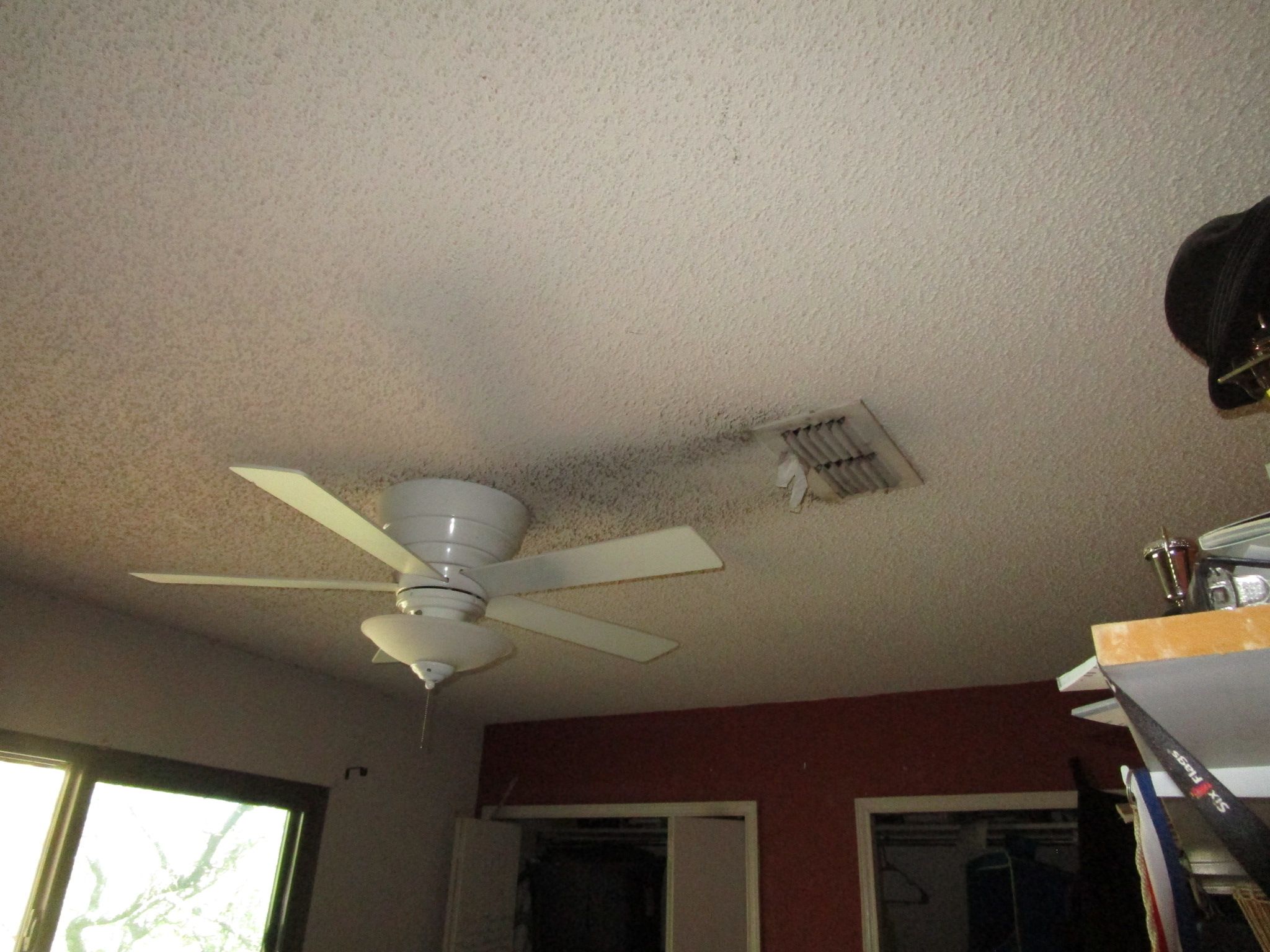
Visible black mold staining around an HVAC vent on a bedroom ceiling due to moisture issues.

What a Certified Master Inspector Looks For

During a professional home inspection in San Antonio, the inspectors at Veteran Home Inspections don't just check if the air coming out is cold. We perform a comprehensive evaluation of the system’s health and sizing.

1. Data Plate Verification

We check the data plates on both the indoor and outdoor units. We verify that the tonnage ratings match and that the equipment is compatible. If we see a 2024 condenser paired with a 2012 evaporator coil, we flag it as a significant concern for both efficiency and warranty coverage. We don't conduct the actual sizing calculations, as that requires extensive specialized training, so if we suspect an improperly sized unit we will refer you to an HVAC specialist to get these calculations done.

2. Temperature Differentials (Delta-T)

We measure the temperature difference between the return air and the supply air. A properly functioning, correctly sized system should generally have a "split" of 15 to 22 degrees. If the split is too low, the system is struggling; if it’s too high, you may have airflow restrictions or sizing issues.

3. Thermal Imaging

We utilize advanced thermal imaging inspections to see what the naked eye cannot. We check for "hot spots" in rooms that might indicate poor duct design or an undersized unit. We also look for cold spots on walls or ceilings that could indicate hidden condensation and potential mold growth.

4. Signs of High Humidity

We look for secondary evidence of sizing issues, such as:

  • Condensation on windows or air vents.
  • Rusting on the HVAC cabinet or surrounding components.
  • Musty odors or visible microbial growth in the air handler closet and around vents.

An inspector using a thermal imaging camera to check the temperature of an HVAC vent.

Protect Your Investment and Your Health

Your home is likely your largest investment. Don't let an improperly sized HVAC system quietly destroy its value, your comfort, and your health. Whether you are buying a new home in Boerne or selling a property in San Antonio, a professional inspection is the only way to ensure your climate control system is working for you, not against you.

If you suspect your HVAC system is short cycling, failing to keep up, or leaving your home feeling clammy, it’s time for a professional evaluation. Veteran Home Inspections provides the expert insight you need to make informed decisions about your property.

Don’t wait until the next Texas heat wave to find out your system isn’t up to the task.

Contact Veteran Home Inspections today at 210-202-1974 or schedule your inspection online.

Saturday, June 13, 2026

Water Quality & Well Testing: Why Hill Country Homeowners Should Be Testing


heroImage

Owning a home in the Texas Hill Country offers a lifestyle defined by breathtaking views, limestone ridges, and a sense of independence. However, for many residents in Boerne, San Antonio, Bandera, and Kerrville, that independence comes with the responsibility of managing a private water well. Unlike city residents who rely on municipal water treatment plants to filter and monitor their supply, well owners are their own "water utility managers."

At Veteran Home Inspections, we understand that your water quality is the foundation of your family’s health and your home’s longevity. While the water coming out of your tap may look and taste fine, the unique geology of our region means that "clear" does not always mean "clean." Professional water quality testing is not just a recommendation; it is a critical component of responsible homeownership in the Hill Country.

The Invisible Risk: Why the Hill Country Is Unique

The Texas Hill Country sits atop complex aquifer systems, primarily the Edwards and Trinity aquifers. These are "Karst" aquifers, characterized by fractured limestone, sinkholes, and caves. While this allows the aquifers to recharge quickly during rain events, it also creates a significant vulnerability: the ground offers very little natural filtration.

In many parts of the country, water travels through hundreds of feet of dense clay or sand, which acts as a natural filter for bacteria and pollutants. In the Hill Country, surface water: and everything it carries: can drop through a limestone fissure and reach the groundwater in a matter of hours. This rapid movement means that contaminants from the surface have a direct path into your well.

Top Contaminants: What We Look For

When we perform water well testing, we focus on specific contaminants that are most likely to impact the health of your family and the integrity of your plumbing.

1. Coliform Bacteria and E. coli

Bacteria are the most immediate health concern for well owners. Total coliform bacteria are a broad category of organisms that are generally not harmful themselves but serve as "indicator organisms." Their presence suggests that your well is vulnerable to surface contamination. E. coli, a subset of coliforms, indicates direct fecal contamination from humans or animals. Consumption can lead to severe gastrointestinal distress, especially in children, the elderly, or those with compromised immune systems.

2. Nitrates and Nitrites

Nitrates are often linked to agricultural runoff, fertilizers, and failing septic systems. High levels of nitrates are particularly dangerous for infants, as they can interfere with the blood’s ability to carry oxygen, leading to a condition known as "blue baby syndrome" (methemoglobinemia). Because nitrates are tasteless and odorless, testing is the only way to confirm their presence.

3. Lead

While some contaminants are man-made, others are naturally occurring. Lead typically enters the water through the corrosion of older household plumbing or well components. It can also be introduced by newer plumbing fixtures, especially those imported from other countries without our strict standards. We prioritize testing for this heavy metal to ensure your long-term safety.

Professional Sampling

The Septic Connection: Protecting Your Supply

Most homes in the Hill Country that rely on a private well also utilize an on-site sewage facility (OSSF), commonly known as a septic system. These two systems must coexist on the same property, which creates a potential for cross-contamination.

If a septic system is failing, undersized, or located too close to the wellhead, pathogens and chemicals from the household waste can migrate into the well. This risk is heightened during heavy Hill Country rains, which can saturate the soil and cause septic effluent to move laterally toward your water source.

We recommend that homeowners maintain a clear understanding of where their septic drain field is located in relation to their well. During a standard home inspection, we look for signs of wellhead vulnerability, such as cracked casings or improper grading that might allow contaminated runoff to pool around the well.

Hardness and pH: The Impact on Your Home

Beyond the health implications, the mineral content of your water dictates how your home functions. The very limestone that defines our landscape also saturates our water with calcium and magnesium, leading to what is known as "hard water."

Mineral Buildup

1. Scale and Buildup

Hard water leaves behind white, crusty deposits on faucets, showerheads, and inside appliances. This scale buildup acts as an insulator in your water heater, forcing it to work harder and significantly shortening its lifespan. It also clogs pipes, reducing water pressure throughout the home.

2. Soap Efficiency and Skin Health

Minerals in the water react with soaps and detergents, making them less effective. This often results in "soap scum" on dishes and clothing, as well as dry, itchy skin and dull hair for the residents.

3. Corrosive Water

On the opposite end of the spectrum, water that is too acidic (low pH) can be corrosive. It may eat away at copper pipes, leading to pinhole leaks and introducing copper or lead into your drinking water. Testing the pH and mineral saturation allows us to advise you on the necessary filtration or softening systems needed to protect your investment.

When Should You Schedule a Water Test?

Many homeowners only think about water testing when they are buying or selling a house. While a real estate transaction is a vital time to test, it should not be the only time. We recommend testing your water in the following scenarios:

  • Annually: At a minimum, you should test for bacteria and nitrates every year to ensure no new pathways for contamination have developed.
  • After Major Repairs: If you have replaced a well pump or performed work on the casing, the system should be disinfected and tested.
  • Following Extreme Weather: Heavy flooding in the Hill Country can overwhelm wellheads. If your wellhead was submerged or if you notice a change in the water's clarity after a storm, test immediately.
  • Physical Changes: If you notice new odors (like "rotten egg" sulfur smells), changes in taste, or unusual staining on laundry or fixtures, a comprehensive mineral and bacteria test is necessary.
  • Nearby Development: New construction or agricultural activity nearby can shift groundwater flow or introduce new contaminants into the aquifer.

The Veteran Home Inspections Process

At Veteran Home Inspections, we don't just "dip a strip" into your water. We follow a rigorous, professional protocol to ensure accurate results. We collect samples using sterile techniques to prevent false positives and transport them to a certified laboratory for analysis.

Our goal is to provide you with a clear, easy-to-read report that explains exactly what is in your water and whether it meets EPA health standards. If issues are found, we provide the objective data you need to consult with water treatment professionals to find the right solution, whether it's a UV disinfection system, a water softener, or a reverse osmosis unit.

Maintaining your home involves more than just checking the roof and the foundation. In the Hill Country, it starts with the water. By staying proactive with your testing, you prevent expensive plumbing repairs and, most importantly, protect the health of your family.

Hill Country Home

Take Control of Your Home’s Health

Do not wait for a strange smell or a failed health check to wonder about your water quality. Whether you are moving into a new home or have lived on your property for years, a professional water analysis provides the peace of mind that comes with facts.

If you have questions about your well or are ready to schedule a comprehensive water quality test, the team at Veteran Home Inspections is ready to help. We are committed to providing the detailed insights you need to manage your home with confidence.

Contact Veteran Home Inspections today at 210-202-1974 to schedule your water quality and well testing.

Thursday, June 11, 2026

Roof Inspections and San Antonio Insurance: What You Need to Know


Modern San Antonio home with a well-maintained roof representing the first line of defense against Texas storms.

In the San Antonio and Texas Hill Country area, your roof is more than just a structural necessity; it is the primary shield between your family and the unpredictable Texas climate. However, beyond protecting you from the elements, your roof plays a critical role in your financial health. If you own a home or are currently navigating a home inspection in San Antonio, you must understand how the condition of that roof directly influences your insurance premiums and coverage options.

Insurance companies have become increasingly meticulous when evaluating properties in South Texas. With the rising frequency of severe weather events, insurers now view the roof as the single most significant risk factor on a residential property. This scrutiny means that a roof in poor condition: or simply an aging one: can lead to skyrocketing premiums, reduced coverage, or even a complete denial of insurance.

Why San Antonio Insurers Prioritize Roof Condition

The geography of San Antonio places homes in a high-risk zone for wind and hail damage. Spring and early summer storms can bring "hail alleys" that batter shingles and compromise the integrity of the home’s envelope. Because a failing roof often leads to much more expensive secondary claims: such as mold growth, electrical damage, and structural wood rot: insurers treat the roof as a leading indicator of future liability.

When you invest in a professional inspection, you are not just checking for leaks; you are gathering the objective data that insurance underwriters use to determine your risk profile. At Veteran Home Inspections, we focus on identifying the specific markers that insurance companies look for, ensuring you have the documentation needed to secure the best possible rates.

The "Magic Numbers" of Roof Age

One of the most frequent questions we encounter during a San Antonio, Texas inspection is how much age matters. To an insurance company, age is often synonymous with risk. Most carriers operate on specific age thresholds that dictate what kind of coverage they will offer you.

  • Under 10 Years: This is the "Gold Standard." Roofs in this age bracket are typically eligible for Replacement Cost Value (RCV) coverage. This means if your roof is damaged, the insurance company pays to replace it at today's market prices.
  • 15 to 20 Years: At this stage, many insurers begin to transition policies from RCV to Actual Cash Value (ACV). Under ACV, the insurer subtracts depreciation from your payout. If a 18-year-old roof is destroyed, you may only receive a fraction of the cost to replace it, leaving you with a massive out-of-pocket expense.
  • Over 20 Years: In San Antonio, many carriers will refuse to write a new policy for a home with a roof over 20 years old unless it has been recently replaced. Even existing policies may face non-renewal notices if an inspection reveals significant wear.

Understanding where your roof stands in this timeline is essential for long-term financial planning. We provide the clarity you need to know if your roof is a "ticking clock" for your insurance policy.

Detailed view of hail damage on an asphalt shingle, showing granule loss and impact marks that insurers look for.

Hail Damage: The Silent Premium Killer

Hail damage is often difficult to spot from the ground, yet it is the most common reason for roof-related insurance claims in Texas. Large hail can crack the fiberglass mat of a shingle, while smaller, high-velocity hail can strip away the protective granules. Once these granules are gone, the underlying asphalt is exposed to the harsh Texas sun, leading to rapid deterioration and leaks.

The challenge for homeowners is that insurance companies often have a "discovery window." If you don't report hail damage within a certain timeframe: usually one to two years after the storm: they may deny the claim. A professional home inspection San Antonio identifies these "bruises" on your shingles before they turn into major leaks, allowing you to address the issue while it is still covered by your policy.

Leveraging Technology for Accuracy

To provide the most accurate assessment for our clients and their insurers, we utilize advanced tools that go beyond a simple visual check. While we always prefer to walk a roof when it is safe to do so, we can also employ drone technology to capture high-resolution imagery of hard-to-reach areas.

A professional inspector using drone technology to capture high-resolution images of a roof structure.

Using drones allows the inspectors at Veteran Home Inspections to see angles and damage patterns that might be missed during a traditional walk-through. This high-definition documentation is invaluable when you are presenting a case to an insurance adjuster or trying to prove the current condition of your roof to a new carrier. Our detailed reports, delivered within 24 hours, provide a clear, photographic record of every finding.

Materials Matter: Investing for Discounts

Not all roofs are created equal in the eyes of an actuary. If you are considering a roof replacement, the materials you choose can significantly lower your annual premiums.

  1. Impact-Resistant Shingles (Class 4): These shingles are specifically tested to withstand the impact of large hail. Many San Antonio insurers offer substantial discounts: sometimes up to 20%: for homes with Class 4 rated roofing.
  2. Metal Roofing: While the initial investment is higher, metal roofs are incredibly resilient against wind and fire. Their longevity often makes them a favorite for insurers, provided they are installed correctly.
  3. Tile and Slate: These materials are durable but heavy. Installers should check to ensure the home's structure can support the weight, as a sagging roof is a major liability.

Choosing the right material isn't just about curb appeal; it's about making your home "insurable" at a lower cost. During our inspections, we verify the material type and its condition, helping you highlight these premium-reducing features to your agent.

The Importance of Professional Documentation

When you are buying a home or renewing a policy, the "word" of a seller or a general contractor isn't always enough for an insurance company. They require objective, third-party verification. This is where the value of a Certified Master Inspector (CMI) becomes apparent.

The Certified Master Inspector badge representing the highest level of professional credentialing in the industry.

As a veteran-owned business, we bring a level of discipline and attention to detail that is unmatched. Our reports are designed to be "user-friendly." We use professional terminology, clear photography, and direct assessments that leave no room for ambiguity. By providing your insurance agent with a Veteran Home Inspections report, you are demonstrating that the property has been vetted by an expert, often smoothing the path to better coverage terms.

Strategies for Homeowners and Buyers

If you are currently in the market for a home or concerned about your current coverage, we recommend the following steps:

  • Audit Your Roof Age: Don't rely on "guesstimates." Check permit records or closing documents. If you're unsure, we can help determine the approximate age based on wear patterns and material types.
  • Schedule a Pre-Listing Inspection: If you are selling, knowing your roof's condition ahead of time prevents "deal-killer" surprises during the buyer's inspection. You can fix small issues now to ensure the buyer can actually get insurance on the home.
  • Request a Professional Roof Evaluation: Even if you don't see a leak, an annual or biennial check-up can save you thousands in denied claims or emergency repairs.

Your Protection is Our Mission

At Veteran Home Inspections, we understand the unique challenges of the San Antonio real estate market. We know that a roof is more than just shingles; it's a critical component of your home's value and your family's safety. Our background as a veteran-owned company means we operate with integrity and a commitment to providing you with the most accurate information possible.

Don't let an aging or damaged roof jeopardize your insurance coverage or your peace of mind. Whether you are a first-time homebuyer or a seasoned property owner, the insights gained from a professional inspection are an investment that pays for itself in avoided risks and lower premiums.

A beautiful Texas Hill Country home with a durable, well-maintained roof providing long-term security.

Ready to secure your home’s future? Contact us today to schedule your comprehensive roof evaluation or full home inspection. We proudly serve Boerne, San Antonio, Bandera, Kerrville, and the surrounding Texas Hill Country.

Call us at 210-202-1974 or Request an Inspection Online today.

Tuesday, June 9, 2026

Home Inspector Tips: Why Your Foundation Needs a Checkup


A beautiful contemporary custom home in Boerne, Texas, featuring limestone exterior and a large lawn on a sloped Hill Country lot.

Owning a home in Boerne or the surrounding Texas Hill Country is a dream for many. Between the rolling hills, the historic charm of Main Street, and the rugged beauty of the landscape, there is a lot to love. However, that very landscape: the ground beneath your feet: presents a unique set of challenges for your home’s structural integrity.

When you are buying or maintaining a property in this region, the foundation isn't just another part of the house; it is the most critical component. At Veteran Home Inspections, we have seen how the "Hill Country Hump" and the shifting seasons can take a toll on even the sturdiest slabs. Understanding why your foundation needs a regular checkup from a qualified home inspector Boerne, TX can save you thousands of dollars and provide the peace of mind you deserve.

The "Hill Country Hump": Understanding Our Unique Soil

To understand why foundation issues are so common here, you have to look at what’s under the grass. Boerne sits on a complex mix of shallow limestone and pockets of expansive clay. While limestone is generally a stable building platform, it is rarely a uniform surface.

Limestone vs. Expansive Clay

Most of our region is famous for its "white rock" or limestone. This is generally good news for homeowners because rock doesn't shrink or swell like the heavy clays found in San Antonio or Dallas. However, Boerne is also home to "pockets" of dark, plastic clay: especially in creek bottoms, low-lying areas, and lots where builders have brought in "fill" soil to level a sloped site.

When this clay gets wet, it expands with incredible force. When it dries out during our frequent Texas droughts, it shrinks, leaving gaps beneath your slab. This constant "push and pull" is what leads to foundation movement. Because your home may be sitting half on rock and half on clay, it can experience "differential settlement," where one side of the house moves while the other stays still. This is exactly why we focus so heavily on the site conditions during our Boerne home inspections.

A wide landscape shot of the rugged Texas Hill Country terrain near Boerne, showing limestone outcrops and native grasses.

Red Flags: Signs Your Foundation Is Moving

You don't need to be a structural engineer to spot the early warning signs of foundation distress. By keeping a close eye on your home, you can catch minor shifts before they become major structural failures. We recommend performing a "perimeter walk" at least twice a year to look for the following issues.

Exterior Warning Signs

  • Stair-Step Cracks: Look at your exterior masonry. If you see cracks that follow the mortar lines in a zigzag pattern, this is a classic sign of settlement.
  • Separation Around Windows and Doors: Are there gaps where the window frames meet the brick? If you see daylight or a widening gap that has been repeatedly caulked, the wall is likely pulling away.
  • Fascia and Soffit Gaps: Check the roofline. Gaps between the roof trim and the top of the wall often indicate that a corner of the foundation is dropping.

Interior Warning Signs

  • The "Sticky" Door: If a door that used to swing freely now rubs against the frame or won't latch properly, the house has likely shifted out of square.
  • Diagonal Cracks in Sheetrock: Look at the corners of your interior door frames and windows. Small hairline cracks are common, but diagonal cracks that are wide enough to fit a nickel are a cause for concern.
  • Sloping Floors: Do you feel like you are walking "downhill" in certain rooms? Or do your kids' marbles always roll to the same corner? This indicates a significant elevation change in the slab.

A close-up photograph of a stair-step crack in the exterior limestone veneer of a residential home.

The Water Factor: Managing Moisture for Stability

In the Texas Hill Country, water is the primary driver of foundation movement. Whether it’s a flash flood or a six-month drought, extreme changes in soil moisture lead to structural stress. Proper moisture management is the single most important thing you can do to protect your investment.

The Importance of Grading

The ground around your home should always slope away from the foundation. We look for at least a six-inch drop over the first ten feet. If the ground is flat or, worse, slopes toward the house, water will "pond" against the slab. This saturates the soil, causing it to lose its bearing capacity and allowing the foundation to sink.

Gutters and Downspouts

A standard roof can shed thousands of gallons of water during a heavy Boerne downpour. Without gutters, all that water falls directly at the base of your foundation walls. We strongly recommend installing gutters on all sides of the home and ensuring that downspouts discharge at least five to ten feet away from the house. Dumping water right at the corner of the slab is a recipe for a "settlement" disaster.

The Role of Landscaping

We love our Texas oak trees, but they are incredibly thirsty. A large tree can pull hundreds of gallons of water out of the soil every day. If a tree is too close to your home, it can dehydrate the soil on that side of the house, causing the foundation to drop while the rest of the house stays level. As your home inspector Boerne, TX, we evaluate the proximity of large vegetation to ensure it isn't sucking the life: and the stability: out of your soil.

Professional Maintenance: Your Foundation Checklist

Maintenance isn't just about fixing things when they break; it’s about prevention. To keep your Boerne home stable, we suggest following this checklist:

  1. Inspect Your Gutters Regularly: Ensure they are clear of leaves and debris. An overflowing gutter is just as bad as having no gutters at all.
  2. Monitor Soil Levels: Make sure you can see at least four to six inches of the concrete slab above the soil line. If mulch or dirt is piled up against the siding, it not only hides foundation cracks but also invites termites and rot.
  3. Use Soaker Hoses Wisely: During extreme droughts, the clay pockets in Boerne will pull away from the slab. You can use a soaker hose placed about 18 inches away from the foundation to keep the moisture level consistent. The goal isn't to make the ground muddy, but to keep it from cracking.
  4. Check Your Sprinkler Heads: Ensure your irrigation system isn't spraying directly against the house. Constant saturation in one spot can lead to localized "heaving."

Why You Need a Local Expert

While any inspector can find a crack, it takes a local expert to understand the context of that crack. The inspectors at Veteran Home Inspections have years of experience walking lots in Boerne, Fair Oaks Ranch, and Bergheim. We know the difference between a minor cosmetic shrinkage crack in the concrete and a structural failure caused by poor drainage on a Hill Country slope.

When we perform a standard home inspection, we don't just look at the house; we look at the entire environment. We assess the "lay of the land," the soil type, and the history of the area to give you a complete picture of the property's health. We provide detailed, digital reports within 24 hours so you can make informed decisions quickly.

A professional home inspector from Veteran Home Inspections kneeling to inspect a concrete slab foundation with a flashlight.

Conclusion: Protect Your Foundation, Protect Your Home

Your home’s foundation is its literal and figurative anchor. In the unique environment of the Texas Hill Country, you cannot afford to ignore the signs of movement or the importance of proper drainage. Whether you are a first-time homebuyer looking to make a smart investment or a long-time homeowner wanting to ensure your property stands the test of time, a professional foundation checkup is essential.

At Veteran Home Inspections, we take pride in our "boots on the ground" approach. As a veteran-owned business and Certified Master Inspectors, we bring a level of discipline and detail to every job that is unmatched in the industry. We offer military discounts and are committed to serving the Boerne community with integrity.

Don't wait until the doors won't close and the cracks are an inch wide. Schedule your inspection today and let us help you keep your home on solid ground.

Contact Veteran Home Inspections today at 210-202-1974 or request an inspection online to ensure your Boerne home is safe, stable, and secure.

Sunday, June 7, 2026

The 11-Month Warranty Inspection: Don't Let Your Builder Off the Hook


A modern new construction home in Boerne, Texas, featuring limestone walls and a metal roof under a clear blue sky.

You finally did it. You survived the dusty construction phase, the endless design center meetings, and the stress of the move. You’ve lived in your brand-new home in San Antonio or Boerne for nearly a year, and everything seems fine. You might notice a small crack in the drywall here or a door that sticks a bit there, but it’s a new house: it’s supposed to be perfect, right?

The reality is that your home is a living, breathing structure. Over the first twelve months, it has been subjected to the intense Texas sun, shifting expansive clay soils, and the natural "settling" that occurs as materials dry out and adjust to their environment. Most builders provide a one-year "workmanship" warranty that covers many of the defects that crop up during this period.

However, that warranty has an expiration date. If you don’t document and report these issues before the 365th day, the financial burden of fixing them shifts entirely to you. At Veteran Home Inspections, we call the 11-month mark "the magic window." This is your final opportunity to hold your builder accountable for the quality of their work.

What Exactly is an 11-Month Warranty Inspection?

An 11-month warranty inspection: often called a builder warranty inspection: is a comprehensive evaluation of your home’s systems and structure performed just before your one-year coverage expires. We treat this with the same level of technical rigor as a standard home inspection, but with a specific focus on identifying defects that have developed since you moved in.

Think of it as a final "no-cost" quality control pass. You pay for the inspection, but the builder pays for the repairs. In almost every case, the cost of the inspection is offset many times over by the repairs the builder is forced to complete.

Why the 11th Month Matters (Especially in the Texas Hill Country)

You might wonder why you shouldn't just wait until the very last week or why you didn't see these issues when you first moved in. The timing is strategic for several reasons:

1. The Seasonal Cycle

A house needs to experience a full cycle of Texas seasons before certain flaws reveal themselves. Our local climate features high-heat summers and unpredictable rain patterns. This causes the wood framing to expand and contract, and more importantly, it causes the expansive clay soil common in San Antonio and Boerne to shift. Issues that were invisible during your final walk-through: like improper drainage or foundation movement: often take several months to manifest.

2. HVAC Stress Testing

Our air conditioning systems work harder than almost anywhere else in the country. After ten or eleven months of operation, we can see how the system is actually performing. We often find disconnected ducts in the attic or improperly installed condensate lines that only start causing moisture issues after a full summer of heavy use.

3. Documentation is Your Power

Builders are businesses. While many are reputable, they are also looking at their bottom line. A casual email from a homeowner saying "my floor feels uneven" is often met with "that's within normal tolerances." However, a professional report from a Certified Master Inspector at Veteran Home Inspections, complete with high-resolution photos and technical descriptions, is much harder to dismiss. It provides you with the evidence you need to demand action.

A professional inspector using a thermal camera to check for energy leaks and moisture in a home's HVAC system.

Common "Hidden" Defects We Uncover

Even in high-end custom builds, we consistently find issues that the builder's own inspectors missed. New construction is often a symphony of different subcontractors working on tight deadlines; occasionally, things get skipped or done incorrectly.

Foundation and Structural Shifting

Texas soil is notorious for movement. We look for signs that the house is moving more than it should. This includes:

  • Sticking Doors and Windows: If a door that used to swing freely now drags on the carpet or won't latch, it’s a sign of framing or foundation shifting.
  • Drywall Cracks: While some "nail pops" are cosmetic, large vertical or diagonal cracks above door frames or at ceiling corners can indicate structural stress.
  • Exterior Masonry Cracks: We examine the brick and mortar. If we see "stair-step" cracks in the brickwork, it's a red flag that the foundation is settling unevenly.

The Attic and Roof

The attic is where some of the most expensive errors hide because homeowners rarely go up there. We check for:

  • Missing Insulation: It’s common for insulation to be disturbed by cable installers or plumbers after the initial inspection, leaving "bald spots" that cause your energy bills to spike.
  • Roofing Defects: We check for cracked shingles, improper flashing around chimneys, and vents that aren't properly sealed. Catching a small roof leak in month 11 prevents a massive mold problem in year three.
  • Ductwork Integrity: If a duct has come loose, you are essentially paying to air condition your attic. We use thermal imaging to find these invisible money-wasters.

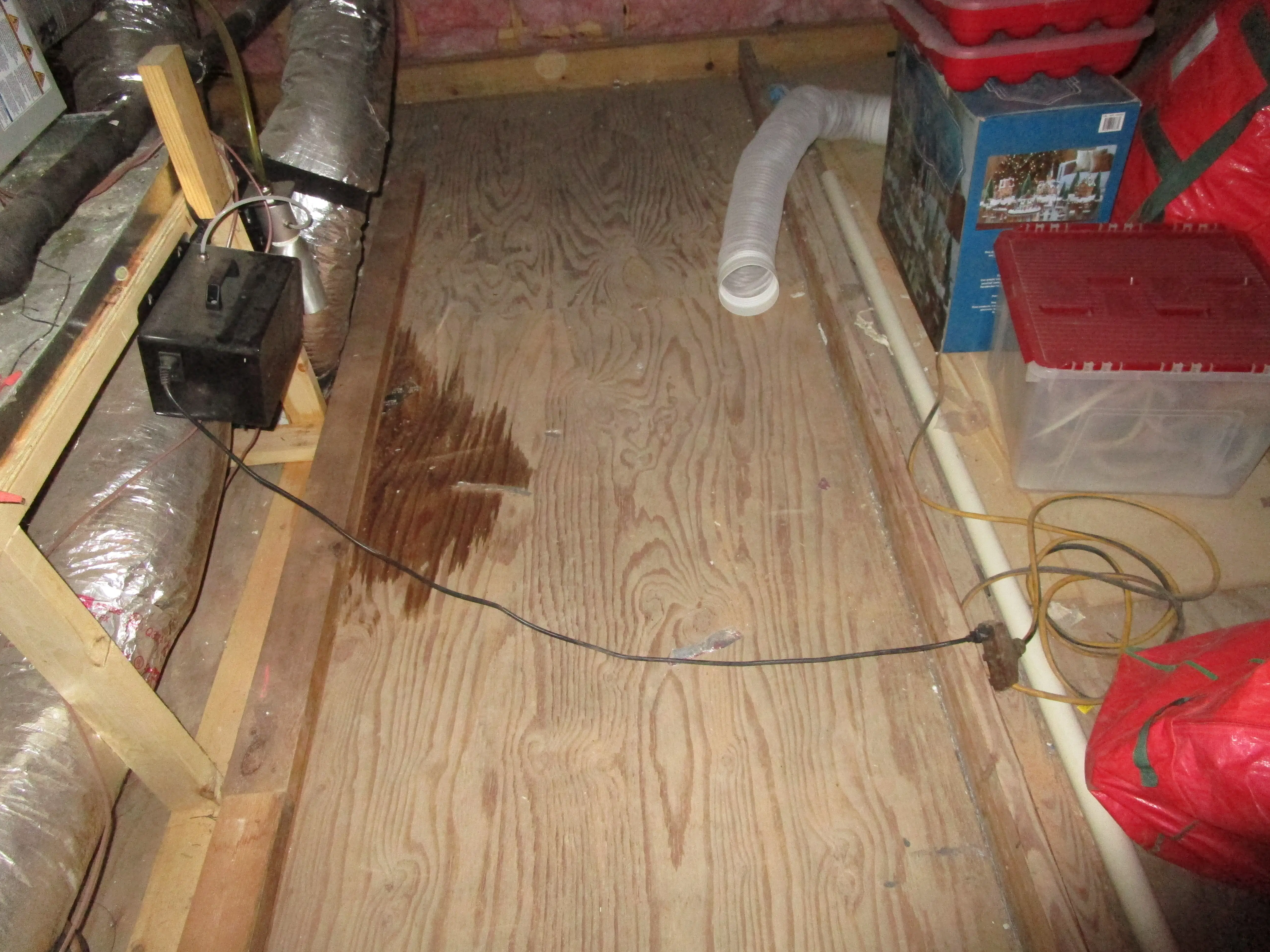
Evidence of water staining on an attic subfloor, indicating a drainage or condensation issue that needs repair.

Plumbing and Moisture Issues

Water is the greatest enemy of your home. We often find:

  • Slow Leaks: Small drips under sinks or behind toilets that haven't caused a visible flood yet but are rotting the cabinetry or subfloor.
  • Improper Drainage: If the soil outside hasn't been graded correctly, water will pool against your foundation. Over time, this can lead to catastrophic foundation failure.
  • Shower and Tub Grout: If the grout or caulk in your primary bath is failing, water can seep behind the tiles, leading to hidden mold growth.

The Financial Logic: Why This is an Investment, Not an Expense

When you look at the cost of a professional inspection, compare it to the cost of the systems being inspected.

  • A new HVAC coil or compressor: $2,000–$4,000+
  • Roof leak repairs and interior ceiling painting: $1,500+
  • Foundation stabilization: $10,000–$20,000+

By spending a few hundred dollars on an 11-month warranty inspection, you are effectively buying an insurance policy against these costs. If we find even one significant ductwork issue or a roof flashing error, the inspection has already paid for itself. You can read more about the difference between warranties and guarantees to understand how these protections work.

The Veteran Home Inspections Difference

We understand that you have choices when it comes to home inspectors in the San Antonio area. However, not all inspections are created equal. At Veteran Home Inspections, we bring a level of discipline and technical expertise that is unmatched.

Certified Master Inspectors: We hold the highest designation in the industry. We know exactly where builders tend to cut corners and where common failures occur in Texas Hill Country homes.

Detailed Reports Within 24 Hours: We know you are on a deadline with your builder. Our reports are digital, easy to read, and delivered fast so you can get them into the builder’s hands immediately.

Professional Equipment: We use advanced tools, including thermal imaging cameras and moisture meters, to see what the naked eye cannot. This allows us to find "invisible" problems like missing insulation or hidden leaks behind walls.

A close-up of a structural crack in brick masonry, a common issue found during warranty inspections.

Don't Wait Until Month 12

The most common mistake homeowners make is waiting until the last possible minute. If you contact your builder on day 364, you are giving them the upper hand. By scheduling your inspection during month 10 or 11, you have time to review our report, ask questions, and present a formal list of repairs to the builder with time to spare.

If you are currently living in a new build in San Antonio, Boerne, Bandera, or Kerrville, check your closing documents. If you are approaching that one-year mark, it’s time to act. Don't assume the house is perfect just because it's new. Even if we find only minor issues, the peace of mind knowing your home is structurally sound is worth the investment.

We are here to help you protect your investment. Let the inspectors at Veteran Home Inspections provide you with the professional documentation you need to ensure your home remains the sanctuary you bought it to be.

Ready to hold your builder accountable? Call Veteran Home Inspections today at 210-202-1974 to schedule your 11-Month Warranty Inspection. Let’s get it right before the clock runs out.

Certified Master Inspector Badge