Showing posts with label phase inspection. Show all posts

Saturday, August 15, 2026

Why You Can't Afford to Skip a Pre-Drywall Inspection on Your Texas New Build


New construction framing and rough-ins in a Texas home

Purchasing a brand-new home in the Texas Hill Country: whether in bustling San Antonio, charming Boerne, or the scenic expanses of Kerrville: is an exciting milestone. You envision sunlit mornings, pristine walls, and the peace of mind that comes with a builder’s warranty. However, between the initial framing and the final walkthrough lies a hidden phase that dictates the long-term safety, efficiency, and structural integrity of your investment: the pre-drywall stage.

Once the drywall goes up, the skeletal framework of your property is sealed away from plain sight. Electrical wiring, plumbing lines, structural framing, and window flashing become completely inaccessible without major demolition. Skipping a professional pre-drywall inspection means gambling on hidden workmanship behind your walls. At Veteran Home Inspections, we help home buyers uncover critical defects before they are permanently hidden from view.

Understanding the Pre-Drywall Inspection Window

Timing is everything in new construction. A pre-drywall inspection: sometimes called a frame-stage or structural phase inspection: must occur precisely when the home is "dried-in." This means the roof, exterior doors, and windows are fully installed, protecting the interior from weather elements, while framing, rough electrical, rough plumbing, and HVAC ductwork are completely in place. Crucially, no insulation or drywall has been installed yet.

During this brief window, independent inspectors can examine every stud, pipe, wire, and connection. City or municipal code inspectors will eventually visit the site, but their municipal checklists are often rushed, focusing strictly on minimum code compliance rather than meticulous craftsmanship. An independent evaluation by Veteran Home Inspections provides a comprehensive, objective assessment designed to protect your interests, not the builder's timeline.

What a Comprehensive Pre-Drywall Inspection Covers

A thorough pre-drywall inspection examines several vital building components that form the backbone of your new property.

1. Framing and Structural Integrity

Your home's framing supports every load, wind gust, and structural shift. We meticulously evaluate:

  • Stud Placement and Straightness: Checking that wall studs are plumb, straight, spaced correctly (typically 16 or 24 inches on center), and free from severe bowing or twisting.
  • Headers and Load-Bearing Walls: Ensuring that headers above windows and doors are properly sized per engineered plans and that load-bearing walls transfer weight securely to the foundation.
  • Trusses and Bracing: Inspecting roof trusses and floor joists for proper hangers, clips, and absence of damage or unauthorized field cuts or notches.

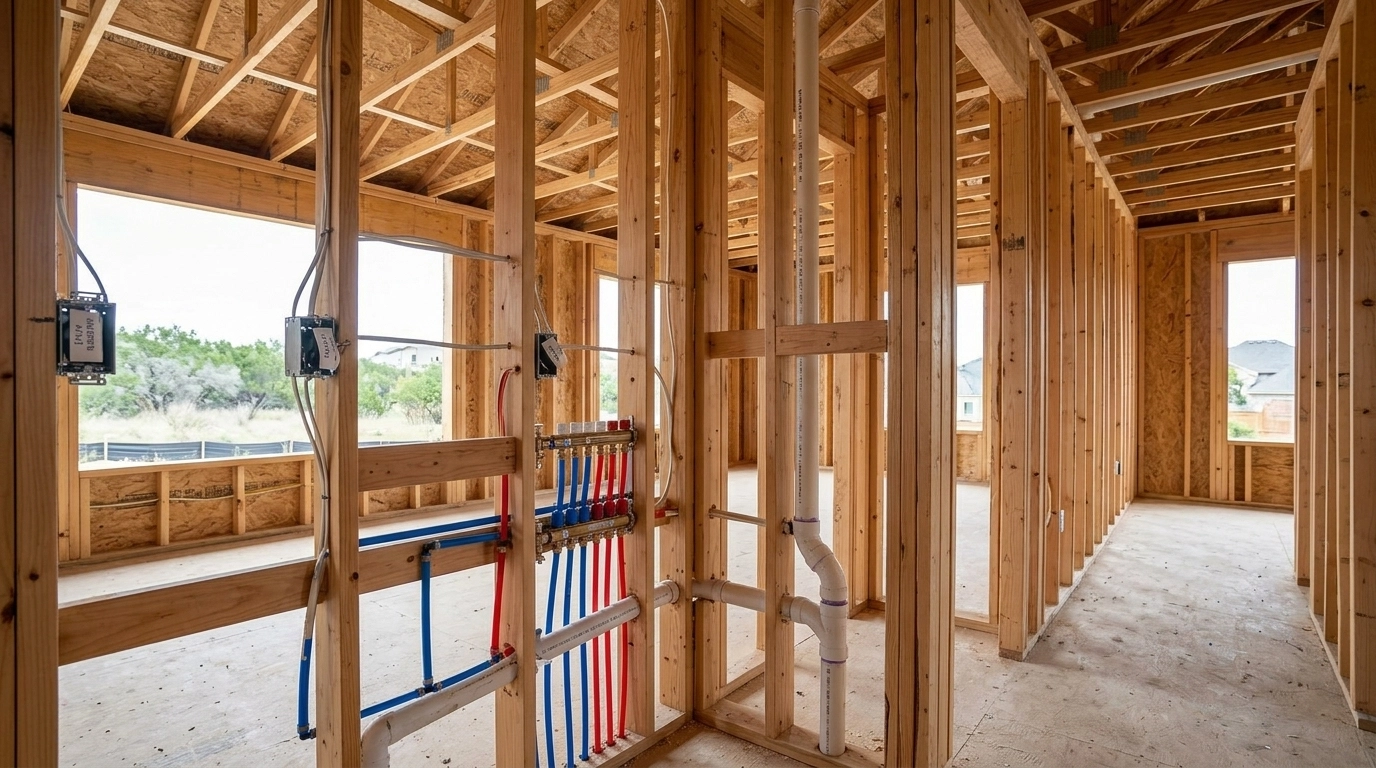
Detailed view of rough-in plumbing and electrical wiring in a new build

2. Rough-In Plumbing Systems

Plumbing leaks behind finished walls can cause catastrophic mold and structural rot before they ever manifest on the surface. Our inspectors check:

  • Supply Line Routing and Insulation: Verifying that your plumbing supply lines are properly routed and insulation is installed where required.
  • Drain, Waste, and Vent (DWV) Slopes: Ensuring drain lines maintain the correct downward slope toward the main sewer line to prevent backups.
  • Protection Plates: Confirming that steel nail plates are installed wherever pipes pass through wood framing close to drywall surfaces, preventing accidental punctures from future nails or screws.

3. Rough-In Electrical Wiring

Electrical safety is non-negotiable in modern residential construction. Our evaluation reviews:

  • Cable Routing and Security: Making sure non-metallic (NM) cables are neatly secured, stapled at proper intervals, and protected from physical damage.
  • Box Placement: Verifying that electrical boxes for switches and outlets are wired with correctly sized cable and meet accessibility and spacing requirements.
  • Life-Safety Rough-Ins: Checking the placement of rough-ins for smoke detectors, carbon monoxide alarms, and dedicated appliance circuits.

4. Window Flashing and Weather Protection

Texas weather brings intense sun, heavy downpours, and rapid temperature swings. Water intrusion is one of the leading causes of premature building decay. We inspect exterior wall sheathing, housewrap installation, and crucial window flashing details to ensure moisture is safely shed away from the building envelope.

Exterior window flashing and wall sheathing installation in Texas

Why Municipal Code Inspections Are Not Enough

Many buyers assume that because municipal building inspectors sign off on the property, everything must be flawless. While municipal inspectors serve an important role, their workflows face significant constraints. They oversee hundreds of active builds across San Antonio, Boerne, or Kerrville, leading to brief, high-level visits that can miss subtle workmanship flaws, misaligned framing members, or minor code deviations. Most importantly, the municipal building inspectors only inspect work within the city limits. If you are outside of those limits, the city will never inspect your new home.

An independent inspection performed by our Certified Master Inspector team focuses exclusively on your property. We spend hours examining the intricate details that municipal officials simply do not have the time to evaluate. By identifying discrepancies early, you give your builder the opportunity to correct errors while walls are still open, saving you immense frustration and expensive remediation down the road.

The Long-Term Value of Catching Defects Early

Addressing construction errors during the pre-drywall phase is exponentially easier and cheaper than dealing with them after closing. Imagine discovering a misrouted plumbing vent, a pinched electrical wire, or compromised structural framing six months after moving in. Repairing those issues requires tearing out custom drywall, painting, matching textures, and disrupting your daily life.
Attic and framing area inspection during a new construction review

By investing in a pre-drywall inspection, you establish a factual baseline of your home’s construction. You gain peace of mind knowing that your investment meets rigorous quality standards, and you empower yourself with detailed photo documentation that proves invaluable for future renovations or warranty claims.

Secure Your New Build Today

Your new construction home in the Texas Hill Country represents one of the largest financial investments you will ever make. Do not leave its hidden framework to chance. Partner with a veteran-owned team dedicated to precision, transparency, and uncompromising quality.

Whether you are building in San Antonio, Boerne, or Kerrville, let Veteran Home Inspections provide the expert oversight you deserve. Contact us today at 210-202-1974 or visit our contact page to schedule your pre-drywall inspection before the walls close in. Explore our new construction inspection services to learn more about how we safeguard your new home build.

Sunday, August 9, 2026

What a $400 Home Inspection San Antonio Can Save You

 Professional home inspector conducting a foundation and structural check

When you are navigating the exciting process of purchasing a home in San Antonio or the picturesque Texas Hill Country, every dollar counts. Between down payments, closing costs, and moving expenses, it is tempting to look for areas where you can trim your upfront expenses. However, viewing a professional home inspection as an optional expense or a mere checklist item for mortgage underwriting is a costly gamble.

When you invest approximately $400 in a comprehensive standard home inspection from Veteran Home Inspections, you are not just paying for a walk-through. You are purchasing financial protection, risk mitigation, and definitive leverage. By identifying hidden structural defects, moisture intrusion, and latent electrical hazards before you sign on the dotted line, a thorough evaluation can save you from catastrophic repair bills that easily reach five figures: such as a $40,000 foundation overhaul.


The True Cost Equation: A Modest Investment Versus Five-Figure Liabilities

Real estate transactions in Central and South Texas present unique regional challenges. Expansive clay soils, intense seasonal heat, heavy downpours, and subterranean pests create an environment where structural and mechanical components work under immense stress.

When buyers skip an inspection or hire the cheapest unqualified evaluator available to save $150, they often inherit unrecorded liabilities. The financial comparison is stark:

  • Standard Home Inspection: Typically ranges between $400 and $800 for an average-sized residential property.
  • Major Structural or System Failures: Foundation stabilization, complete roof replacements, extensive mold remediation, and rewiring can quickly escalate from $5,000 to over $40,000.

By identifying minor distress signals early, the inspectors at Veteran Home Inspections empower you to negotiate repairs with the seller, request financial concessions, or walk away from a money pit entirely.


1. Foundation Movement and Structural Compromise

San Antonio and Hill Country soils are notorious for their high shrink-swell capacity. During periods of drought, clay soils shrink and pull away from foundations; during heavy rains, they swell and exert tremendous upward pressure. This cyclic movement frequently leads to structural cracking, sticking doors, and sloping floors.

Professional home inspector using a digital moisture meter

The Hidden Danger

Minor hairline cracks in brick veneer or drywall might seem cosmetic at first glance. However, trained inspectors know how to distinguish normal settling from active, progressive foundation failure. If left unaddressed, differential movement compromises the entire structural envelope of the house.

The Financial Impact

  • Inspection Detection: A standard home inspection identifies early warning signs of foundation stress, allowing for an engineer's evaluation while the issue is still manageable.
  • Unchecked Repair Cost: Major pier and beam or slab stabilization, coupled with structural framing repairs and cosmetic drywall restoration, can easily total $15,000 to $40,000+. Spending $400 today prevents a devastating financial surprise tomorrow.

2. Concealed Moisture, Roof Leaks, and Mold Hazards

Texas weather brings torrential thunderstorms and high humidity levels, particularly during transition seasons. Water is a home's greatest enemy, and it rarely announces its presence openly. Instead, it travels silently behind walls, under subfloors, and into attic assemblies.

The Hidden Danger

Compromised flashing around roof penetrations, failing plumbing supply lines, and inadequate attic ventilation create perfect microclimates for mold growth and wood rot. Without specialized tools and systematic probing, these defects remain completely invisible during a casual walkthrough.

Professional home inspector examining roof trusses and insulation

The Financial Impact

  • Inspection Detection: Utilizing advanced diagnostic tools and visual examination, our inspectors trace moisture pathways to their source, stopping leaks before mold colonies establish themselves. You can learn more about our specialized evaluation methods on our Thermal Imaging Inspections page.
  • Unchecked Repair Cost: Comprehensive mold remediation, structural wood replacement, roof deck repair, and interior drywall restoration regularly exceed $8,000 to $15,000. Early detection preserves both your financial health and your indoor air quality.

3. Outdated or Defective Electrical Systems

Electrical safety is non-negotiable. Many charming older homes throughout San Antonio, Boerne, and Kerrville feature legacy wiring methods, overloaded breaker panels, or improper DIY modifications that violate modern electrical codes.

The Hidden Danger

Outdated aluminum wiring, ungrounded outlets, double-tapped breakers, and deteriorating service entrance cables create severe fire hazards and electrocution risks. These conditions often pass standard visual tests by untrained occupants but are immediately flagged by certified professionals.

Professional home inspector checking an electrical breaker panel

The Financial Impact

  • Inspection Detection: A rigorous inspection evaluates panel integrity, grounding systems, and branch circuit functionality to ensure compliance and safety.
  • Unchecked Repair Cost: Rewiring an entire residential property or replacing a damaged main electrical service panel can easily cost $5,000 to $12,000+, not including repairing the drywall cutouts required during the rewiring process.

4. Wood-Destroying Insect (Termite) Infestations

Subterranean termites are active year-round in Texas. These silent destroyers feed on cellulose materials from the ground up, eating away at structural framing, baseboards, and subflooring without leaving visible exterior damage until the structural integrity is severely compromised.

The Hidden Danger

Shed wings, mud tubes along foundation walls, and hollow-sounding wood are subtle indicators that require expert interpretation. If you buy a home without a dedicated termite inspection, you risk inheriting an active infestation.

The Financial Impact

  • Inspection Detection: Combining your standard home inspection with a professional Wood Destroying Insect (WDI) inspection ensures complete coverage of vulnerable wooden elements. Explore our Termite Inspections page for more details.
  • Unchecked Repair Cost: Treating an established termite infestation and replacing structural sill plates, floor joists, and studs can cost $3,000 to $10,000+.

Why Choose Veteran Home Inspections?

When you partner with Veteran Home Inspections, you are enlisting a team rooted in military precision, rigorous discipline, and uncompromising attention to detail. We understand that buying property in the Texas Hill Country is one of the most significant financial commitments you will ever make.

Our core advantages include:

  • Certified Master Inspector (CMI) Credentials: Delivering elite-level expertise across all residential and commercial building systems.
  • Detailed Reports Within 24 Hours: Providing clear, actionable digital reports complete with high-resolution photos so you can make informed decisions quickly.
  • Military Discounts: Honoring those who serve with special pricing on our comprehensive service suite.
  • Comprehensive Service Offerings: From standard evaluations to New Construction Inspections, Radon Testing, and Septic Inspections, we cover every square foot of your investment.

Secure Your Investment Today

Do not leave your financial future to chance. A modest investment in a professional inspection today provides absolute clarity, protects your hard-earned capital, and gives you the ultimate peace of mind as you step into your new home.

Ready to schedule your property evaluation? Visit our Request Inspection page or call Veteran Home Inspections directly at 210-202-1974 to speak with our expert inspection team.

Saturday, August 1, 2026

"Trust But Verify" : Why Even New Builds Need a Home Inspection in San Antonio


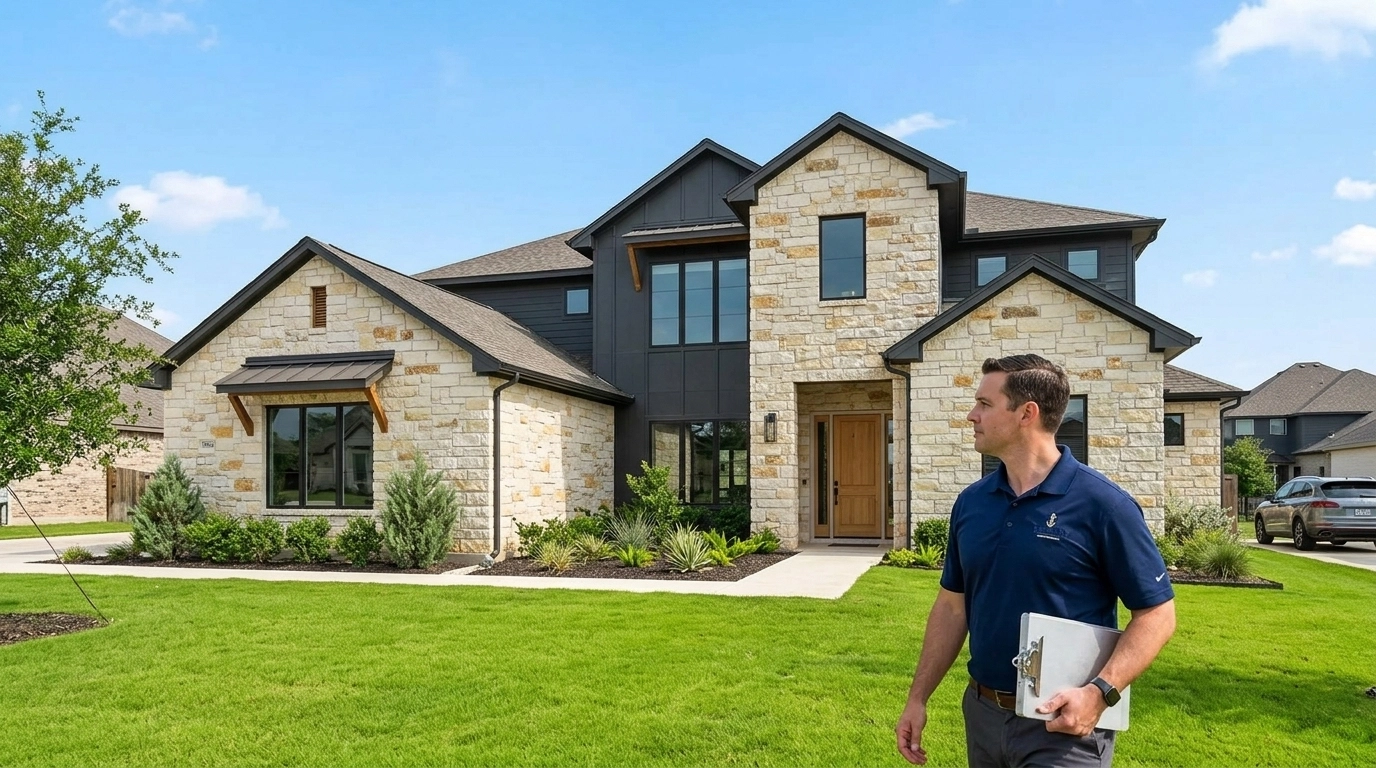
Professional home inspector examining the exterior of a newly constructed modern single-family home in Texas Hill Country

Walking through a brand-new home in San Antonio, Boerne, or across the Texas Hill Country can feel exhilarating. Pristine drywall, the scent of fresh paint, gleaming stainless steel appliances, and flawless landscaping create the illusion of perfection. It is easy to assume that because a house has never been lived in, everything operates exactly as engineered.

However, relying solely on city code enforcement or builder assurances is a costly gamble. At Veteran Home Inspections, our Certified Master Inspectors routinely uncover significant defects, safety hazards, and construction shortcuts in brand-new builds. When you invest your hard-earned capital into a new property, you need absolute certainty that your home is structurally sound and built to endure the rigorous Texas climate.


The Dangerous Myth of the "Flawless" New Build

Many homebuyers believe that municipal building inspectors act as their personal quality-assurance team. In reality, city inspectors operate under immense time constraints and focus primarily on minimum baseline code compliance at specific, isolated stages of construction: not comprehensive livability or long-term durability.

Furthermore, today’s booming real estate market across San Antonio and the surrounding Hill Country has accelerated construction timelines. When subcontractors rush to meet tight deadlines, oversight slips. Rushed workmanship, miscommunicated blueprints, and skipped quality checks lead directly to hidden defects that municipal inspectors never see.

By scheduling an independent inspection with the Certified Master Inspectors at Veteran Home Inspections, you gain an objective advocate who evaluates the property from top to bottom before you sign on the dotted line.


5 Major Issues We Frequently Find in New Construction Homes

Even the most reputable tract and custom builders make mistakes. Understanding what lurks behind those pristine walls highlights why an independent evaluation is indispensable.

1. Rushed Workmanship and Framing Defects

The framing forms the skeleton of your home. In the rush to enclose a structure, framing crews frequently miss vital structural hardware, such as joist hangers, straps, and appropriate nailing patterns. In some cases, engineered wood components like roof trusses are improperly altered or drilled to accommodate ductwork or plumbing lines, severely compromising load-bearing capacity. This is why a pre-drywall inspection is critical for your new construction home. All of the framing is visible, and we can find problems before they are covered with insulation and drywall.

2. Settling Cracks and Foundation Vulnerabilities

The expansive clay soils native to San Antonio and Boerne present a constant challenge for foundations. If grading is improperly executed or sub-base compaction is rushed during site preparation, severe foundation settling and movement occur much sooner than expected. This leads to sticking doors, cracked masonry, and compromised interior finishes within the first year of occupancy.

A professional home inspector inspecting attic insulation and HVAC ductwork installation in a new construction home

3. Improperly Installed HVAC Systems and Ductwork

Long, blistering Texas summers demand peak cooling efficiency. Unfortunately, independent inspections regularly reveal:

  • Disconnected or crushed flexible air ducts hidden in the attic.
  • Inadequate airflow balancing that leaves specific rooms uncomfortably warm.
  • Oversized or improperly wired condensing units that drive up monthly utility bills.

4. Plumbing Shortcuts and Drainage Failures

Plumbing leaks are notorious for remaining hidden until severe water damage occurs. In new construction, we frequently discover unsealed pipe joints, improper slope on drain lines, and compromised waterproofing around shower pans. Outside, poor surface grading often causes rainwater to pool directly against the foundation slab rather than draining away from the structure.

5. Attic Insulation Deficiencies

Insulation coverage in the attic is rarely uniform across newly built homes. Inspectors frequently identify patchy insulation, bare spots over living areas, and missing soffit ventilation baffles. In our climate, these gaps directly degrade energy efficiency and accelerate indoor humidity buildup.


The Certified Master Inspector Advantage

When you choose Veteran Home Inspections, you are partnering with elite professionals. Achieving the Certified Master Inspector (CMI) designation requires proven industry experience, rigorous ongoing education, and a strict adherence to professional ethics.

Gold-edged seal displaying Certified Master Inspector

We combine advanced diagnostic tools: such as thermal imaging cameras and moisture meters: with years of field expertise to detect invisible flaws. Whether it is verifying electrical panel bonding or inspecting sub-floor moisture levels in the attic, our meticulous approach ensures no detail is overlooked.


Why You Need a Multi-Phase Inspection Strategy

Protecting your investment requires more than a single walkthrough right before closing. We recommend a strategic, multi-phase inspection schedule for every new build:

  1. Pre-Drywall / Framing Inspection: Conducted after the framing, electrical, rough plumbing, and HVAC systems are installed, but before insulation and drywall go up. This is our only opportunity to examine the home's bare bones and catch structural or wiring defects before they are permanently sealed behind walls.
  2. Final Pre-Closing Inspection: A comprehensive evaluation performed right before you take ownership. We test every operational system, inspect the roof and exterior envelope, and compile a detailed punch list for your builder to correct before closing day.
  3. The 11-Month Warranty Inspection: Most builders provide a one-year structural and workmanship warranty. Before that warranty expires, we perform a thorough re-inspection. This catches settling cracks, drainage failures, plumbing weeping, and HVAC anomalies that only become apparent after you have experienced all four seasons in the home.

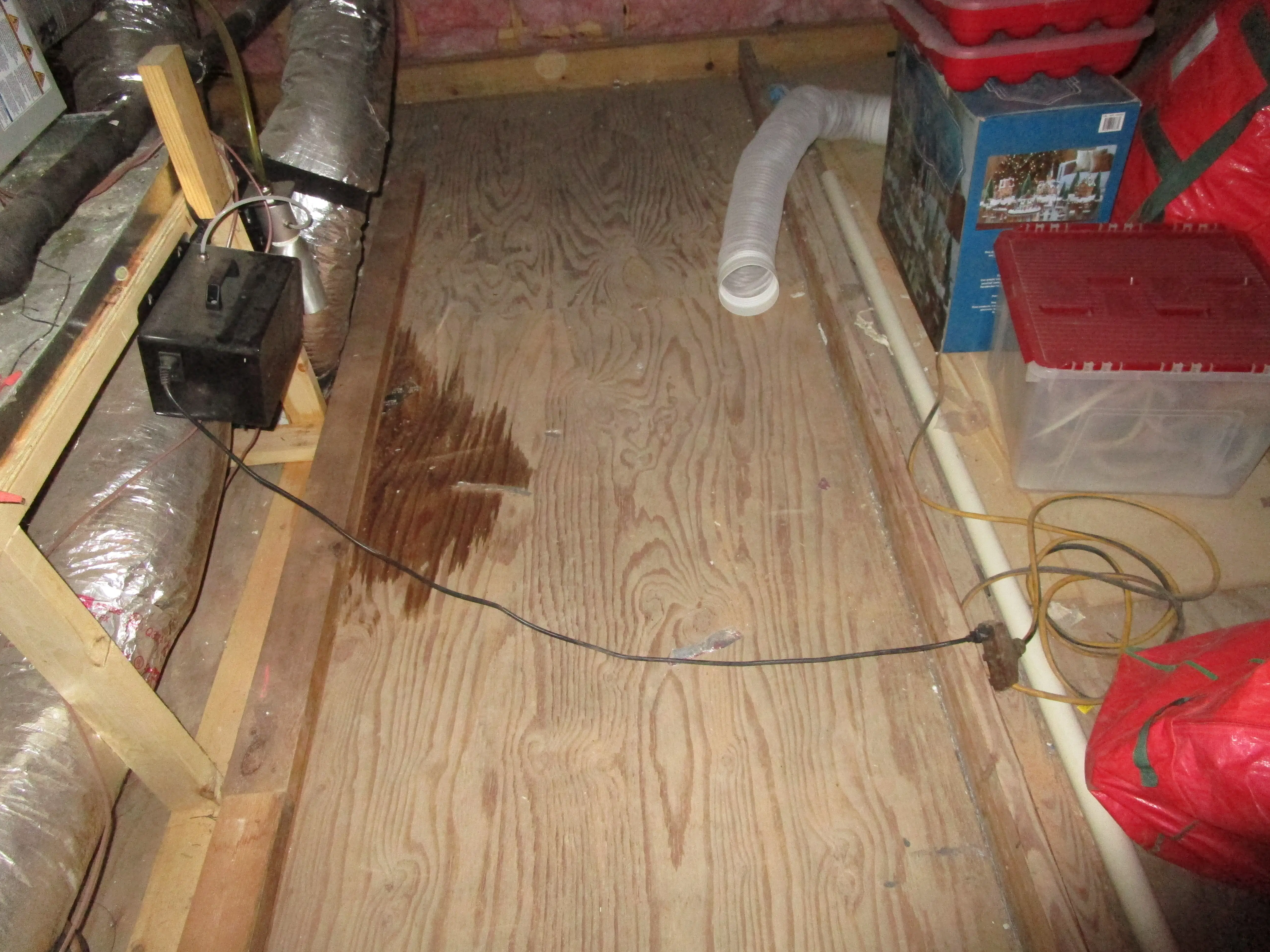
Attic mechanical area with signs of water staining on plywood subfloor


Safeguard Your Investment Today

Purchasing a new construction home is a major milestone. Do not let the fresh paint and polished finishes obscure potential structural, electrical, or mechanical failures. By investing in an independent evaluation, you protect your family's safety, secure leverage with your builder, and prevent expensive future repairs.

Take control of your home purchase today. Explore our comprehensive services or request your inspection online. For immediate assistance or to speak directly with our team serving San Antonio, Boerne, and the Hill Country, call us at 210-202-1974. Trust the experts at Veteran Home Inspections to give you the clarity and peace of mind you deserve.

Thursday, May 7, 2026

Boerne Home Inspector Tips: Why New Construction Inspections Aren't "Optional" (Tackling the myth that new builds are perfect)


Hero Image: A professional home inspector examining a new construction home in Boerne, Texas.

Let’s be honest: there is nothing quite like that "new house smell." It’s a mix of fresh paint, brand-new carpet, and the sweet scent of a massive financial commitment. When you’re walking through a gleaming new build in Boerne: maybe one of those beautiful modern farmhouses out near Esperanza or a custom job tucked into the Hill Country: it’s easy to assume everything is perfect. The walls are straight, the appliances are shiny, and surely, the builder did everything by the book, right?

We hate to be the ones to pop that bubble, but at Veteran Home Inspections, we’ve seen enough "perfect" new homes to know better.

In our years of experience: leveraging our extensive inspection experience, we’ve found that new construction is often where the most surprising issues hide. From rushed sub-contractors to the unique challenges of Boerne’s expansive clay soils, "new" does not mean "defect-free."

If you’re tempted to skip the inspection because the house is brand new, pull up a chair. We’re going to walk you through why a new construction inspection isn't just a good idea: it’s a non-negotiable step in protecting your investment.

The Myth of the "Perfect" New Build

There’s a common misconception that because a home has passed municipal building code inspections, it’s flawless. Here’s the reality: city inspectors are often overworked and under-resourced. They might spend fifteen minutes on a site, checking off the bare minimums of the international building code.

We, on the other hand, spend hours. We aren't just looking for "code-compliant"; we’re looking for "built right."

Because our team at Veteran Home Inspections is very experienced, we know exactly where the shortcuts are usually taken. We know that when a developer is trying to hit a deadline, the "small stuff": like properly sealed windows or attic insulation depth: is often the first thing to get sloppy.

1. The Boerne Soil Factor: Why Your Foundation Matters Now

Boerne is beautiful, but its dirt is dangerous. Depending on where you’re building, you’re either sitting on solid limestone or the notorious expansive clay common to the Texas Hill Country.

Expansive clay acts like a sponge. It swells when it rains and shrinks when it’s dry. This constant movement puts immense pressure on a concrete slab. We’ve seen brand-new homes where the grading was done incorrectly, leading to water pooling against the foundation. Over time, that water will cause the soil to heave, potentially cracking your foundation before you’ve even finished unpacking your boxes.

Foundation and grading of a new home showing the expansive clay soil of Boerne.

The Veteran Advantage: When we perform a Standard Home Inspection in Boerne, we pay special attention to the exterior grading. We ensure that water is being diverted away from the house effectively, protecting your foundation from the long-term structural failures that can cost upwards of $40,000 to repair.

2. Hidden "Gifts" Inside Your Walls

Once the drywall goes up, a lot of mistakes are buried. We’re talking about things like:

  • Missing Insulation: It’s incredibly common to find large voids in attic or wall insulation. In the Texas heat, that missing pink stuff means your AC is going to work overtime, and your electric bill will be through the roof (literally in this case).
  • Structural Shortcuts: A stud that was cut too short, a load-bearing wall that wasn't properly supported, or a roof truss that was damaged during delivery and "patched" with a few nails.
  • Electrical Hazards: Improperly grounded outlets or wires that were nicked by a drywall screw.

These aren't just "handyman" fixes; these are safety and efficiency issues that you don't want to discover three years from now when your builder’s warranty has expired.

3. The Thermal Camera Doesn't Lie

One of the most powerful tools in our arsenal is thermal imaging. We use high-end infrared cameras to look for hidden issues. In a new build, this is how we catch missing insulation or hidden plumbing leaks that haven't quite soaked through the drywall yet.

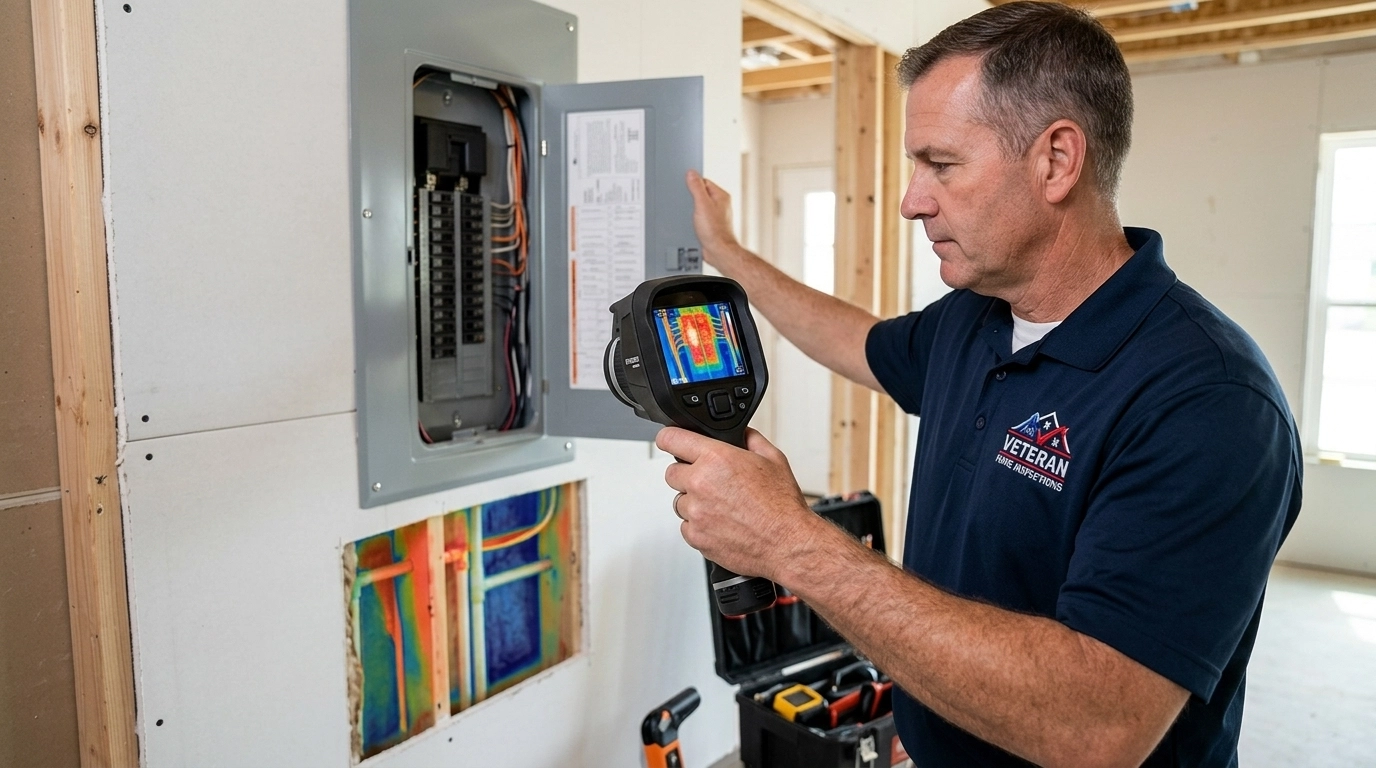
A thermal imaging camera being used to inspect a new home for hidden moisture and insulation gaps.

Many Boerne home inspectors won't tell you that a visual inspection alone isn't enough for a new build. Without Thermal Imaging Inspections, you’re essentially guessing at what’s happening behind the paint. We don't guess. We provide you with the data you need to hold your builder accountable.

The Three Phases of New Construction Inspection

To get the most out of your home inspection, we recommend a "Phase" approach. This allows us to catch issues at every step of the building process.

Phase 1: The Pre-Slab Inspection

This happens right before the concrete is poured. We check the plumbing lines, the vapor barrier, and the reinforcement steel (rebar). Once that concrete is poured, these components are hidden forever. Catching a plumbing leak now is easy; catching it later involves a jackhammer.

Phase 2: The Pre-Drywall (Framing) Inspection

This is the "skeletal" phase. We inspect the framing, the electrical rough-in, the plumbing, and the HVAC ducting before the walls are closed up. This is the absolute best time to ensure the structural integrity of the home.

An inspector examining the framing and wiring during a pre-drywall inspection.

Phase 3: The Final Inspection

This is the one most people think of. We test all appliances, check the roof, evaluate the HVAC system, and check the house as a system. Our goal is to provide you with a comprehensive "punch list" to give to your builder before you sign those final papers.

Why Choose Veteran Home Inspections?

We aren't just another checklist-style inspection company. We are a veteran-owned and operated business, and we bring that military discipline and attention to detail to every job site.

When you hire the inspectors at Veteran Home Inspections, you’re getting:

  • Certified Master Inspector (CMI) Credentials: We are in the top tier of inspectors nationally.
  • Extensive Inspection Expertise: We understand how homes are built, which helps us identify why they might be failing.
  • Fast Turnaround: You get a detailed, digital report within 24 hours: because we know real estate moves fast in Boerne.
  • A Professional Perspective: We speak the language of builders. When we find a defect, we explain exactly why it’s a problem and what the standard should be, giving you the leverage you need during negotiations.

The Bottom Line: Don't Inherit the Builder's Mistakes

Buying a home is likely the biggest investment you’ll ever make. Don't let the "newness" of the property blind you to the potential risks. A professional inspection is a tiny fraction of the cost of the home, but it can save you tens of thousands of dollars in future repairs and give you the peace of mind that your new Boerne home is as solid as it looks.

Ready to schedule your Boerne home inspection? Whether you’re at the pre-slab phase or ready for the final walk-through, we’ve got your back.

Contact Veteran Home Inspections today at (210) 202-1974 or request an inspection online. Let's make sure your "perfect" home is actually perfect.

Saturday, April 11, 2026

Phase Inspections 101: Catching New Build Mistakes Before They're Behind Drywall

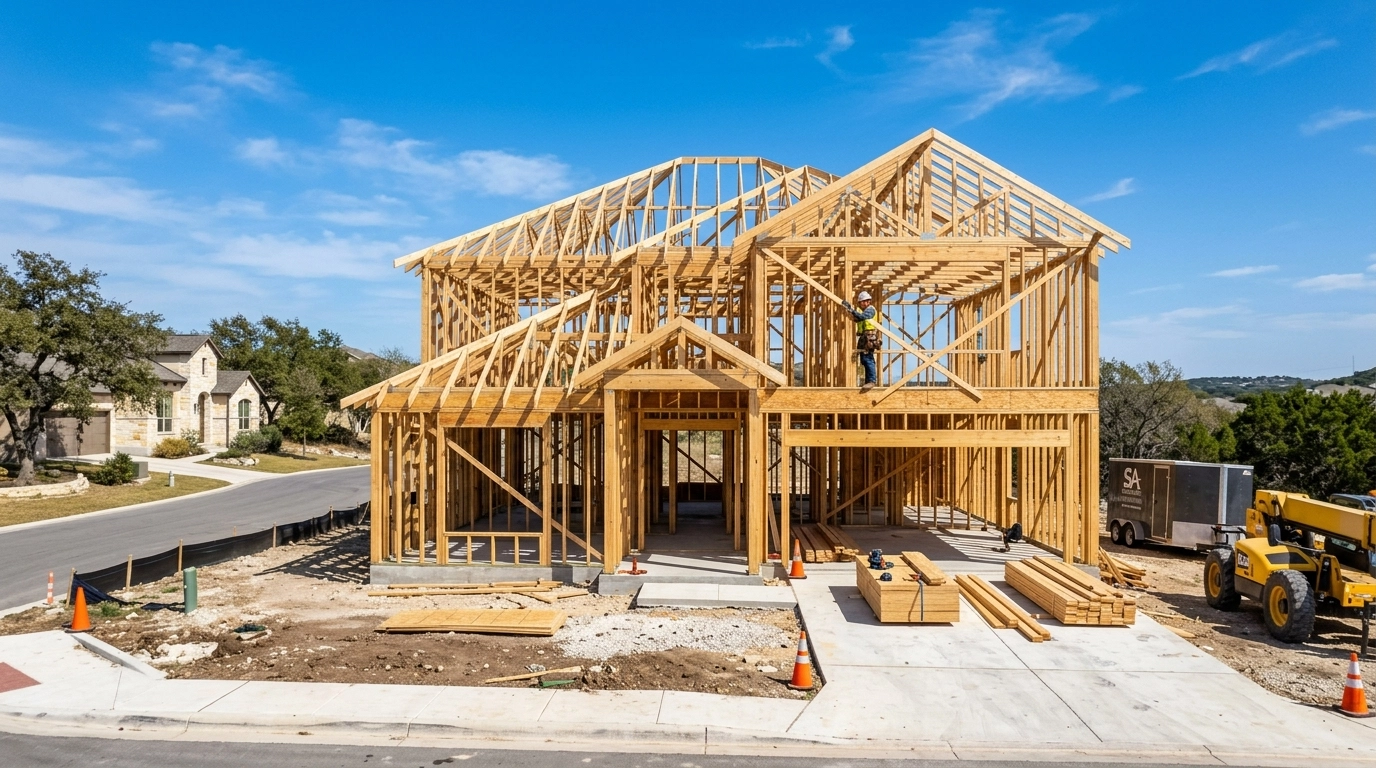
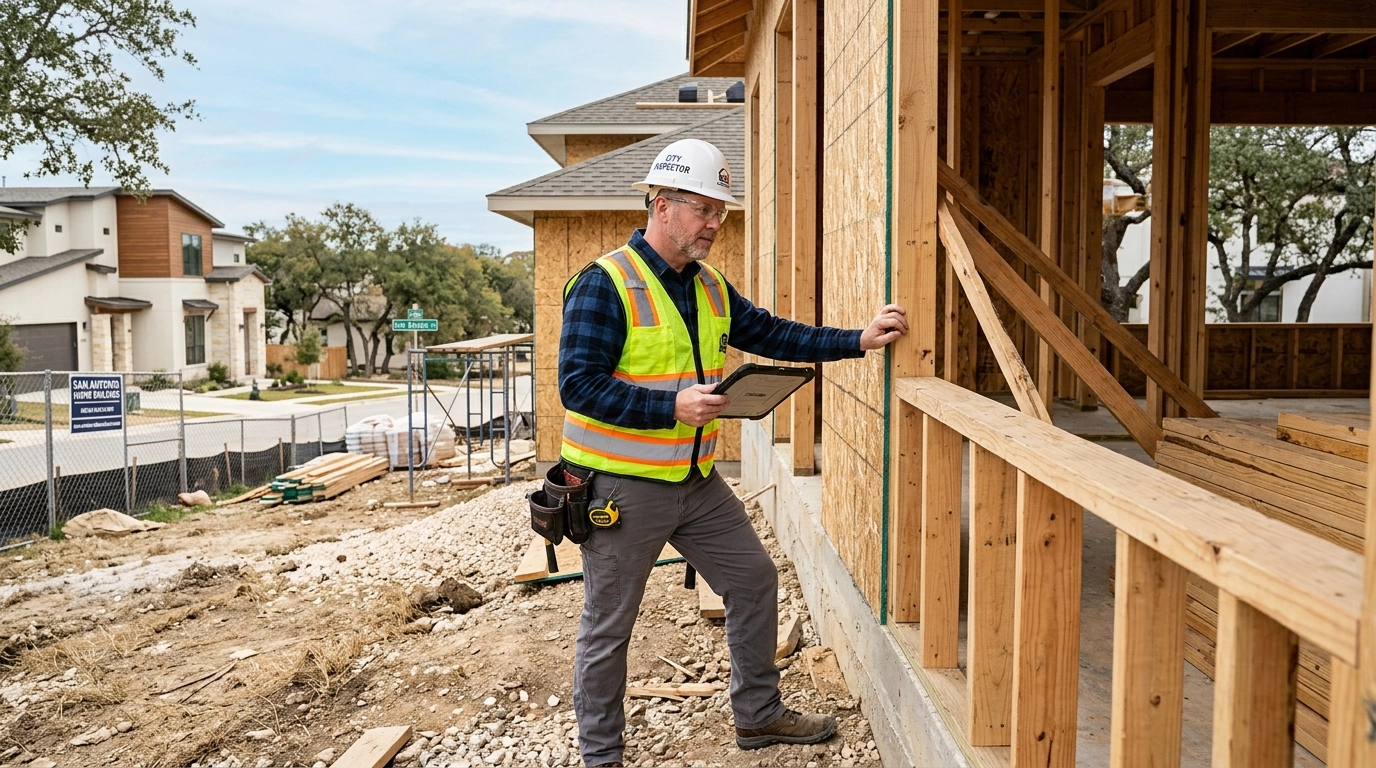
 A new construction residential house in San Antonio at the framing stage, showcasing the wooden skeleton under a bright Texas sky.

When you purchase a brand-new home in the San Antonio or Texas Hill Country area, you likely expect perfection. You assume that because the foundation is freshly poured and the studs are new, the structure is inherently sound. However, the reality of modern residential construction is often dictated by tight deadlines, revolving crews, and high-volume production. Even the most reputable builders can overlook critical details that eventually lead to catastrophic failures.

A phase inspection is your primary line of defense. By evaluating the home at specific intervals during construction, you gain the opportunity to identify and rectify structural, mechanical, and safety issues before they are permanently sealed behind layers of drywall and brick. At Veteran Home Inspections, we emphasize a proactive approach: catching a mistake today is significantly more affordable than excavating a foundation five years from now.

The Myth of the "Perfect" New Build

It is a common misconception that municipal building inspectors provide a comprehensive safety net. While city inspectors verify that a home meets minimum code requirements, their time on-site is often limited to a few minutes per property. They are looking for broad compliance, not the meticulous details that ensure long-term durability.

Hiring a Certified Master Inspector for a private phase inspection provides a deeper level of scrutiny. We act as your eyes and ears on the job site, ensuring that the quality of work matches the investment you are making. From the soil beneath your feet to the shingles on your roof, every component must work in harmony to protect your family and your finances.

Phase 1: Pre-Pour (Foundation) Inspection

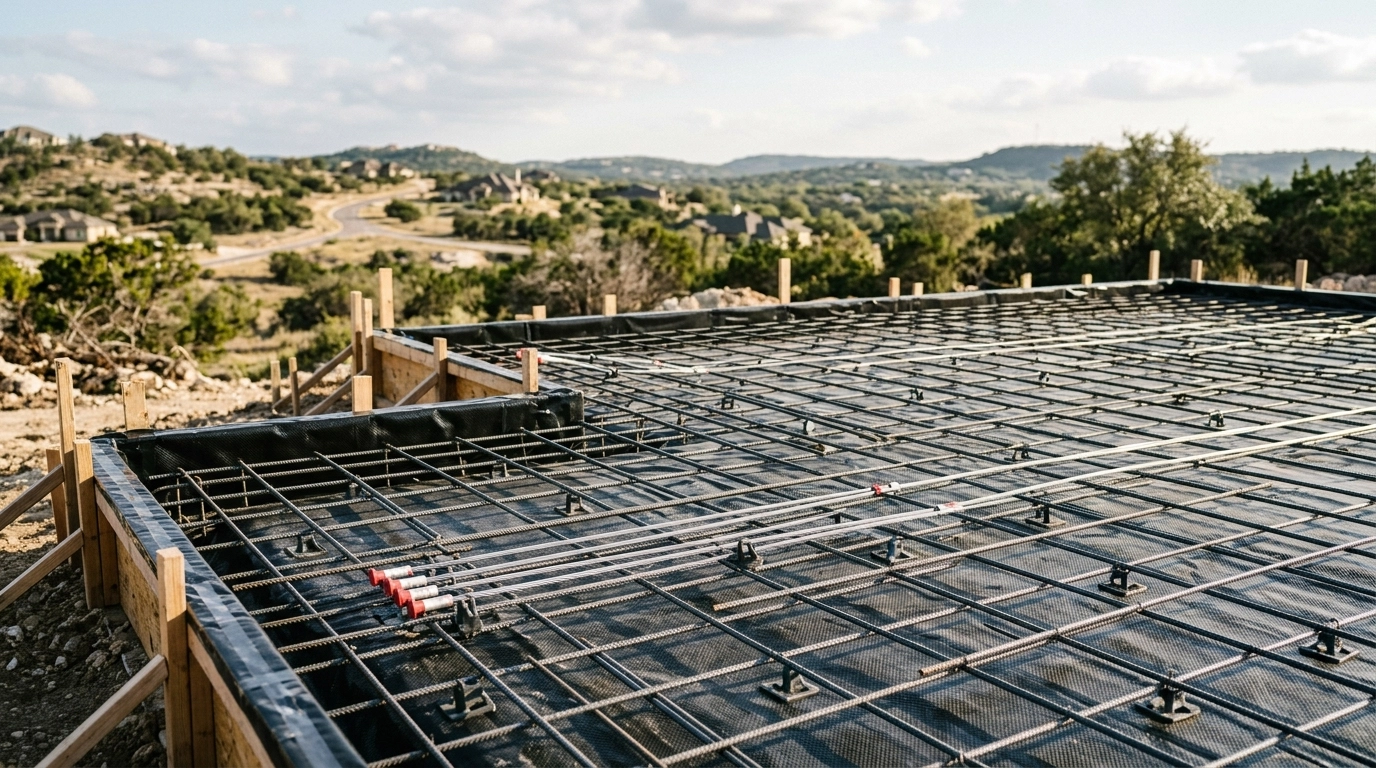
A detailed view of a home's foundation preparation, showing rebar and post-tension cables over a black vapor barrier before the concrete is poured.

The foundation is the most critical element of your home. In the San Antonio area, our expansive clay soils exert immense pressure on residential structures, making foundation integrity paramount. Once the concrete is poured, the opportunity to inspect the "bones" of your foundation is lost forever.

Why Pre-Pour Matters

A pre-pour inspection occurs after the forms are set and the reinforcement is in place but before the concrete trucks arrive. We verify the following:

  • Rebar and Post-Tension Cables: We ensure that the steel reinforcement is spaced correctly and supported by "chairs" to keep it at the proper depth within the slab.
  • Vapor Barrier Integrity: A high-quality vapor barrier prevents moisture from seeping up through the slab, which can cause flooring failures and mold issues later. We check for tears or improper overlaps.
  • Plumbing Penetrations: We confirm that plumbing lines are properly sleeved. Moving a drain line after the concrete has hardened involves jackhammers and structural risks.
  • Site Grading and Drainage: We evaluate the area around the slab to ensure water will flow away from the foundation, preventing the soil saturation that leads to shifting.

By identifying a misplaced pipe or a sagging cable at this stage, you prevent structural cracks and moisture intrusion that could cost tens of thousands of dollars to remediate in the future.

Phase 2: Framing and Pre-Drywall Inspection

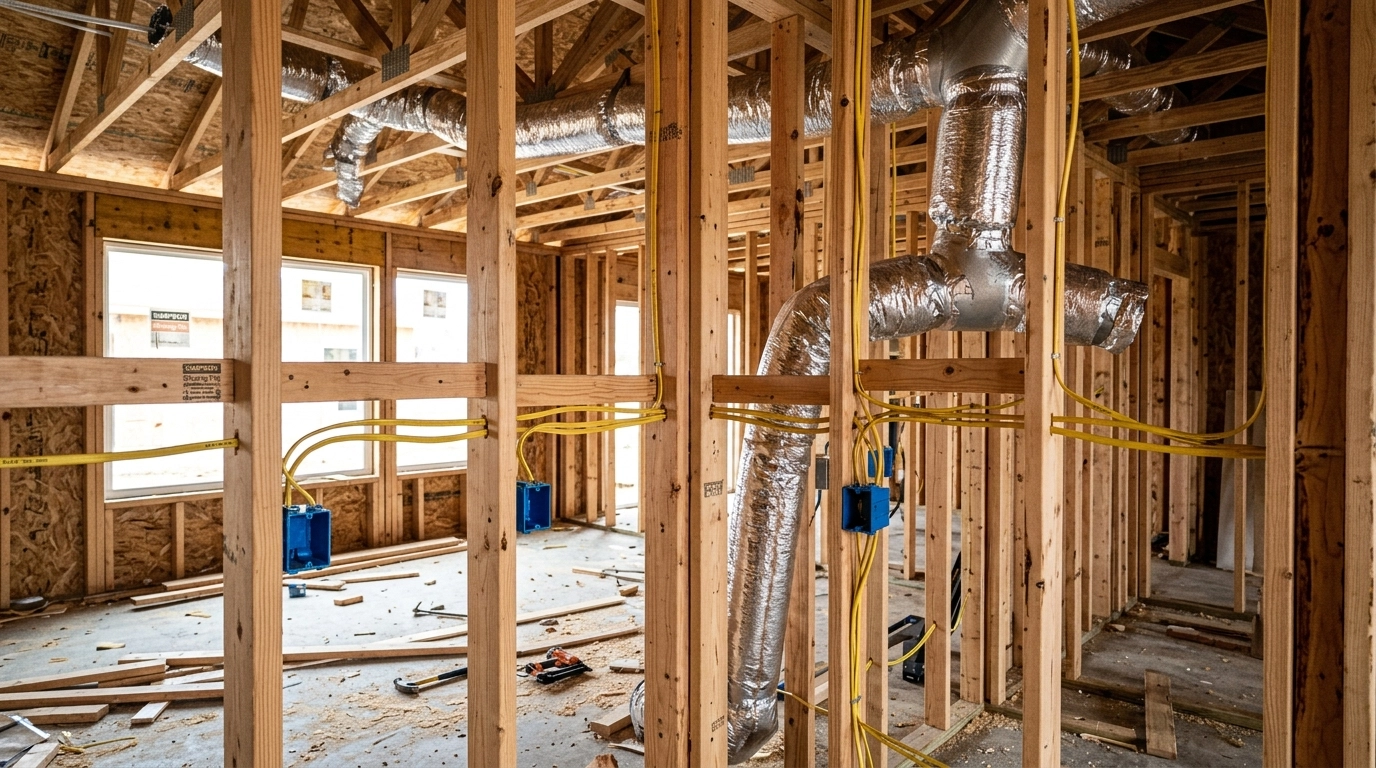
The interior of a San Antonio home during the framing stage, revealing the wooden studs, electrical wiring, and HVAC ductwork.

This is often considered the most informative phase of the inspection process. At this point, the "skeleton" of the home is complete, and the mechanical systems (plumbing, electrical, and HVAC) have been roughed in. However, the walls are still open, allowing us to see everything that will soon be hidden.

The "Hidden" Systems

During the pre-drywall inspection, we perform a comprehensive audit of the home’s vital systems:

  1. Structural Framing: We look for bowed studs, improper notched beams, and missing nail plates that protect wiring. We also verify that the roof trusses are installed according to the manufacturer's specifications and were not broken during installation.
  2. Electrical Routing: We ensure that wires are not pinched and that they are properly secured. Incomplete connections or damaged insulation can pose a significant fire hazard once the home is occupied.
  3. Plumbing and Gas Lines: We check for issues with the rough-in and ensure that pipes are properly insulated and sloped for drainage.
  4. HVAC Ductwork: We verify that ducts are sealed and supported to prevent energy loss. Efficient airflow is essential for maintaining comfort in the intense Texas heat.

Discovering a structural defect at this stage is a simple fix for a carpenter. Discovering it after the drywall is textured and painted involves a messy, expensive, and stressful demolition process.

Phase 3: Final Inspection and Blue Tape Walkthrough

A professional home inspector evaluating the exterior framing of a new build in San Antonio, demonstrating expertise and attention to detail.

The final phase occurs when the home is "move-in ready." This is your last chance to hold the builder accountable for the finished product. While many homeowners focus on cosmetic issues like paint chips or scratched floors (the "blue tape" items), our focus remains on safety, functionality, and performance.

Beyond the Surface

A Standard Home Inspection for a new build includes:

  • Appliance Testing: We run the dishwasher, oven, and microwave to ensure they are properly installed and functioning.
  • Electrical Outlet Verification: We test every outlet for proper grounding and GFCI protection.
  • Thermal Imaging: Using advanced thermal imaging technology, we can detect missing insulation in the walls or hot spots in the electrical panel that are invisible to the naked eye.
  • Attic Inspection: We verify that attic insulation is at the correct depth and that all ventilation systems are exhausting to the exterior, not into the attic space.

This phase provides you with the leverage needed to ensure the builder completes all necessary repairs before you sign the final closing documents.

The Financial Case for Phase Inspections

The cost of a phase inspection is a fraction of the total purchase price of a home, yet it provides the highest return on investment of any closing expense.

Consider the "Rule of 10s" in construction: a mistake that costs $10 to fix during the framing stage will cost $100 to fix after the drywall is up, and $1,000 to fix after you have moved in. By catching issues early, you are not just buying a home; you are protecting your long-term wealth. Furthermore, having a professional report from a veteran-owned business like Veteran Home Inspections gives you the documentation you need to demand repairs from the builder without the back-and-forth of "opinion vs. opinion."

Why San Antonio Homeowners Trust Veteran Home Inspections

Building a home is one of the most significant financial commitments you will ever make. You deserve a partner who understands the intricacies of the Texas building environment and who brings a disciplined, detail-oriented approach to the job site.

The inspectors at Veteran Home Inspections, leverages extensive continuing education and elite Certified Master Inspector credentials to provide insights that go beyond a simple checklist. We understand the specific challenges of the Texas Hill Country: from the limestone bedrock and clay soil, to the high humidity levels: and we ensure your home is built to withstand them.

Protect Your Investment Today

Do not wait until the drywall is up to wonder if your home was built correctly. Ensure your peace of mind and the safety of your family by scheduling your phase inspections as soon as you break ground.

Are you ready to secure your new home?
Request an Inspection Online or call us today to discuss your construction timeline. We proudly serve Boerne, San Antonio, Bandera, Kerrville, and the surrounding areas.

Veteran Home Inspections Certified Master Inspector Badge

Thursday, April 9, 2026

New Build, Old Problems: Why Your New Construction Home Needs an Inspection

 A professional home inspector approaching a newly built modern home in San Antonio, highlighting the need for expertise even in new construction.

You just signed the papers on a brand-new build in San Antonio. The paint is fresh, the appliances are shining, and that "new home smell" is in the air. It’s natural to assume that because no one has ever lived there, everything must be perfect. You might even think, "Why would I pay for an inspection? The city building inspector already signed off on it."

This is a common, and potentially very expensive, misconception.

At Veteran Home Inspections, we’ve seen it all. From luxury builds in Boerne to modern townhomes in downtown San Antonio, "new" does not equate to "flawless." In fact, new construction often presents a unique set of challenges that can remain hidden for years until they become catastrophic repairs. Whether it’s the haste of high-demand building schedules or the specific geological quirks of the Texas Hill Country, your new investment needs a professional eye before you take the keys.

The San Antonio Soil Factor: Why Foundations Fail Early

One of the most critical reasons to get a new construction inspection in San Antonio is right beneath your feet. Our region is famous for its expansive clay soil. This type of earth acts like a sponge; it expands significantly when wet and shrinks when dry.

A close-up of a new concrete foundation in San Antonio, showing the expansive clay soil that can cause structural shifting if not properly managed.

Even in a new build, if the foundation wasn't poured or cured correctly, or if the initial grading is off, you are looking at major structural issues within the first few years. An inspector looks for:

  • Improper Grading and Drainage: If the yard isn't sloped away from the house correctly, water will pool at the foundation, leading to soil expansion that can crack your slab.
  • Foundation Voids: Issues during the pour can leave gaps that weaken the structural integrity.
  • Premature Cracking: While some settling is normal, specific types of cracks in a brand-new slab are red flags for future movement.

By identifying these issues during our standard home inspections, you can force the builder to correct the drainage or reinforce the area before it compromises your home’s value.

The "Pre-Drywall" Advantage: Seeing Behind the Mask

Most buyers wait until the home is finished to call us. While a final inspection is vital, the real "gold mine" for finding defects is the Phase Inspection, specifically the pre-drywall phase.

Once the drywall is up, the skeleton of your home is hidden. You can no longer see the electrical wiring, the plumbing runs, or the structural framing.

The interior of a San Antonio home under construction, showing the framing, wiring, and plumbing before being covered by drywall.

During a pre-drywall inspection, we examine:

  1. Framing Errors: We often find bowed studs, missing fire blocking, or un-braced roof trusses. These are things that cause sagging floors or wavy walls later on.
  2. Plumbing and Mechanical: Are the PEX pipes protected from nail punctures? Is the ductwork kinked, which will lead to "hot rooms" and high energy bills in the Texas summer?
  3. Electrical Routing: We ensure wires aren't pinched or improperly grounded. Catching a wiring error now costs the builder almost nothing to fix; catching it after the walls are painted requires removing drywall.

Investing in a phase inspection provides you with a documented roadmap of your home’s "bones," ensuring that what you’re buying is as solid as it looks on the surface.

High-Tech Protection: Thermal Imaging and Modern Detection

Standard visual inspections are the baseline, but to truly protect your investment, we utilize advanced technology. New homes are built to be incredibly airtight for energy efficiency. However, if a window wasn't flashed correctly or a seal is missing in the attic, that airtightness can actually trap moisture, leading to mold.

A professional inspector using a thermal imaging camera to detect hidden moisture or electrical hotspots in a newly constructed property.

We use thermal imaging inspections to see what the naked eye cannot. This technology allows us to:

  • Identify Insulation Gaps: If a contractor missed a section of insulation in your wall, you’ll feel it every July. Thermal imaging reveals these "cold spots" (or hot spots) instantly.
  • Detect Moisture Intrusion: We can find leaks from brand-new windows or roof flashing before they ever cause a visible water stain.
  • Spot Electrical Overheating: We check the breaker panel for "hot" circuits that indicate loose connections or overloaded breakers: major fire hazards that can exist even in a home that’s zero days old.

Common "New Build" Blunders We Find Daily

It’s easy to assume that because a house is built to "code," it’s built to a high standard. In reality, "code" is the bare minimum legal requirement. Our goal as Certified Master Inspectors is to hold builders to a higher standard of quality.

Here are the most frequent issues we find in "perfect" new San Antonio homes:

  • Incomplete Roof Flashing: Builders often rush the roofing process. Missing flashing around chimneys or valleys is the #1 cause of leaks in homes under 5 years old.
  • Reversed Polarity in Outlets: It sounds minor, but improperly wired outlets can damage your expensive electronics and pose a shock hazard.
  • HVAC Sizing and Installation: We frequently find units that aren't installed correctly or ductwork that was never actually connected to the register, meaning you're cooling your attic instead of your bedroom.
  • Missing Attic Insulation: You’d be surprised how often a crew simply forgets to blow in the final layer of insulation in a corner of the attic.

Why Your Builder Might Discourage an Inspection

Some builders may tell you that a private inspection is "unnecessary" or that they have their own internal quality control. While many builders have great intentions, they are often managing dozens of subcontractors at once. Mistakes happen.

By bringing in an independent, veteran-owned firm like Veteran Home Inspections, you gain an advocate whose only interest is your safety and financial well-being. We provide a detailed, easy-to-read report within 24 hours that you can hand directly to your builder’s site supervisor as a "punch list" for repairs. It is much easier to get these repairs done before you close and the builder moves on to the next project.

Your Final Checklist: The 11th Month Inspection

If you already moved into your new construction home and skipped the initial inspection, don't panic. You usually have a one-year builder's warranty.

We highly recommend a "Warranty Inspection" (or 11th Month Inspection) before that year is up. This is your last chance to have the builder cover the cost of repairs for things like:

  • Foundation settling cracks.
  • Nail pops in the drywall.
  • Truss uplift in the attic.
  • Developing leaks in the septic system or plumbing.

Professional Guidance You Can Trust

Buying a home is likely the largest investment you will ever make. Don't let the "newness" blind you to potential risks. Whether you are in the middle of a build or are about to close, getting a professional evaluation is the only way to ensure your San Antonio home is a sanctuary, not a money pit.

Veteran Home Inspections is led by a Certified Master Inspector, ensuring the highest level of scrutiny for your new build.

Ready to ensure your new home is actually built to last? Request an inspection today and let a veteran-owned, master-certified team give you the peace of mind you deserve. If you have more questions about what we look for, check out our FAQ page for more insights.

Veteran Home Inspections: Professional, detailed, and dedicated to protecting your Texas home.

Thursday, March 1, 2018

Do I need an inspection for new construction homes?

In short, YES!
With the amount of new construction going on in this area, an inspection on new construction is critical.  First and foremost, outside of the major cities, there isn’t any code enforcement.  In other words, the city or county doesn’t inspect the builders work.  Some builders will hire their own inspectors to check up on their work, but this is really not sufficient.  I have seen these inspectors on site, and to be honest, I was not impressed.  They work for the builder, and therefore, are beholden to them.  Some have even outright lied and tried to tell buyers that the city inspected it, when they are outside city limits.
Most new construction contracts allow for 2-3 inspections throughout the building process.  The most common are pre-drywall and pre-closing (or final) inspection.  Some will also allow for slab inspections.  Make sure you get an inspector in at every opportunity, as we always find issues.  If you are presented with a contract that limits inspections to less than these, don’t sign it.  Also, beware of clauses that may restrict the inspector.  One large builder recently tried to prevent inspectors from things like inspecting the roof, opening the electric panel, and running appliances.  I think they were publicly shamed into changing their stance on that though (but if you get something like this, let me know).  Also, make sure you can pick your inspector.  Some will try to steer you to the blind inspector that never finds anything major.  We’ve had a couple builders try to blacklist us because we found too much, but thankfully (for our customers) they didn’t succeed.
So, what do we find on new construction?  Just over the last few months we’ve found issues with just about every major component.  Missing rebar in the foundation, damaged and improperly installed roofs, framing deficiencies, improper gas lines, electrical issues galore, heat registers that weren’t hooked up, plumbing leaks too numerous to count, missing insulation, and dangerous decks.
Another inspection that people are starting to get more frequently, is the 11-month warranty inspection.  Almost every new home comes with a 1-year warranty.  Make sure you get an inspection at the 11 month mark, so that we can not only find hidden issues that may have popped up, but we can also document that they were there before the warranty expired.
We know that you are spending a lot of money for your new home, and an inspection is just one more expense.  I can honestly say though, that we have never found less in needed repairs than our fee.  We do offer discounted packages for more than one inspection on a new construction house.
To schedule your new construction home inspection, call 210-202-1974 or visit www.vhillc.com to schedule online.