Showing posts with label home warranty. Show all posts

Saturday, August 1, 2026

"Trust But Verify" : Why Even New Builds Need a Home Inspection in San Antonio


Professional home inspector examining the exterior of a newly constructed modern single-family home in Texas Hill Country

Walking through a brand-new home in San Antonio, Boerne, or across the Texas Hill Country can feel exhilarating. Pristine drywall, the scent of fresh paint, gleaming stainless steel appliances, and flawless landscaping create the illusion of perfection. It is easy to assume that because a house has never been lived in, everything operates exactly as engineered.

However, relying solely on city code enforcement or builder assurances is a costly gamble. At Veteran Home Inspections, our Certified Master Inspectors routinely uncover significant defects, safety hazards, and construction shortcuts in brand-new builds. When you invest your hard-earned capital into a new property, you need absolute certainty that your home is structurally sound and built to endure the rigorous Texas climate.


The Dangerous Myth of the "Flawless" New Build

Many homebuyers believe that municipal building inspectors act as their personal quality-assurance team. In reality, city inspectors operate under immense time constraints and focus primarily on minimum baseline code compliance at specific, isolated stages of construction: not comprehensive livability or long-term durability.

Furthermore, today’s booming real estate market across San Antonio and the surrounding Hill Country has accelerated construction timelines. When subcontractors rush to meet tight deadlines, oversight slips. Rushed workmanship, miscommunicated blueprints, and skipped quality checks lead directly to hidden defects that municipal inspectors never see.

By scheduling an independent inspection with the Certified Master Inspectors at Veteran Home Inspections, you gain an objective advocate who evaluates the property from top to bottom before you sign on the dotted line.


5 Major Issues We Frequently Find in New Construction Homes

Even the most reputable tract and custom builders make mistakes. Understanding what lurks behind those pristine walls highlights why an independent evaluation is indispensable.

1. Rushed Workmanship and Framing Defects

The framing forms the skeleton of your home. In the rush to enclose a structure, framing crews frequently miss vital structural hardware, such as joist hangers, straps, and appropriate nailing patterns. In some cases, engineered wood components like roof trusses are improperly altered or drilled to accommodate ductwork or plumbing lines, severely compromising load-bearing capacity. This is why a pre-drywall inspection is critical for your new construction home. All of the framing is visible, and we can find problems before they are covered with insulation and drywall.

2. Settling Cracks and Foundation Vulnerabilities

The expansive clay soils native to San Antonio and Boerne present a constant challenge for foundations. If grading is improperly executed or sub-base compaction is rushed during site preparation, severe foundation settling and movement occur much sooner than expected. This leads to sticking doors, cracked masonry, and compromised interior finishes within the first year of occupancy.

A professional home inspector inspecting attic insulation and HVAC ductwork installation in a new construction home

3. Improperly Installed HVAC Systems and Ductwork

Long, blistering Texas summers demand peak cooling efficiency. Unfortunately, independent inspections regularly reveal:

  • Disconnected or crushed flexible air ducts hidden in the attic.
  • Inadequate airflow balancing that leaves specific rooms uncomfortably warm.
  • Oversized or improperly wired condensing units that drive up monthly utility bills.

4. Plumbing Shortcuts and Drainage Failures

Plumbing leaks are notorious for remaining hidden until severe water damage occurs. In new construction, we frequently discover unsealed pipe joints, improper slope on drain lines, and compromised waterproofing around shower pans. Outside, poor surface grading often causes rainwater to pool directly against the foundation slab rather than draining away from the structure.

5. Attic Insulation Deficiencies

Insulation coverage in the attic is rarely uniform across newly built homes. Inspectors frequently identify patchy insulation, bare spots over living areas, and missing soffit ventilation baffles. In our climate, these gaps directly degrade energy efficiency and accelerate indoor humidity buildup.


The Certified Master Inspector Advantage

When you choose Veteran Home Inspections, you are partnering with elite professionals. Achieving the Certified Master Inspector (CMI) designation requires proven industry experience, rigorous ongoing education, and a strict adherence to professional ethics.
Gold-edged seal displaying Certified Master Inspector

We combine advanced diagnostic tools: such as thermal imaging cameras and moisture meters: with years of field expertise to detect invisible flaws. Whether it is verifying electrical panel bonding or inspecting sub-floor moisture levels in the attic, our meticulous approach ensures no detail is overlooked.


Why You Need a Multi-Phase Inspection Strategy

Protecting your investment requires more than a single walkthrough right before closing. We recommend a strategic, multi-phase inspection schedule for every new build:

  1. Pre-Drywall / Framing Inspection: Conducted after the framing, electrical, rough plumbing, and HVAC systems are installed, but before insulation and drywall go up. This is our only opportunity to examine the home's bare bones and catch structural or wiring defects before they are permanently sealed behind walls.
  2. Final Pre-Closing Inspection: A comprehensive evaluation performed right before you take ownership. We test every operational system, inspect the roof and exterior envelope, and compile a detailed punch list for your builder to correct before closing day.
  3. The 11-Month Warranty Inspection: Most builders provide a one-year structural and workmanship warranty. Before that warranty expires, we perform a thorough re-inspection. This catches settling cracks, drainage failures, plumbing weeping, and HVAC anomalies that only become apparent after you have experienced all four seasons in the home.
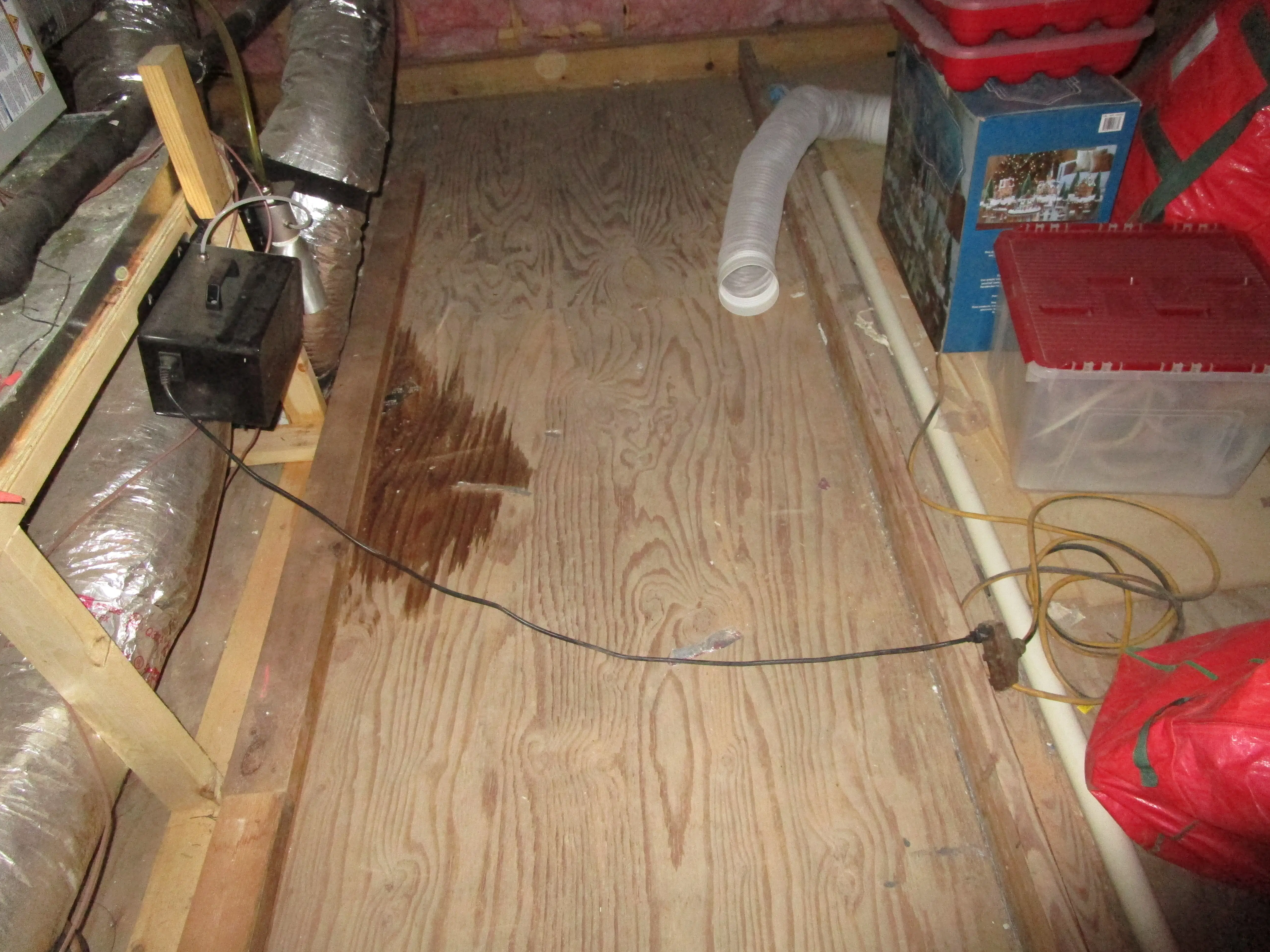
Attic mechanical area with signs of water staining on plywood subfloor


Safeguard Your Investment Today

Purchasing a new construction home is a major milestone. Do not let the fresh paint and polished finishes obscure potential structural, electrical, or mechanical failures. By investing in an independent evaluation, you protect your family's safety, secure leverage with your builder, and prevent expensive future repairs.

Take control of your home purchase today. Explore our comprehensive services or request your inspection online. For immediate assistance or to speak directly with our team serving San Antonio, Boerne, and the Hill Country, call us at 210-202-1974. Trust the experts at Veteran Home Inspections to give you the clarity and peace of mind you deserve.

Sunday, June 7, 2026

The 11-Month Warranty Inspection: Don't Let Your Builder Off the Hook


A modern new construction home in Boerne, Texas, featuring limestone walls and a metal roof under a clear blue sky.

You finally did it. You survived the dusty construction phase, the endless design center meetings, and the stress of the move. You’ve lived in your brand-new home in San Antonio or Boerne for nearly a year, and everything seems fine. You might notice a small crack in the drywall here or a door that sticks a bit there, but it’s a new house: it’s supposed to be perfect, right?

The reality is that your home is a living, breathing structure. Over the first twelve months, it has been subjected to the intense Texas sun, shifting expansive clay soils, and the natural "settling" that occurs as materials dry out and adjust to their environment. Most builders provide a one-year "workmanship" warranty that covers many of the defects that crop up during this period.

However, that warranty has an expiration date. If you don’t document and report these issues before the 365th day, the financial burden of fixing them shifts entirely to you. At Veteran Home Inspections, we call the 11-month mark "the magic window." This is your final opportunity to hold your builder accountable for the quality of their work.

What Exactly is an 11-Month Warranty Inspection?

An 11-month warranty inspection: often called a builder warranty inspection: is a comprehensive evaluation of your home’s systems and structure performed just before your one-year coverage expires. We treat this with the same level of technical rigor as a standard home inspection, but with a specific focus on identifying defects that have developed since you moved in.

Think of it as a final "no-cost" quality control pass. You pay for the inspection, but the builder pays for the repairs. In almost every case, the cost of the inspection is offset many times over by the repairs the builder is forced to complete.

Why the 11th Month Matters (Especially in the Texas Hill Country)

You might wonder why you shouldn't just wait until the very last week or why you didn't see these issues when you first moved in. The timing is strategic for several reasons:

1. The Seasonal Cycle

A house needs to experience a full cycle of Texas seasons before certain flaws reveal themselves. Our local climate features high-heat summers and unpredictable rain patterns. This causes the wood framing to expand and contract, and more importantly, it causes the expansive clay soil common in San Antonio and Boerne to shift. Issues that were invisible during your final walk-through: like improper drainage or foundation movement: often take several months to manifest.

2. HVAC Stress Testing

Our air conditioning systems work harder than almost anywhere else in the country. After ten or eleven months of operation, we can see how the system is actually performing. We often find disconnected ducts in the attic or improperly installed condensate lines that only start causing moisture issues after a full summer of heavy use.

3. Documentation is Your Power

Builders are businesses. While many are reputable, they are also looking at their bottom line. A casual email from a homeowner saying "my floor feels uneven" is often met with "that's within normal tolerances." However, a professional report from a Certified Master Inspector at Veteran Home Inspections, complete with high-resolution photos and technical descriptions, is much harder to dismiss. It provides you with the evidence you need to demand action.

A professional inspector using a thermal camera to check for energy leaks and moisture in a home's HVAC system.

Common "Hidden" Defects We Uncover

Even in high-end custom builds, we consistently find issues that the builder's own inspectors missed. New construction is often a symphony of different subcontractors working on tight deadlines; occasionally, things get skipped or done incorrectly.

Foundation and Structural Shifting

Texas soil is notorious for movement. We look for signs that the house is moving more than it should. This includes:

  • Sticking Doors and Windows: If a door that used to swing freely now drags on the carpet or won't latch, it’s a sign of framing or foundation shifting.
  • Drywall Cracks: While some "nail pops" are cosmetic, large vertical or diagonal cracks above door frames or at ceiling corners can indicate structural stress.
  • Exterior Masonry Cracks: We examine the brick and mortar. If we see "stair-step" cracks in the brickwork, it's a red flag that the foundation is settling unevenly.

The Attic and Roof

The attic is where some of the most expensive errors hide because homeowners rarely go up there. We check for:

  • Missing Insulation: It’s common for insulation to be disturbed by cable installers or plumbers after the initial inspection, leaving "bald spots" that cause your energy bills to spike.
  • Roofing Defects: We check for cracked shingles, improper flashing around chimneys, and vents that aren't properly sealed. Catching a small roof leak in month 11 prevents a massive mold problem in year three.
  • Ductwork Integrity: If a duct has come loose, you are essentially paying to air condition your attic. We use thermal imaging to find these invisible money-wasters.

Evidence of water staining on an attic subfloor, indicating a drainage or condensation issue that needs repair.

Plumbing and Moisture Issues

Water is the greatest enemy of your home. We often find:

  • Slow Leaks: Small drips under sinks or behind toilets that haven't caused a visible flood yet but are rotting the cabinetry or subfloor.
  • Improper Drainage: If the soil outside hasn't been graded correctly, water will pool against your foundation. Over time, this can lead to catastrophic foundation failure.
  • Shower and Tub Grout: If the grout or caulk in your primary bath is failing, water can seep behind the tiles, leading to hidden mold growth.

The Financial Logic: Why This is an Investment, Not an Expense

When you look at the cost of a professional inspection, compare it to the cost of the systems being inspected.

  • A new HVAC coil or compressor: $2,000–$4,000+
  • Roof leak repairs and interior ceiling painting: $1,500+
  • Foundation stabilization: $10,000–$20,000+

By spending a few hundred dollars on an 11-month warranty inspection, you are effectively buying an insurance policy against these costs. If we find even one significant ductwork issue or a roof flashing error, the inspection has already paid for itself. You can read more about the difference between warranties and guarantees to understand how these protections work.

The Veteran Home Inspections Difference

We understand that you have choices when it comes to home inspectors in the San Antonio area. However, not all inspections are created equal. At Veteran Home Inspections, we bring a level of discipline and technical expertise that is unmatched.

Certified Master Inspectors: We hold the highest designation in the industry. We know exactly where builders tend to cut corners and where common failures occur in Texas Hill Country homes.

Detailed Reports Within 24 Hours: We know you are on a deadline with your builder. Our reports are digital, easy to read, and delivered fast so you can get them into the builder’s hands immediately.

Professional Equipment: We use advanced tools, including thermal imaging cameras and moisture meters, to see what the naked eye cannot. This allows us to find "invisible" problems like missing insulation or hidden leaks behind walls.

A close-up of a structural crack in brick masonry, a common issue found during warranty inspections.

Don't Wait Until Month 12

The most common mistake homeowners make is waiting until the last possible minute. If you contact your builder on day 364, you are giving them the upper hand. By scheduling your inspection during month 10 or 11, you have time to review our report, ask questions, and present a formal list of repairs to the builder with time to spare.

If you are currently living in a new build in San Antonio, Boerne, Bandera, or Kerrville, check your closing documents. If you are approaching that one-year mark, it’s time to act. Don't assume the house is perfect just because it's new. Even if we find only minor issues, the peace of mind knowing your home is structurally sound is worth the investment.

We are here to help you protect your investment. Let the inspectors at Veteran Home Inspections provide you with the professional documentation you need to ensure your home remains the sanctuary you bought it to be.

Ready to hold your builder accountable? Call Veteran Home Inspections today at 210-202-1974 to schedule your 11-Month Warranty Inspection. Let’s get it right before the clock runs out.

Certified Master Inspector Badge

Saturday, April 11, 2026

Phase Inspections 101: Catching New Build Mistakes Before They're Behind Drywall

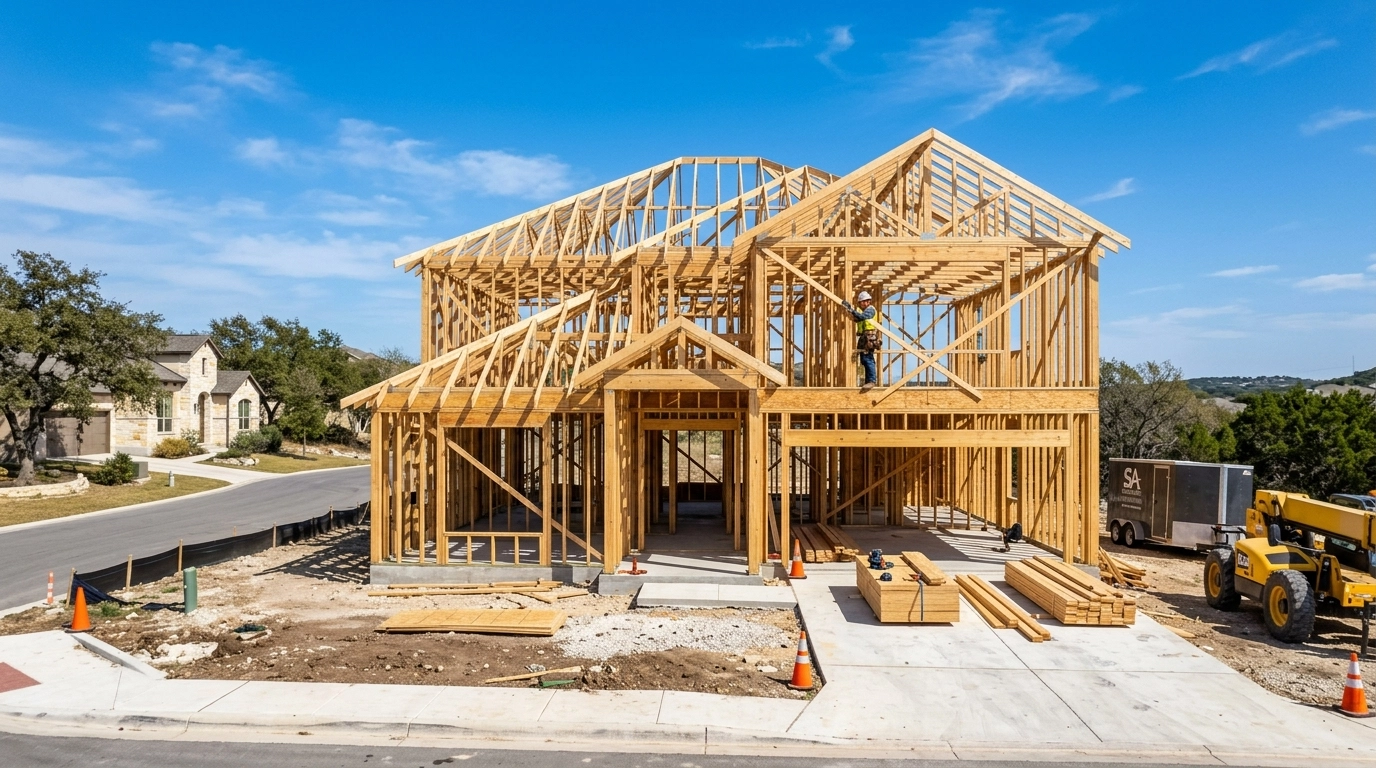
 A new construction residential house in San Antonio at the framing stage, showcasing the wooden skeleton under a bright Texas sky.

When you purchase a brand-new home in the San Antonio or Texas Hill Country area, you likely expect perfection. You assume that because the foundation is freshly poured and the studs are new, the structure is inherently sound. However, the reality of modern residential construction is often dictated by tight deadlines, revolving crews, and high-volume production. Even the most reputable builders can overlook critical details that eventually lead to catastrophic failures.

A phase inspection is your primary line of defense. By evaluating the home at specific intervals during construction, you gain the opportunity to identify and rectify structural, mechanical, and safety issues before they are permanently sealed behind layers of drywall and brick. At Veteran Home Inspections, we emphasize a proactive approach: catching a mistake today is significantly more affordable than excavating a foundation five years from now.

The Myth of the "Perfect" New Build

It is a common misconception that municipal building inspectors provide a comprehensive safety net. While city inspectors verify that a home meets minimum code requirements, their time on-site is often limited to a few minutes per property. They are looking for broad compliance, not the meticulous details that ensure long-term durability.

Hiring a Certified Master Inspector for a private phase inspection provides a deeper level of scrutiny. We act as your eyes and ears on the job site, ensuring that the quality of work matches the investment you are making. From the soil beneath your feet to the shingles on your roof, every component must work in harmony to protect your family and your finances.

Phase 1: Pre-Pour (Foundation) Inspection

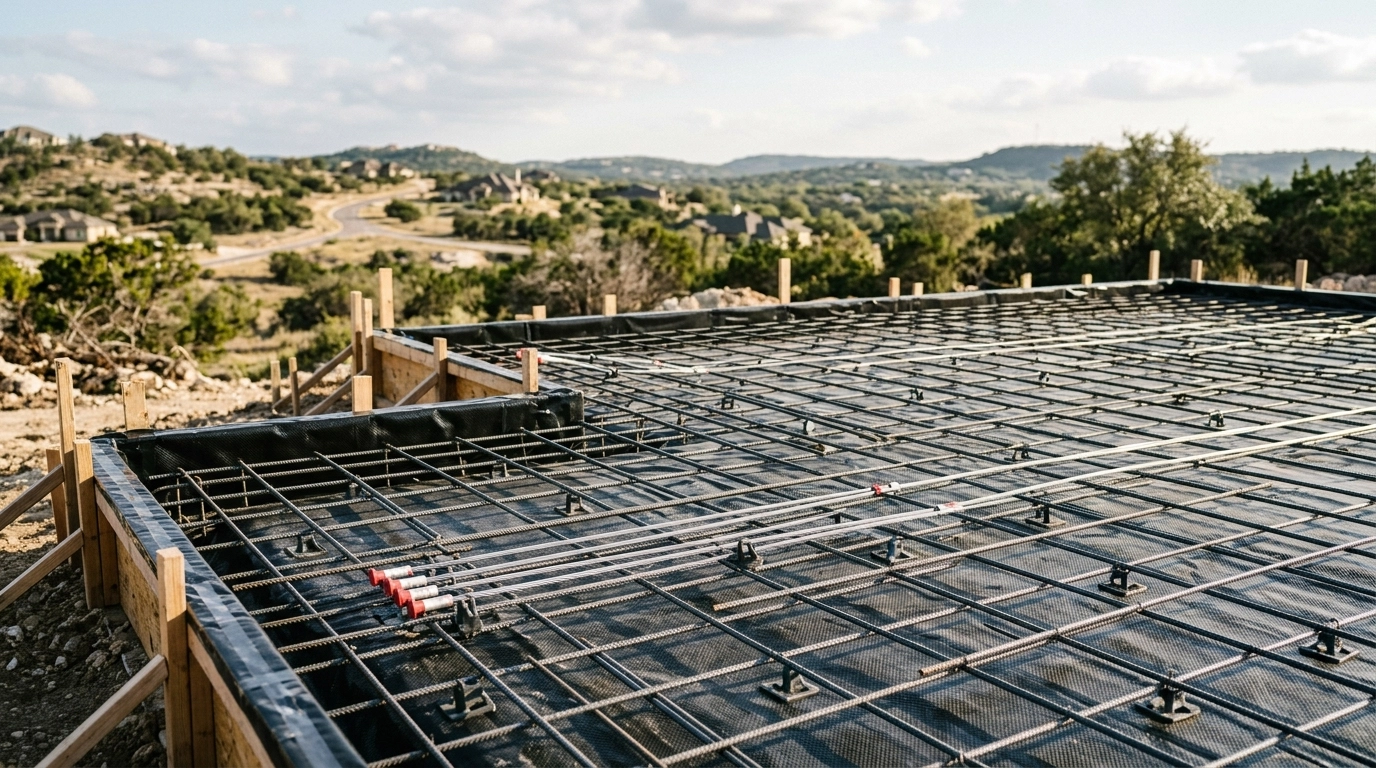
A detailed view of a home's foundation preparation, showing rebar and post-tension cables over a black vapor barrier before the concrete is poured.

The foundation is the most critical element of your home. In the San Antonio area, our expansive clay soils exert immense pressure on residential structures, making foundation integrity paramount. Once the concrete is poured, the opportunity to inspect the "bones" of your foundation is lost forever.

Why Pre-Pour Matters

A pre-pour inspection occurs after the forms are set and the reinforcement is in place but before the concrete trucks arrive. We verify the following:

  • Rebar and Post-Tension Cables: We ensure that the steel reinforcement is spaced correctly and supported by "chairs" to keep it at the proper depth within the slab.
  • Vapor Barrier Integrity: A high-quality vapor barrier prevents moisture from seeping up through the slab, which can cause flooring failures and mold issues later. We check for tears or improper overlaps.
  • Plumbing Penetrations: We confirm that plumbing lines are properly sleeved. Moving a drain line after the concrete has hardened involves jackhammers and structural risks.
  • Site Grading and Drainage: We evaluate the area around the slab to ensure water will flow away from the foundation, preventing the soil saturation that leads to shifting.

By identifying a misplaced pipe or a sagging cable at this stage, you prevent structural cracks and moisture intrusion that could cost tens of thousands of dollars to remediate in the future.

Phase 2: Framing and Pre-Drywall Inspection

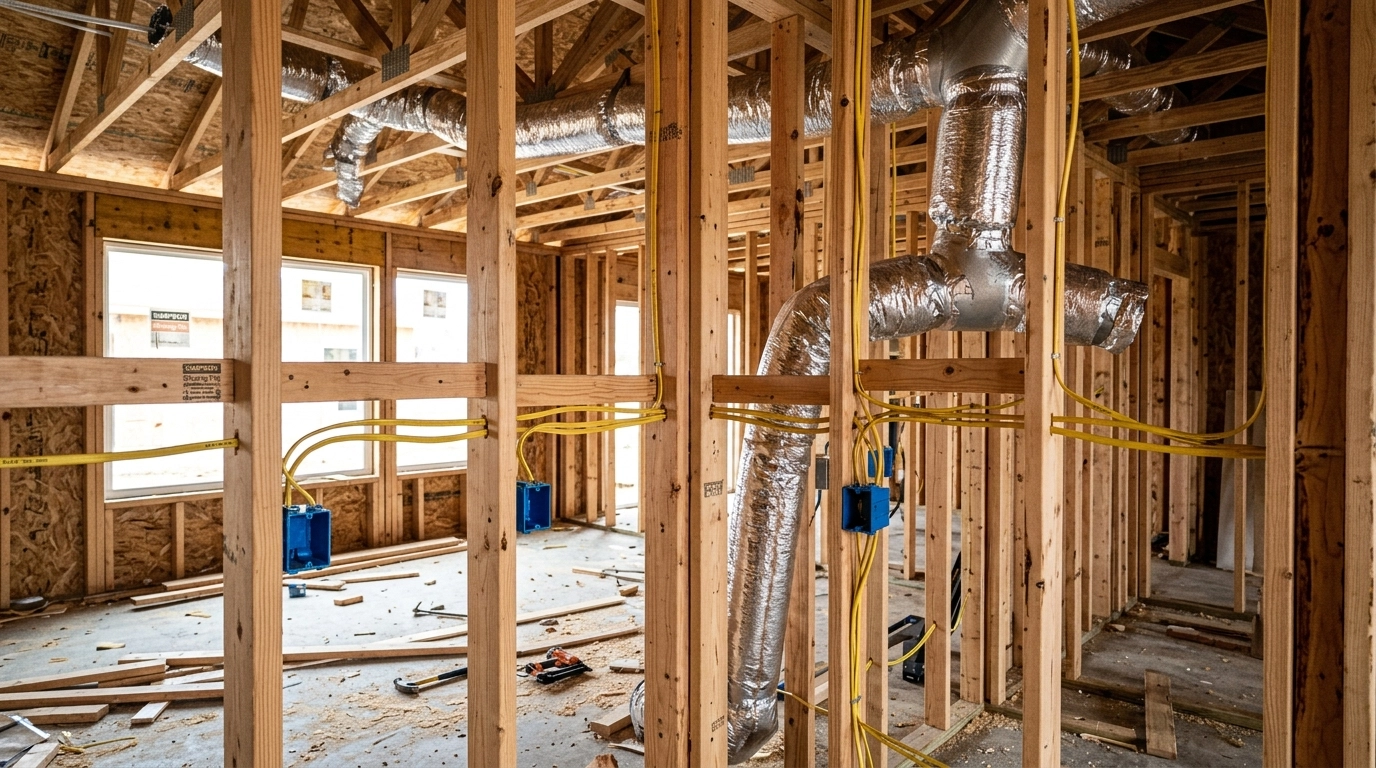
The interior of a San Antonio home during the framing stage, revealing the wooden studs, electrical wiring, and HVAC ductwork.

This is often considered the most informative phase of the inspection process. At this point, the "skeleton" of the home is complete, and the mechanical systems (plumbing, electrical, and HVAC) have been roughed in. However, the walls are still open, allowing us to see everything that will soon be hidden.

The "Hidden" Systems

During the pre-drywall inspection, we perform a comprehensive audit of the home’s vital systems:

  1. Structural Framing: We look for bowed studs, improper notched beams, and missing nail plates that protect wiring. We also verify that the roof trusses are installed according to the manufacturer's specifications and were not broken during installation.
  2. Electrical Routing: We ensure that wires are not pinched and that they are properly secured. Incomplete connections or damaged insulation can pose a significant fire hazard once the home is occupied.
  3. Plumbing and Gas Lines: We check for issues with the rough-in and ensure that pipes are properly insulated and sloped for drainage.
  4. HVAC Ductwork: We verify that ducts are sealed and supported to prevent energy loss. Efficient airflow is essential for maintaining comfort in the intense Texas heat.

Discovering a structural defect at this stage is a simple fix for a carpenter. Discovering it after the drywall is textured and painted involves a messy, expensive, and stressful demolition process.

Phase 3: Final Inspection and Blue Tape Walkthrough

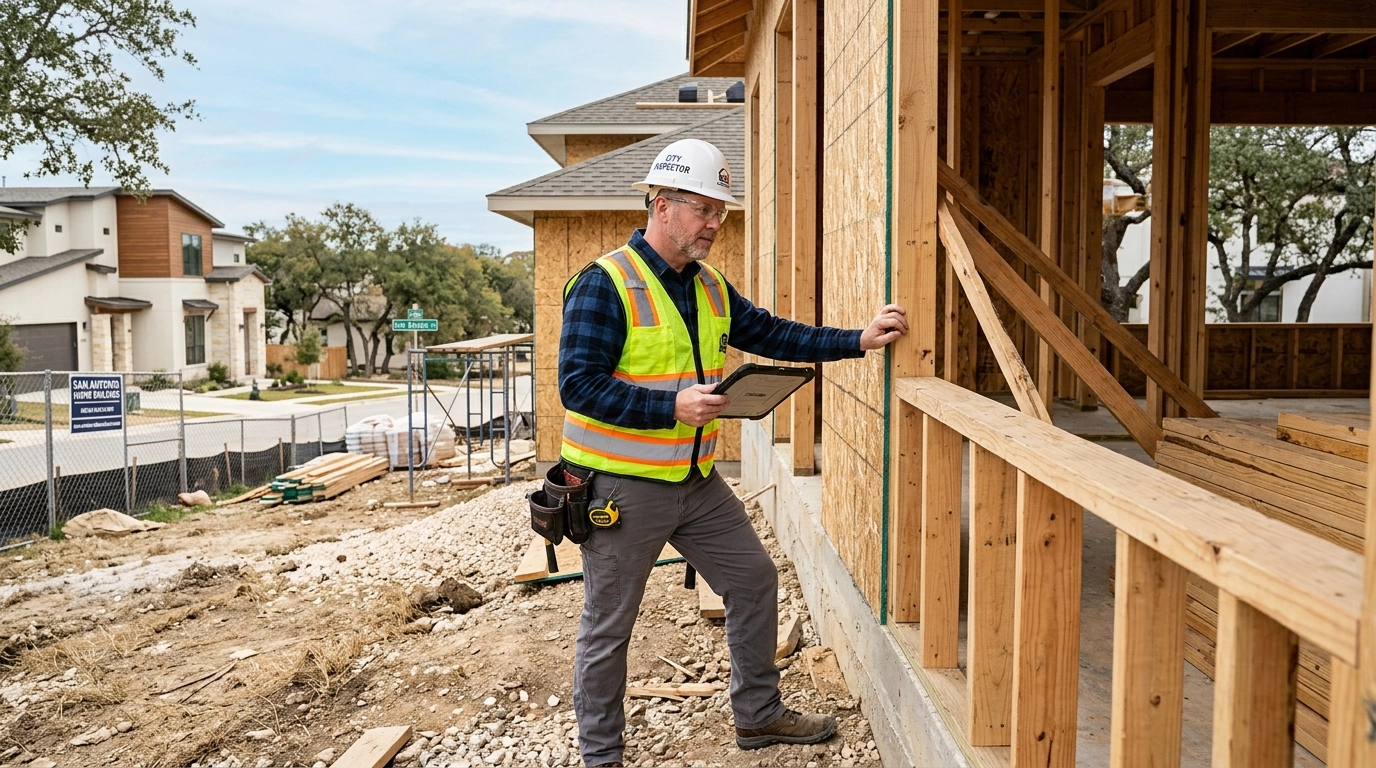
A professional home inspector evaluating the exterior framing of a new build in San Antonio, demonstrating expertise and attention to detail.

The final phase occurs when the home is "move-in ready." This is your last chance to hold the builder accountable for the finished product. While many homeowners focus on cosmetic issues like paint chips or scratched floors (the "blue tape" items), our focus remains on safety, functionality, and performance.

Beyond the Surface

A Standard Home Inspection for a new build includes:

  • Appliance Testing: We run the dishwasher, oven, and microwave to ensure they are properly installed and functioning.
  • Electrical Outlet Verification: We test every outlet for proper grounding and GFCI protection.
  • Thermal Imaging: Using advanced thermal imaging technology, we can detect missing insulation in the walls or hot spots in the electrical panel that are invisible to the naked eye.
  • Attic Inspection: We verify that attic insulation is at the correct depth and that all ventilation systems are exhausting to the exterior, not into the attic space.

This phase provides you with the leverage needed to ensure the builder completes all necessary repairs before you sign the final closing documents.

The Financial Case for Phase Inspections

The cost of a phase inspection is a fraction of the total purchase price of a home, yet it provides the highest return on investment of any closing expense.

Consider the "Rule of 10s" in construction: a mistake that costs $10 to fix during the framing stage will cost $100 to fix after the drywall is up, and $1,000 to fix after you have moved in. By catching issues early, you are not just buying a home; you are protecting your long-term wealth. Furthermore, having a professional report from a veteran-owned business like Veteran Home Inspections gives you the documentation you need to demand repairs from the builder without the back-and-forth of "opinion vs. opinion."

Why San Antonio Homeowners Trust Veteran Home Inspections

Building a home is one of the most significant financial commitments you will ever make. You deserve a partner who understands the intricacies of the Texas building environment and who brings a disciplined, detail-oriented approach to the job site.

The inspectors at Veteran Home Inspections, leverages extensive continuing education and elite Certified Master Inspector credentials to provide insights that go beyond a simple checklist. We understand the specific challenges of the Texas Hill Country: from the limestone bedrock and clay soil, to the high humidity levels: and we ensure your home is built to withstand them.

Protect Your Investment Today

Do not wait until the drywall is up to wonder if your home was built correctly. Ensure your peace of mind and the safety of your family by scheduling your phase inspections as soon as you break ground.

Are you ready to secure your new home?
Request an Inspection Online or call us today to discuss your construction timeline. We proudly serve Boerne, San Antonio, Bandera, Kerrville, and the surrounding areas.

Veteran Home Inspections Certified Master Inspector Badge

Tuesday, February 7, 2017

Questions to Ask When Hiring a Home Inspector

Congratulations, you've found the perfect home to buy! Right about now, you are probably on information overload, and looking for resources to get everything ready. One of the most important steps you need to take after getting that ratified contract is to get the home inspected. Like most subjects on the internet, there is a ton of information about home inspections, and how to hire them. One source that is very underrepresented though is probably the best one out there: the home inspectors themselves. No, I'm not just talking about reading their websites, since anyone can put up whatever they want. Instead, we went to a group of highly respected home inspectors and posed this question: If you were hiring a home inspector to inspect a home for your out-of-state family member, what questions would you ask them?

1. What are your certifications?

If you are in one of the many states where home inspectors are licensed, that is just a minimum level to be able to do the job. As a group, we will look for a home inspector that has taken the time to get extra certifications above and beyond the minimum. There are multiple home inspection organizations (both national and local) that offer certifications for inspectors. The two major organizations are the International Association of Certified Home Inspectors (InterNACHI), and the American Society of Home Inspectors (ASHI). Both offer multiple levels of certifications based on both experience and continuing education. InterNACHI has the Certified Professional Inspector and Certified Master Inspector certifications. ASHI has the ASHI Associate, Inspector, and Certified Inspector certifications.

In states where there isn't a licensing program for home inspectors, it is even more important to make sure the inspector has a certification, since essentially anyone can call themselves a home inspector! In these cases, it can be tempting to hire someone like a general contractor to just walk through the house with you. But, as Andrew Jolley with JODA Home Inspections in Stansbury Park, Utah said "unlike contractors, home inspectors have a system they follow so that all systems are evaluated and nothing is left out of the inspection." Additionally, a certified home inspector has received training on all of the systems in a house, as well how to inspect them and look at the whole house as a system.

2. What kind of report do you provide and when will I receive it?

Hopefully any legitimate inspector will be providing you with a written report that you can use in your evaluation of the home purchase. That being said, reports differ in both style and level of detail. An inspection report should include digital pictures of defects as well as narrative statements about the systems and defects found. Some reports will also include things like video, glossaries, and summaries. If there is a summary, make sure you still read the entire report!

The turnaround time for a report should also be determined. As inspectors, we understand the tight timelines your real estate agent has put you under, so we will always get you the report as quick as possible. Remember that sometimes a little extra research is required, so don't expect to get the report at the end of the inspection. Most inspectors should have the report to you within 24 hours of the end of the inspection.

3. Walk me through your typical inspection, what are the most important things?

Norm Tyler of Sage Inspections in St. Louis, MO says: "I'd ask this for a couple reasons. It would help me decide if his approach would be similar to mine. Every inspector is a little different, some will detail 500 little issues, while I'm more of a 'disregard petty cosmetic stuff so I can focus on finding $1000 problems' kind of guy. More importantly, if the inspector takes the time to walk me through his approach now, while I'm just a prospect - he'll probably take all the time needed to take care of me as a customer."

4. Are you available after you send the report for questions and/or clarification?

This was one of the most popular questions I received from the inspectors I talked to. We all strive to write a report that explains all of the issues as clearly as possible, but sometimes things may not make sense to you. Being able to call or email your inspector with questions after the inspection is critical, especially if you can't make it to the inspection.

Along with this, you should probably ask the inspector about their policy for follow-up inspections. Once you have negotiated repairs with the seller, make sure you get those repairs re-inspected. I have done a lot of re-inspections, and I have yet to find that all of the repairs were done. Sometimes I am given receipts for repairs that were clearly not even attempted. You should expect to pay for this re-inspection, so find out what it will cost ahead of time so there aren't any surprises.

5. What is your home inspection experience?

You will find that home inspectors come from many different backgrounds. Some may have been in the building trades, and some may be doing it as a second career. The important thing to look for is an inspector that has experience doing home inspections. David Sharman of County Home Inspection in Peterborough, Ontario mentioned to ask them how many inspections they've done in the last 12 months. This number could vary based on the market, but it should be a reasonable number. Look for someone doing at least a few inspections a week, but be wary of those that have really high numbers (unless they have multiple inspectors at their company). This can be a sign of someone that is just doing the minimum to get on to the next inspection of several that day.

6. How many inspections do you do in a day?

Hopefully the answer is only one or two. Most inspectors will do a morning and an afternoon inspection. Some will add in an evening inspection. If it gets over three, start to worry about how long they are spending on your inspection. Most inspections will take 2-3 hours for an average size house. Smaller houses don't really cut down on the time, but larger houses can significantly increase the amount of time it takes to inspect.

7. What extra services can you provide?

Michael Conrad II, at Diligent, LLC in Nashville, TN points out that you should check with the inspector to see if they offer any other inspection services, such as Thermal Imaging, Termite, Radon, and Mold inspections. This can help you in many ways, since not only do you get all of the inspections you need from one company, it allows your inspector to look at the whole house as a system and provide the best assessment of the house. Some areas require separate licenses for these extra inspections, so make sure they have those licenses as well if required. If licensing isn't required, make sure they have a third-party certification.

8. Can I accompany you on the inspection?

The inspection is your time to learn about the house. Odds are, the inspection is the longest amount of time you will spend in the house until you own it, so make the most of it. Your inspector should encourage you to ask questions as the inspection is going on. After all, it's a lot easier to explain (and understand) an issue with it right in front of you. If you wait until a day or two later, now the inspector has to explain it over the phone, and they've inspected more houses since then. Charles Buell, of Charles Buell Inspections, Inc in Shoreline, WA, says that he wants the client there the whole time. This is their time to learn about the house.

Additionally, Jim Holl with 5 Star Home Inspections LLC in Hillsborough, NC says: A professional home inspector wants you, the future occupant, to attend the inspection so you can ask questions and see most of what the inspector sees. Since you are going to live there and get to maintain it, for safety, health and financial reasons, this is your opportunity learn all about your new castle. If the inspector doesn't want you to observe, move on to the next inspector you want to interview.

9. Who will be doing the inspection?

This is mainly for the multi-inspector firms, but Ian Mayer of IM Home Inspections in Woodland Hills, CA warns to watch out for the bait-and-switch. The owner of the company may have really great certifications, but he sends out the guy that was just certified last week to do your inspection.

10. What warranties/guarantees are included with the inspection?

A home inspection is, by definition, a snapshot in time. It shows the condition of the house on the day of the inspection. None of us have a crystal ball to predict the future of a house, and sometimes sellers will intentionally hide known defects. Some home inspectors offer various warranties and guarantees with their inspection. Make sure you read the fine print on anything offered to ensure you understand what you are getting and what the limitations are. Frank Rotte of Certified Inspection Services, LLC of San Diego points out that many repairs are actually under the deductible, so the buyer ends up paying for the repair anyways.

11. How much does the inspection cost?

This is the last question you should ask, and it's really only so you know how much to write the check out for. In other words, don't price shop, and don't look for the cheapest inspector. (How much are you paying for that house again?) James Braun with Braun Inspection Consultations in Jefferson City, MO rightly says that "A good inspector is not cheap, and a cheap inspector is not good." You are making what may be the largest purchase of your life, do you really want the cheapest inspector you can find to do your inspection?

Thank you for sticking with me for this long, and I hope that it has been informative for you. The best home inspectors are those that work for you, and inspect each home as if they, or their favorite relative, were buying it. These home inspectors have nothing to gain except providing you with the best inspection they can, which allows you to make an extremely important decision. Now, go out there and hire the best home inspector you can find.

Veteran Home Inspections, PLLC

For more information, or to book your full home inspection, visit http://www.vhillc.com or call 210-202-1974.

Friday, June 13, 2014

Warranties vs. Guarantees


First off, I will apologize for the pause in posting.  The last couple of weeks have been very busy.  Part of the reason for that has been the announcement of the new "We'll Buy Your Home" Guarantee by InterNACHI.  Anyone who has owned a home is probably familiar with the traditional home warranty programs, and many have probably had one at some time.  If you aren't familiar with these, they are often offered as part of a home sale to cover major systems for a set time after closing.  Many home inspectors also offer warranties as a part of their inspection package.  Of course, these come with all kinds of exclusions and deductibles.

As an example, I had an A/C unit break down, and when I called the home warranty company (one of the biggest) I was told that they wouldn't replace it, but would instead exercise their cash-in-lieu option (They pay me what they think they could get it replaced for, and I get it replaced).  How much did I get?  $700.  How much did I pay to have it replaced?  $6900.  And nothing I could do, except cancel my policy with them.

So, why do I tell you all of this?  Basically, warranties are planning for failure.  The home seller knows that something will probably go wrong, so they try to assuage you fears, and cover their liability, by offering the home warranty.

On the flip side, a guarantee is planning for success.  We are very confident in our inspections.  So much so, that InterNACHI has agreed to back us up on that with their "We'll Buy Your Home" Guarantee.  If we miss something that we should have inspected per the standards, InterNACHI will buy the house back from you at the price you paid, and it's valid for 90 days after closing.

So, one final question, why would you have an inspection done by someone planning to fail?

To schedule your home inspection backed by the best guarantee in the industry, call 210-202-1974 or book online at www.vhillc.com.