Showing posts with label wood destroying insect inspection. Show all posts

Friday, May 15, 2026

Termite Inspection San Antonio TX: Why Our Local Soil Makes WDI Checks Non-Negotiable


heroImage

If you are buying a home in the San Antonio area, you aren't just buying a structure; you are buying the ground it sits on. In the Texas Hill Country and the surrounding Bexar County plains, that ground is far more active than most homeowners realize. From the shifting "cracking clays" of the Blackland Prairie to the rocky limestone of the Edwards Plateau, our local soil creates a unique set of challenges for property owners: specifically when it comes to termites.

At Veteran Home Inspections, we have seen firsthand how San Antonio’s unique geology acts as a VIP highway for wood-destroying insects. A Standard home inspection is vital, but in this region, a Wood Destroying Insect (WDI) check is non-negotiable.

The San Antonio Soil Factor: Why Our Dirt is Different

San Antonio sits at a geological crossroads. To the west, you have the rocky, thin soils of the Edwards Plateau. To the east, you have the deep, heavy clays of the Blackland Prairie. Both environments are prime real estate for subterranean termites, but for different reasons.

The "Cracking Clay" Highway

In the eastern and southern parts of San Antonio, the soil is dominated by expansive clay. This soil is famous for its "shrink-swell-shrink" cycle. During our brutal Texas summers, the clay loses moisture and shrinks, creating deep fissures and cracks that can extend several feet into the ground.

These cracks are more than just an eyesore for your lawn; they are direct access tunnels for subterranean termites. Termites require moisture to survive and will travel deep into the earth to find it. When the surface soil cracks, it provides a protected, moisture-wicking path directly to your home’s foundation. By the time you see evidence of an infestation on your baseboards or drywall, the termites may have been using these "soil highways" for months.

The Rocky Hill Country Shield

In areas like Boerne and Kerrville, the soil is thinner and sits atop solid limestone. You might think this rock-hard foundation would deter pests, but it often does the opposite. Because the soil is shallow, moisture often traps between the limestone and the concrete slab of a home. This creates a high-humidity microclimate that termites love. Furthermore, the rocky terrain often leads to "conducive conditions" like wood-to-ground contact where decks or fences are anchored directly into the thin soil layer.

What is a WDI Inspection and Why Do You Need One?

A Wood Destroying Insect (WDI) inspection is a specialized evaluation that goes beyond the scope of a standard home inspection. In Texas, this report is officially known as the SPCS/T-5 form, regulated by the Texas Department of Agriculture.

If you are using a VA or FHA loan to purchase your home, a WDI report is almost always a mandatory requirement for closing. Lenders view termites as a significant threat to their collateral: and for good reason. Termites cause billions of dollars in structural damage every year, most of which is not covered by standard homeowners insurance.

What We Look For

When we perform a termite inspection in San Antonio, TX, we aren't just looking for bugs. We are looking for the history and the potential of infestation:

  • Active Infestations: Live insects or fresh mud tubes (the protective tunnels termites build to travel).
  • Previous Damage: Evidence of past activity that may have compromised the structural integrity of the wood.
  • Signs of Previous Treatment: Drill marks in the slab or bait stations that indicate the home has been treated before.
  • Conducive Conditions: This is the most important part of the report. We identify factors that make your home a target, such as standing water, high soil grade, or firewood stacked against the house.

The Hidden Threat: Formosan Termites

While the Eastern Subterranean termite is our most common resident, San Antonio is also home to the Formosan subterranean termite. Often called "super termites," these insects are significantly more aggressive. A large Formosan colony can cause structural damage to a home in as little as six months.

Because they are so prolific, they don't always need soil contact to survive if they can find a consistent moisture source within the walls (like a leaky pipe). This makes our thermal imaging inspections particularly valuable, as they can help detect the heat signatures or moisture patterns associated with large, hidden colonies.

Why "Conducive Conditions" Matter to Your Wallet

Many buyers see "Conducive Conditions" on a WDI report and assume it’s a minor detail. However, in the world of Texas real estate, these are major red flags. If a report lists "high soil grade" (where the dirt is touching the siding or brick ledge), your lender may require you to remediate the soil before they will fund the loan.

By identifying these issues early, we provide you with the leverage you need to negotiate repairs or price credits with the seller. Our goal is to ensure you aren't moving into a "buffet" for local pests.

Why Choose Veteran Home Inspections?

When it comes to protecting your investment, credentials matter. We are Certified Master Inspectors, a designation held by fewer than 3% of all inspectors. This means we have the experience and the specialized training to spot the subtle signs that others might miss.

cmi-badge

We understand the local landscape. We know how the soil in San Antonio behaves and where termites like to hide. Our reports are detailed, easy to read, and delivered within 24 hours, so you can make informed decisions without delaying your closing.

Our Comprehensive Approach

We don't just "look around." We conduct a systematic sweep of the property:

  1. Exterior Perimeter: Checking the foundation line, weep holes, and soil-to-wood contact points.
  2. Interior Walls: Looking for "kick-out holes," bubbling paint, or hollow-sounding wood.
  3. Attics and Crawl Spaces: Inspecting the "skeleton" of the home where moisture issues often go unnoticed.
  4. Garage and Outbuildings: Ensuring that detached structures (if included in the scope) aren't serving as a bridge for termites to enter the main house.

Protect Your San Antonio Home Today

Don't let the "cracking clays" of San Antonio lead termites straight to your front door. Whether you are a first-time homebuyer or a seasoned investor, a professional WDI inspection is the only way to truly understand the condition of the property you are about to purchase.

At Veteran Home Inspections, we take pride in being the "boots on the ground" for our clients. We offer military discounts and a level of detail that only a veteran-owned business can provide.

Ready to schedule your inspection?
Call us today at 210-202-1974 or visit our contact page to book your appointment online. Let us help you protect your piece of the Texas Hill Country.

Saturday, April 18, 2026

Do You Really Need a Termite Inspection in San Antonio? Here’s the Truth

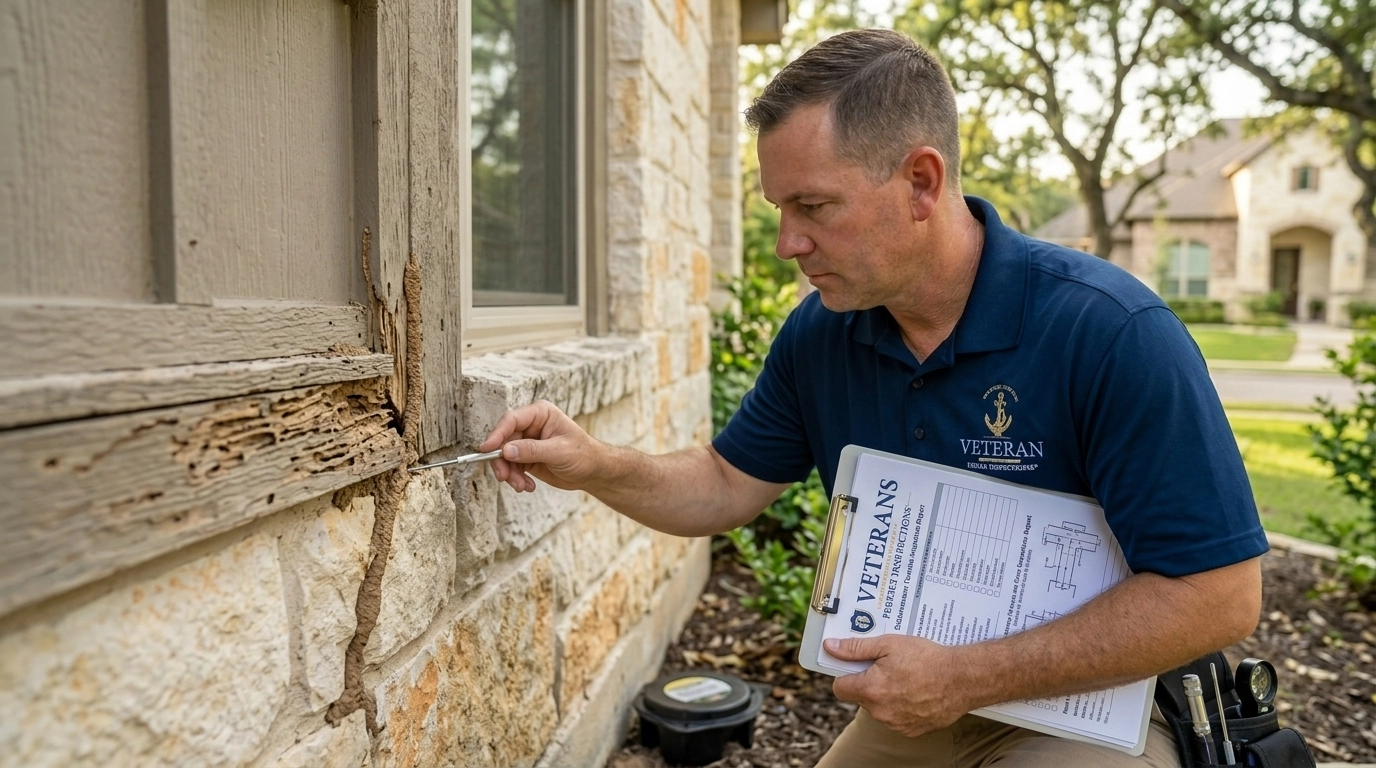
 A professional home inspector examining wood trim in San Antonio

For many homebuyers and homeowners in San Antonio, the focus during a property transaction is often on the visible: the granite countertops, the condition of the HVAC system, or the age of the roof. However, there is a silent, 6-legged threat that can compromise the structural integrity of your investment without ever making its presence known until the damage is severe.

At Veteran Home Inspections, we understand that a home is more than just a building; it is your largest financial asset. In the warm, humid climate of the Texas Hill Country, the question isn't whether termites are present in the environment, it is whether they have found a way into your structure.

The short answer is: Yes, a termite inspection is an absolute necessity in San Antonio. Whether you are navigating the "Option Period" of a real estate contract or simply performing routine maintenance on your long-term residence, a professional Wood Destroying Insect (WDI) report is the only way to ensure your property isn't being hollowed out from the inside.

The Reality of Termites in San Antonio and the Hill Country

San Antonio is situated in a high-risk zone for termite activity. Our climate provides the perfect breeding ground for these pests, specifically the Subterranean Termite, which is the most common and destructive species in the region. Unlike drywood termites, which live inside the wood they consume, subterranean termites live in the soil and build intricate mud tubes to reach the wooden structures of your home.

We have seen firsthand how these insects can bypass concrete foundations, utilizing tiny cracks or plumbing penetrations to reach floor joists, wall studs, and rafters. Because they work from the inside out, a beam can appear perfectly solid to the untrained eye while being structurally hollowed.

The Financial Risk: Inspection vs. Remediation

One of the most compelling reasons to schedule a termite inspection is the sheer disparity between the cost of the inspection and the cost of the damage.

  • Cost of Inspection: A professional WDI report is a minor investment, often bundled with our Standard Home Inspection for maximum efficiency.
  • Cost of Damage: Nationally, termite damage costs homeowners over $5 billion annually. In the San Antonio area, the average repair for structural termite damage can easily exceed $3,000, with severe cases reaching five figures if load-bearing walls or foundation plates are compromised.

By investing in a professional assessment now, you are essentially purchasing an insurance policy against one of the few home hazards that standard homeowner’s insurance typically does not cover.

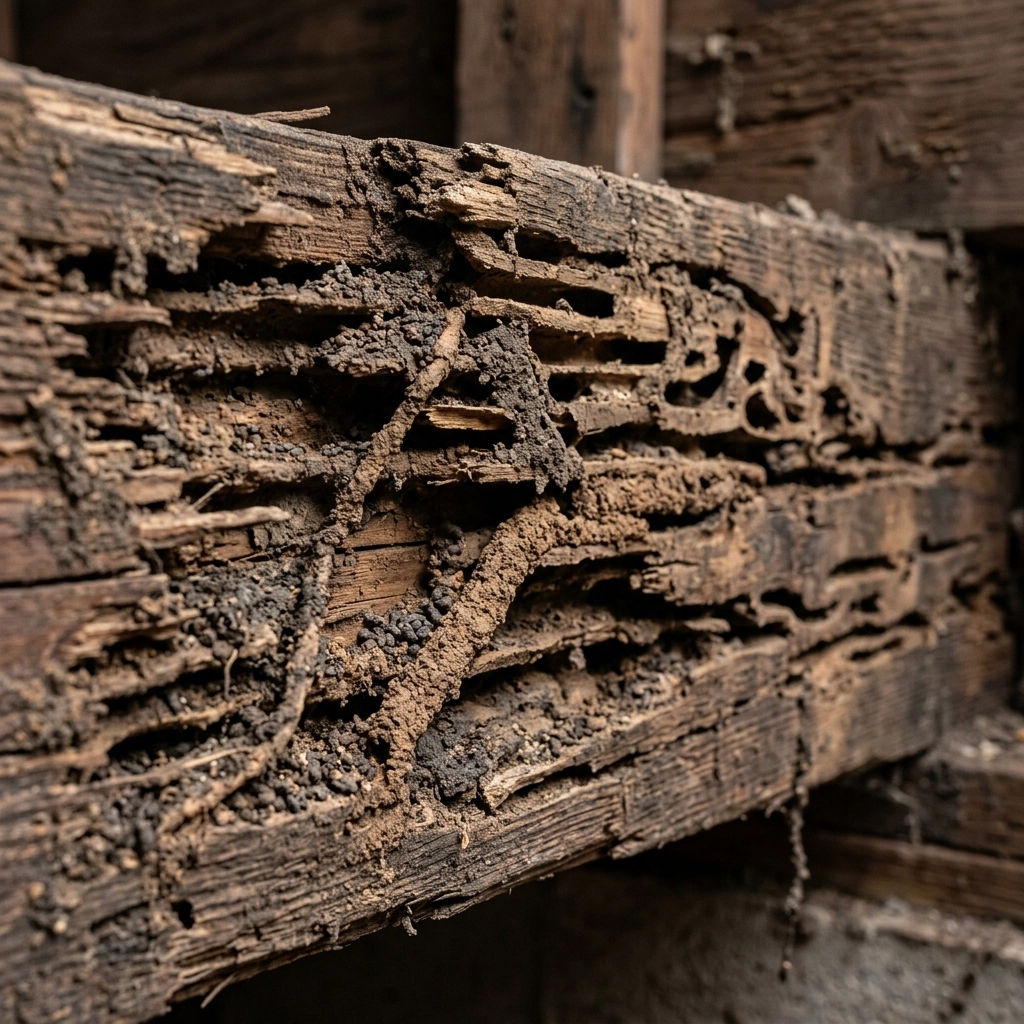
Detailed macro photograph of termite damage in wood

Lender Requirements: When an Inspection is Mandatory

If you are purchasing a home using a government-backed loan, the decision may already be made for you. VA loans almost universally require a Wood Destroying Insect Report before the loan can be funded.

As a Veteran-owned business, the inspectors at Veteran Home Inspections take particular pride in assisting our fellow service members with their VA loan requirements. The Department of Veterans Affairs requires a clear WDI report in most parts of Texas because they recognize that termites pose a direct threat to the Veteran’s collateral. Even for conventional loans, many lenders will defer to the appraiser's observations; if the appraiser sees even a hint of a mud tube, the loan will be paused until a professional inspection is completed.

Why Homeowners Often Miss the Signs

Termites are masters of concealment. We often hear homeowners say, "I haven't seen any bugs, so I think we're fine." The reality is that by the time you see a "swarmer" (a winged termite) inside your home, the infestation has likely been established for years.

During our comprehensive inspections, we look for the subtle indicators that most people overlook:

  1. Mud Tubes: Pencil-thin tunnels running up the foundation or along plumbing pipes.
  2. Frass: Tiny, wood-colored droppings that look like sawdust but are actually a sign of drywood termite activity.
  3. Hollow-Sounding Wood: When tapped with a tool, infested wood produces a distinct, dull thud.
  4. Conducive Conditions: This is perhaps the most important part of our report. We identify high-moisture areas, soil-to-wood contact, and heavy vegetation against the home that practically "invite" termites to your property.

A beautiful Texas Hill Country residential property in San Antonio

The Veteran Home Inspections Advantage

When you choose Veteran Home Inspections for your WDI report, you are receiving more than just a checklist. You are benefiting from our background in construction management and our status as Certified Master Inspectors.

We do not just look for termites; we look at the house as a complete system. We understand how a grading issue in your yard or a leak in your plumbing system can create the moisture-rich environment that termites crave. Our reports are detailed, photographic, and delivered within 24 hours, ensuring you have the data you need to make an informed decision within your contract's deadlines.

What is Included in Our WDI Report?

A standard Wood Destroying Insect report from our team covers more than just termites. We also evaluate the property for:

  • Carpenter Ants: While they don't eat wood, they tunnel through it to create nests, causing significant structural weakness.
  • Carpenter Bees: Often found in the eaves and fascia boards of San Antonio homes.
  • Wood-Boring Beetles: These can be particularly problematic in older homes or properties with unsealed structural lumber.

Our goal is to provide a "no-surprises" experience. If we find evidence of activity, we document it clearly. If we find evidence of previous treatments, we help you understand what that means for the home’s history.

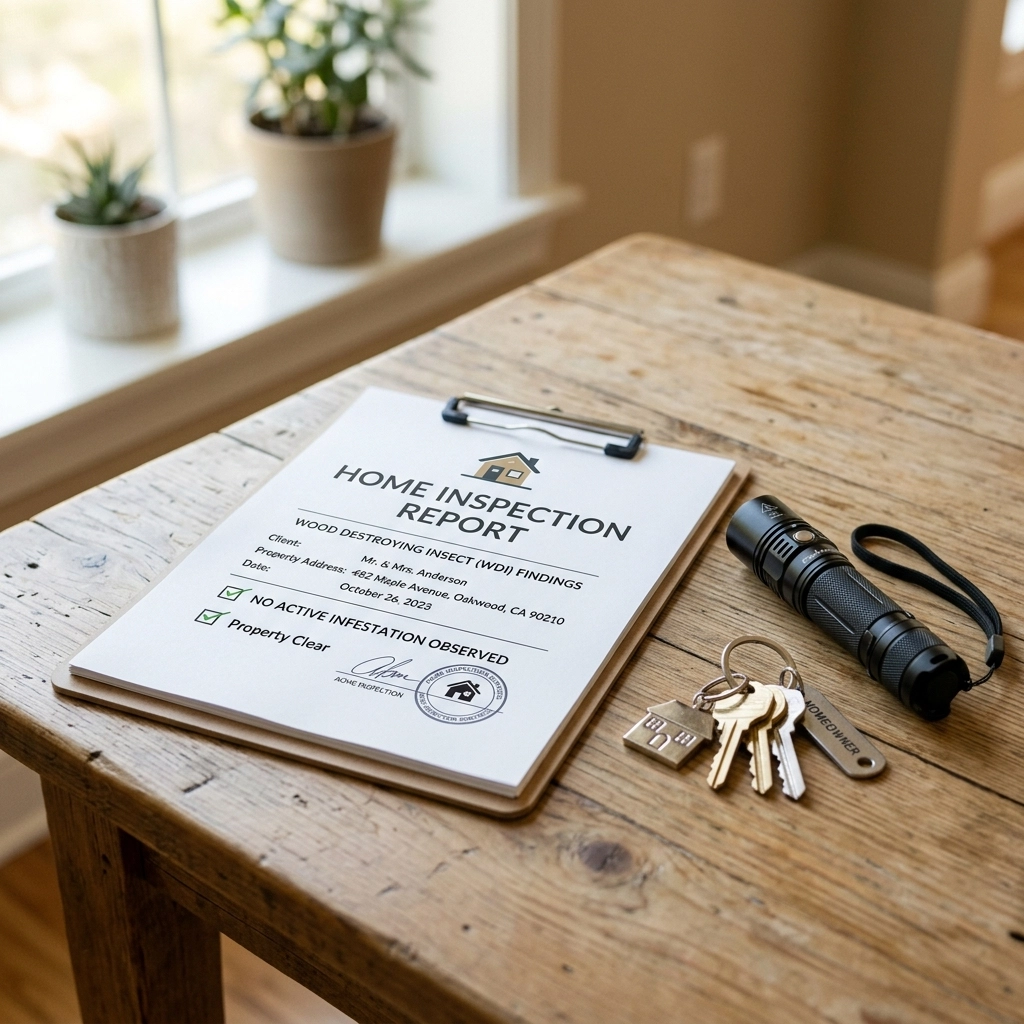
A professional WDI report with house keys

Protecting Your Investment for the Long Term

For those already living in their "forever home," we recommend a professional inspection every two to three years. The soil in San Antonio is constantly shifting, which can create new cracks in foundations that termites use as entry points. Regular monitoring is the most effective way to prevent a small problem from becoming a structural nightmare.

Prevention is always more cost-effective than a cure. During our inspections, we often provide actionable advice on how to optimize your home's exterior to deter pests, such as maintaining a 6-inch gap between the soil and your siding and ensuring your gutters are clear of debris.

Secure Your Peace of Mind Today

Do you really need a termite inspection in San Antonio? If you value the safety of your family, the stability of your home’s structure, and the security of your financial future, the answer is an emphatic yes.

At Veteran Home Inspections, we bring a level of discipline, detail, and expertise to every property we evaluate. Whether you are buying, selling, or maintaining your home, don’t leave its integrity to chance.

Ready to protect your home? Request an inspection online or contact the inspectors at Veteran Home Inspections today to schedule your comprehensive WDI report. We serve the entire Texas Hill Country, including Boerne, San Antonio, Bandera, and Kerrville, ensuring you have a clear understanding of your property's condition.

Friday, May 5, 2017

Termite Control in the Home

Veteran Home Inspections provides Wood Destroying Insect inspections for the San Antonio, TX and Hill Country area.  

The following is an article from our professional organization about termites and how to best control them in your home:

Wood-destroying insects and other organisms can cause serious problems in the wooden structural components of a house, and may go undetected for a long period of time.

New Construction
All chemical soil treatments, bait systems, and chemical wood treatment must be approved by the Environmental Protection Agency (EPA) and applied in accordance with the EPA label's instructions. In some cases, it is not feasible for a builder to arrange for soil treatment. In this regard, the International Residential Code (IRC) by the International Code Council allows a builder to utilize pressure-treated wood as a measure of termite protection. If pressure-treated wood is used, however, it must be used in all framing members up to and including the top plate of the first floor's level wall. This includes the sub-floor and floor joists of the first floor. The use of pressure-treated wood in only the sill plate is not acceptable. In such cases, the builder must provide the lender with a letter stating that the house is protected from termites by the use of pressure-treated wood. The builder must also provide the home buyer with a one-year warranty against termites. The use of post-construction soil treatment where the chemicals are applied only around the perimeter of the foundation is NOT acceptable in new construction.
Appraiser’s Observations
Appraisers are to observe all areas of the house and other structures/areas within the legal boundaries of the property that have potential for infestation by termites and other wood-destroying organisms, including the bottoms of exterior doors and frames, wood siding in contact with the ground, and crawlspaces. Mud tunnels running from the ground up the side of the house may indicate termite infestation. Observe the eaves and gable vents and wood window sills for indication of the entrance of swarming termites, and note excessive dampness or large areas where the vegetation is dead. Evidence of active termite infestation must be noted.
Termites 
 
Subterranean termites are the most damaging insects of wood. Their presence is hard to notice, and damage usually is found before the termites are seen. Prevent infestations because if they occur, they will almost always need professional pest-control service.
Signs of Infestation
Hire a qualified InterNACHI inspector to inspect for termites or other wood-destroying organisms. Generally, the first sign of infestation is the presence of swarming termites on the window or near indoor light. If they are found inside the house, it almost always means that they have infested. Other signs that may be found are termite wings on window sills or in cobwebs, and shelter tubes, which are tunnels constructed by the termites from soil or wood and debris. Usually, wood damage is not found at first, but when it is found, it definitely reveals a termite infestation. Anywhere wood touches soil is a possible entry into a home for termites. Examine wood which sounds dull or hollow when struck by a screwdriver or hammer. Inspect suspected areas with a sharp, pointed tool, such as an ice pick, to find termite galleries or their damage.
Control
Control measures include reducing the potential infestation, preventing termite entry, and applying chemicals for remedial treatment.
Inspection
Inspect thoroughly to determine if there is an infestation, damage, and/or conditions that could invite a termite attack, or the need for remedial control measures. The tools and equipment needed for an inspection include a flashlight, ice pick or sharp-pointed screwdriver, ladder, and protective clothing. Always hire an InterNACHI inspector for your inspection needs, as they are trained by the highest standards in the inspection industry.
Outdoors
Check the foundation of the house, garage and other buildings for shelter tubes coming from the soil. Look closely around porches, connecting patios, sidewalks, areas near kitchens and bathrooms, and hard-to-see places. Check window and door frames, and where utility services enter the house for termite infestation or wood decay. Also, look behind shrubbery and plants near walls. Pay special attention to areas where earth and wood meet, such as fences, stair carriages and trellises. Open and check any exterior electrical meter or fuse box set into the wall, a common point of infestation.
Indoors
Carefully check all doors, window facings, baseboards, and hardwood flooring. Discoloration or stains on walls or ceilings may mean that water is leaking and can decay wood, and this can aid termite infestation. It is very important to inspect where plumbing and utility pipes enter the foundation and flooring. Also, examine the attic for shelter tubes, water leakage, and wood damage.
.
 Prevention
 Many termite problems can be prevented. The most important thing to do is to deny termites access to food (wood), moisture and shelter. Follow these suggestions:
  • have at least a 2-inch clearance between the house and planter boxes, or soil-filled porches;
  • eliminate all wood-to-soil contact, such as trellises, fence posts, stair casings and door facings (they can be put on masonry blocks or on treated wood);
  • separate shrubbery from the house to help make it easier to inspect the foundation line;
  • use wolmanized wood (pressure-treated wood) so that rain will not rot it;
  • seal openings through the foundation;
  • remove wood scraps and stumps from around the foundation;
  • have at least 12 to 18 inches of clearance between floor beams and the soil underneath.
Chemical Treatment
Termite treatment often requires specialized equipment. Therefore, it is recommended that you always use the services of a pest control operator because he is familiar with construction principles and practices, has the necessary equipment, and knows about subterranean termites.
Exterminating Termites 

If you think you have a termite infestation in your house, you need to call a structural pest control company to conduct a professional inspection. To find a company, ask friends or coworkers for recommendations, or check the Yellow Pages. If the inspection finds evidence of drywood termites, you have several options, depending on the degree of infestation. Fumigation and heating of the entire house are the only options that ensure eradication in the entire structure. If the infestation is contained in a small area, local or spot control may be effective. However, hidden infestations in other parts of the structure will not be eradicated.
Total (Whole-House) Eradication 
For the heat method, pets, plants, and other items that might be damaged by high temperatures must be removed. The house is then covered with tarps, and hot air is blown into the tarp until the inside temperature reaches 140° F to 150° F, and the temperature of the structural timbers reaches 120° F. The time to complete this procedure varies greatly from one structure to another, depending on factors such as the building's construction and the weather conditions. The procedure may not be practical for structures that cannot be heated evenly.
Local or Spot Control
Local or spot-control methods include the use of pesticides, electric current, extreme cold, localized heat, microwave energy, or any combination of these methods. Local or spot control also includes the removal and replacement of infested structural timber. These methods are intended to remove or kill termites only within the specific targeted area, leaving open the possibility of other undetected infestations within the structure. These treatments are NOT designed for whole-house eradication. Any pest control company that claims whole-house results with local or spot control methods is guilty of false advertising and should be reported.
Local or spot treatment with pesticides involves drilling and injecting pesticides into infested timbers, as well as the topical application of toxic chemicals. The electric-current method involves delivering electric energy to targeted infestations. For the extreme cold method, liquid nitrogen is pumped into wall voids adjacent to suspected infestation sites, reducing the area to -20° F. The localized heat method involves heating infested structural timbers to 120° F. The microwave method kills termites by directing microwaves into termite-infested wood.


If you see the following signs in your house, you might have termites:
  
• sawdust-like droppings; 
• dirt or mud-like tubes or trails on the structure; 
• damaged wood members (like window sills); and 
• swarming winged insects within the structure, especially in the spring or fall.

To schedule your home inspection with a wood destroying insect inspection, please call 210-202-1974 or schedule online at www.vhillc.com