When you discover a dark, fuzzy patch of mold growing on your drywall or floorboards, your first instinct is likely to reach for the strongest cleaner in your cabinet: bleach. It is a common household reflex, fueled by decades of marketing and "old-school" cleaning advice. You see the mold vanish before your eyes, replaced by a clean, white surface, and you assume the problem is solved.
However, this is one of the most persistent and dangerous myths in home maintenance. For homeowners in San Antonio and the surrounding Texas Hill Country, relying on bleach for mold remediation is not just ineffective: it can actually make your mold problem significantly worse. Understanding why this chemical fails is the first step toward protecting your property and your family's health.
The Chemistry of Failure: Why Bleach Doesn't Kill Mold
To understand why bleach is a poor choice for mold cleanup, you must understand the structure of both the mold and the materials it grows on. Mold is not just a surface stain; it is a living organism with a root system known as hyphae. These roots grow deep into the substrate to feed on organic materials like cellulose.
Most household materials, such as drywall, wood, and grout, are porous. They are filled with microscopic channels and pockets. When you apply a solution of bleach (sodium hypochlorite and water) to these surfaces, a specific chemical reaction occurs that works against you:
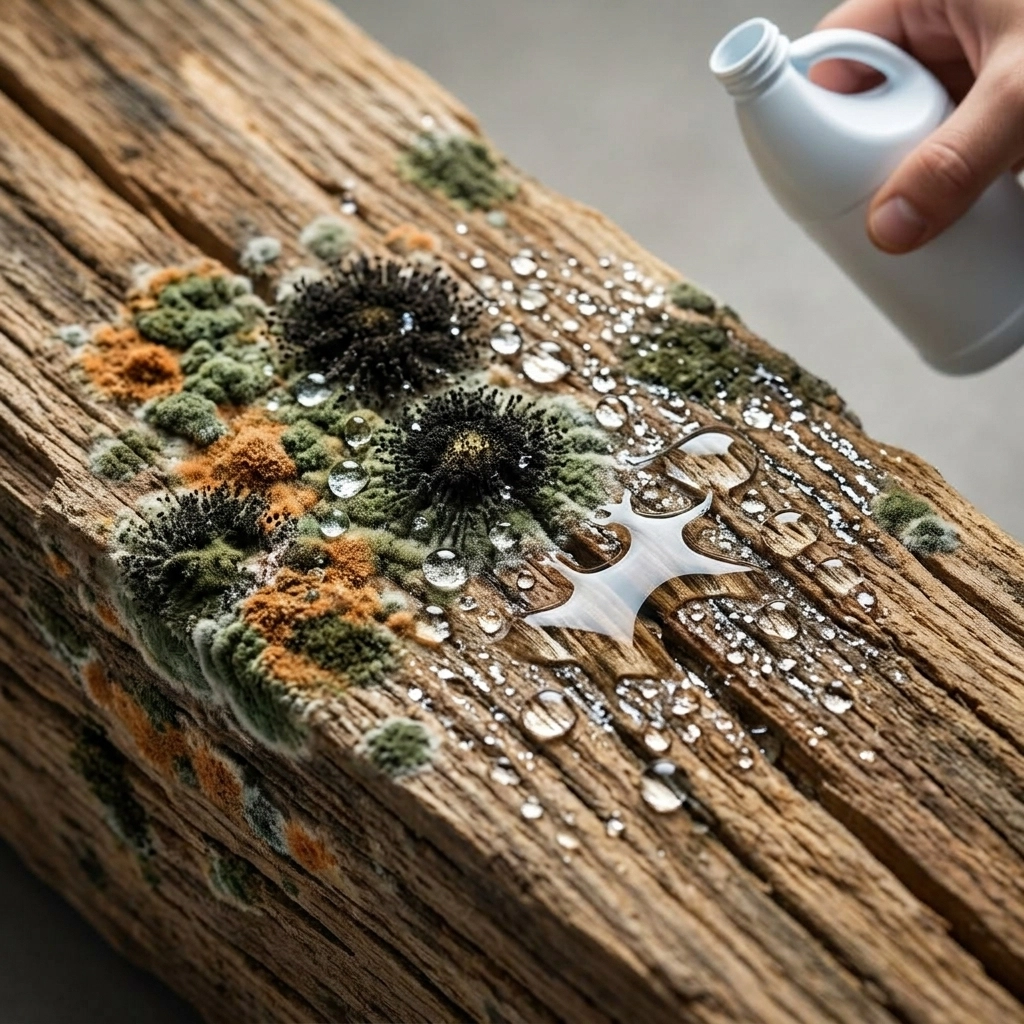
- Molecular Size Constraints: The sodium hypochlorite molecule: the part that actually kills bacteria and mold: is physically too large to penetrate the pores of a material like wood or drywall. It remains on the surface, killing only the visible top layer of the colony.
- Water Penetration: Bleach is typically 90% to 94% water. Unlike the active chemicals, water molecules are small enough to soak deep into the porous material.
- The Feeding Effect: While the chlorine stays on the surface and eventually evaporates, the water travels down into the roots of the mold. Since mold thrives on moisture, you are essentially "watering" the mold roots after killing its surface layer.
The result is a deceptive "clean" look that lasts only a few days or weeks before the mold returns, often more aggressively than before.
The Hidden Dangers: Promoting Growth and Spore Release
Beyond its failure to kill the root system, using bleach can introduce secondary risks to your home environment. When you spray a liquid directly onto a mold colony, you can inadvertently trigger a defense mechanism in the fungus.
Spore Aerosolization
Many mold species release spores into the air when they are disturbed or threatened by a harsh chemical. By scrubbing or spraying bleach without proper containment, you risk sending millions of microscopic spores into your HVAC system, where they can travel to other rooms and start new colonies. This is why professional mold inspection is critical. We can help identify the actual source of the issue, and build a mold remediation protocol for a mold remediation company to follow including containment strategies and specialized air filtration to ensure the problem doesn't spread during the diagnostic or cleaning phases.
Structural Degradation
Bleach is a corrosive substance. Repeated applications to wood can break down the lignin and fibers that provide structural integrity. In San Antonio’s humid climate, maintaining the strength of your home’s framing is vital. Using harsh chemicals that weaken these materials while simultaneously feeding the mold roots is a recipe for long-term structural damage.
Why Surface Cleaning Isn't Enough
If you can see mold on the outside of a wall, there is a high probability that it is also growing on the inside. Mold often begins in the "dark spaces": behind baseboards, under cabinets, or inside wall cavities: where moisture from a hidden leak or condensation accumulates.
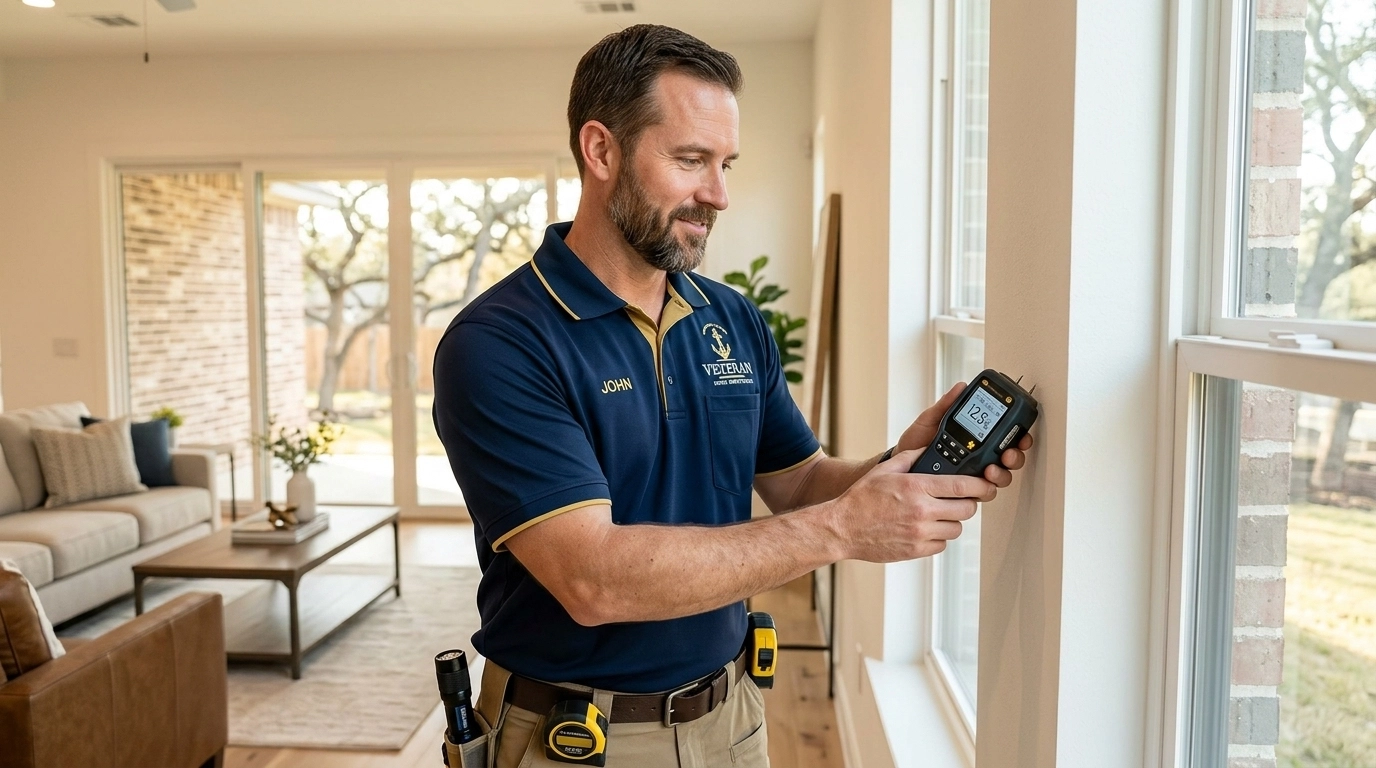
Simply cleaning the surface with bleach (or any other cleaner) does nothing to address the source of the moisture or the mold hidden from view. This is where professional technology becomes indispensable. At Veteran Home Inspections, we utilize thermal imaging inspections to identify temperature anomalies that indicate hidden moisture behind your walls. Without these tools, you are merely treating the symptom while the underlying disease continues to spread.
The Professional Advantage: Inspection and Testing in San Antonio
Hiring a Certified Master Inspector for a mold assessment provides a level of detail and security that no DIY kit or cleaning solution can match. Professional inspections offer three key benefits:
1. Accurate Species Identification
Not all mold is the same. Some species are merely an allergen, while others can produce mycotoxins that are hazardous to humans and pets. DIY mold kits are notoriously unreliable, often returning "positive" results for molds that are naturally present in every home's ambient air. We provide lab-certified testing that identifies the specific species and concentration levels, giving you a clear picture of the risks involved.
2. Root Cause Analysis
A professional won't just tell you that you have mold; they will tell you why you have mold. We examine your home’s drainage, plumbing, and ventilation systems to find the source of the moisture. Whether it’s a grading issue in your yard or a slow leak in a pipe, identifying the cause is the only way to ensure the mold won't return after remediation.
3. Documentation for Insurance and Sales
If you are planning to sell your home or file an insurance claim, a handwritten note about using bleach won't suffice. You need a legally defensible report. Our reports are delivered within 24 hours and include high-resolution photos, moisture readings, and professional recommendations. This documentation is essential for protecting your liability and your property value.
Why Professional Inspection Saves You Money
Many homeowners avoid professional inspection because of the initial cost, which typically ranges from $400 to $800. However, this is a pragmatic investment that prevents much larger expenses down the line.
Consider the cost of a full-scale mold remediation project, which can easily reach $5,000 to $10,000 if a minor issue is allowed to spread throughout the wall cavities. By investing in a professional mold inspection in San Antonio at the first sign of trouble, you can identify exactly what needs to be fixed, preventing unnecessary demolition and ensuring that the work is done correctly the first time.
Your Next Steps: Moving Toward a Healthy Home
If you suspect mold in your home, put the bleach away. Instead, follow these professional recommendations:
- Stop the Moisture: If you see an active leak, turn off the water or take immediate steps to stop the flow.
- Don't Disturb the Area: Avoid scrubbing or vacuuming the mold, as this releases spores.
- Monitor Humidity: Keep your indoor humidity levels below 50% to discourage further growth.
- Call an Expert: Contact a veteran-owned business with the credentials to provide a thorough, unbiased assessment of your home’s condition.
The goal of any home maintenance task should be the long-term health and efficiency of the structure. Bleach provides a temporary cosmetic fix at the cost of long-term integrity. Choosing a professional inspection ensures that you are acting on facts, not myths.

Secure Your Peace of Mind Today
Don't gamble with the air quality of your home or the integrity of your property. If you’ve spotted mold or noticed a musty odor in your Boerne, San Antonio, or Hill Country home, get the facts before you act.
Contact Veteran Home Inspections today to schedule a comprehensive mold inspection. As a veteran-owned company led by a Certified Master Inspector, we provide the authoritative insight and detailed reporting you need to make informed decisions for your home. Reach out to us at (210) 202-1974 or visit our website to request your inspection.

No comments:
Post a Comment