Showing posts with label stucco. Show all posts

Monday, April 13, 2026

Stucco Secrets: The Invisible Moisture Problems Hiding in San Antonio Homes

 Modern Stucco Home in San Antonio

Stucco is one of the most popular exterior finishes in San Antonio and the surrounding Texas Hill Country. Its timeless, Mediterranean-inspired aesthetic and perceived durability make it a top choice for luxury builds and modern renovations alike. However, for many homeowners, that beautiful exterior hides a costly secret.

In our specific South Texas climate, stucco is not a "set it and forget it" material. The combination of intense humidity, seasonal downpours, and shifting soils creates a perfect storm for moisture intrusion. Because stucco is a porous, cement-based material, it behaves more like a sponge than a shield if it isn't perfectly installed and maintained.

The most dangerous part? By the time you see evidence of a problem on your interior walls, the structural damage behind the stucco has often been occurring for years.

Why the San Antonio Climate is a Threat to Your Stucco

You might associate stucco with the dry, arid climates of Arizona or New Mexico, where it performs exceptionally well. But San Antonio is different. We experience high humidity and sudden, heavy rainfall that puts immense pressure on a home’s "building envelope."

When moisture hangs in the air, stucco absorbs it. Without a properly designed drainage plane behind the finish, that water has nowhere to go. It sits against your wood framing, your sheathing, and your insulation. In the San Antonio heat, this trapped moisture creates a literal incubator for rot and organic growth.

The Hidden Enemy: What Happens Behind the Surface

Most homeowners believe that if the exterior looks clean and the interior paint isn't bubbling, their home is dry. Unfortunately, this is a dangerous assumption. Stucco moisture problems are almost always "blind" issues.

  1. The Sponge Effect: Stucco naturally absorbs water. If the system was installed without a proper "weep screed" at the bottom of the wall, that water cannot escape. It remains trapped, slowly saturating the wooden components of your home.
  2. The Vapor Drive: As the Texas sun beats down on a damp stucco wall, it pushes that moisture inward toward the cooler, air-conditioned interior of your home. This "vapor drive" can force moisture through your house wrap and into your wall cavity.
  3. Compromised Insulation: Wet insulation loses its R-value, meaning your home becomes less energy-efficient. You’ll find yourself paying more for cooling while the moisture continues to degrade your home's skeleton.

Utilizing thermal imaging inspections is one of the only ways to detect these issues before they become visible to the naked eye.

4 Warning Signs You Cannot Afford to Ignore

While many issues are hidden, your home will often provide subtle clues that something is wrong. As a Certified Master Inspector, I recommend looking for these specific "red flags" during your monthly walk-around.

1. "Stucco Tears" (Brown Staining)

If you notice vertical brown or dark streaks appearing below the corners of your windows or where your roof meets a wall, you are looking at "stucco tears." These stains are usually the result of water getting behind the stucco and washing out the tannins from the wood or dirt from the wall cavity. This is a clear indicator that your flashing is either missing or failing.

2. Efflorescence (White Chalky Deposits)

You may see a white, powdery substance on the surface of your stucco. This is called efflorescence. It occurs when water moves through the stucco and carries minerals to the surface. While the powder itself isn't the problem, its presence proves that a significant amount of water is moving through your walls.

3. Deteriorated Caulking Around Windows and Doors

The seal between your stucco and your windows is your first line of defense. In San Antonio, the sun can bake this caulk until it cracks and pulls away. Once that seal is broken, every rainstorm sends gallons of water directly into your wall framing.

4. Cracks Larger Than a Credit Card

Small hairline cracks are common as homes settle, but any crack large enough to stick a credit card into is a gateway for moisture. These cracks need to be professionally evaluated and sealed to prevent systemic failure.

The Structural Reality: Rot and Mold

The end-game for ignored stucco moisture is structural failure. We have seen San Antonio homes where the OSB (oriented strand board) sheathing has turned into the consistency of wet cardboard.

When your home's framing remains damp, it invites wood-destroying insects and mold. Mold in your wall cavities isn't just a repair issue; it’s a health issue. Because we spend so much time indoors with the AC running, the negative pressure in the house can pull mold spores from the wall cavities into your living space.

If you are buying a home, a standard inspection may not be enough to catch these nuances. You need an inspector with a background in construction management who understands how these layers are supposed to be integrated.

Why a Professional Inspection is Mandatory

Because stucco issues are often invisible, you cannot rely on a simple visual "walk-through" by a general contractor. At Veteran Home Inspections, we utilize advanced tools to bridge the gap between what you see and what is actually happening.

  • Thermal Imaging: We use infrared technology to find temperature anomalies in your walls. Wet materials retain heat differently than dry ones, allowing us to "see" moisture through the stucco.
  • Moisture Metering: If we suspect an issue, we use specialized moisture meters to confirm the presence of high moisture levels.
  • Flashing Evaluation: We check every critical junction: kick-out flashing, window headers, expansion joints, and deck attachments: to ensure water is being diverted away from the structure, not into it.

Protecting Your Investment

If you own a stucco home in San Antonio, or if you are considering purchasing one, don't leave the condition of your walls to guesswork. Stucco is a high-performance system that requires high-performance oversight.

Whether you need a pre-listing inspection to ensure your sale goes smoothly or a comprehensive standard home inspection for a new purchase, getting the facts about your stucco is the only way to prevent a five-figure repair bill down the road.

Don't wait for the stains to appear on your drywall. Contact Veteran Home Inspections today to schedule a professional evaluation and ensure your home is truly protected against the Texas elements.

Certified Master Inspector Badge


Summary Checklist for Stucco Homeowners:

  • Check your kick-out flashing: Ensure water from the roof isn't dumping directly into the side of a stucco wall.
  • Inspect the weep screed: Ensure the bottom edge of your stucco is at least 4 inches above the earth and 2 inches above pavement.
  • Seal the gaps: Replace dried or cracked sealant around windows, doors, and light fixtures every 2-3 years.
  • Get a professional scan: Schedule a thermal imaging inspection every few years to catch moisture before it causes rot.


Friday, April 10, 2026

Cracks and Concerns: When Your San Antonio Stucco Needs a Professional Look

 Modern San Antonio home with a clean stucco exterior

Stucco has long been the gold standard for high-end residential architecture in the San Antonio and Texas Hill Country areas. Its durability, fire resistance, and classic Mediterranean aesthetic make it a premier choice for homeowners in Boerne, Bandera, and beyond. However, because stucco is a rigid material, it is also prone to cracking.

For many homeowners, the sight of a single fracture on their exterior wall triggers immediate anxiety. Is your home’s foundation shifting? Is water seeping into your wall cavities? Or is this simply a natural part of the material’s curing process? Understanding the difference between a cosmetic "hairline" crack and a major structural red flag is essential for protecting your investment and your peace of mind.

The San Antonio Climate vs. Your Stucco Exterior

San Antonio presents a unique set of challenges for any rigid building material. The primary culprit is the combination of intense Texas heat and expansive clay soils. During the summer, the sun beats down on your stucco, causing the material to expand. At night, or during a sudden storm, it cools and contracts. Over time, this thermal cycling puts immense stress on the exterior shell of your home.

Furthermore, the soil in the Hill Country is notorious for shifting. As the clay absorbs moisture or dries out during a drought, your foundation moves. Because stucco does not "flex" like wood or vinyl siding, it reacts to these shifts by cracking. Knowing how to interpret these cracks is the first step in responsible home maintenance.

Hairline Cracks: The "Normal" Signs of Life

Not every crack in your stucco is a cause for alarm. In fact, nearly every stucco home will develop minor fractures at some point. These are typically classified as "hairline" cracks: usually less than 1/16 of an inch wide (about the thickness of a credit card).

Why Hairline Cracks Occur:

  • Curing and Shrinkage: As new stucco dries, the water evaporates, causing the material to shrink slightly. This often results in small, spiderweb-like patterns.
  • Minor Settling: Every new home "settles" into the ground during its first few years. Small hairline cracks near windows and door frames are common results of this micro-movement.
  • Vibration: Homes near busy roads or construction sites may develop hairline cracks due to consistent ground vibration.

If you can barely fit the tip of a toothpick into the crack, it is likely a cosmetic issue. These can often be addressed with a high-quality elastomeric paint or a professional stucco patch during your regular maintenance cycle.

Red Flags: When Cracks Mean Structural Trouble

When a crack exceeds 1/16 of an inch, it is no longer just a cosmetic blemish; it is a structural warning sign. These larger gaps allow wind-driven rain to enter the wall system, which can lead to catastrophic internal damage before you ever see a drop of water inside your living room.

Identification of Serious Fractures:

  1. Width: If the crack is wide enough to insert a coin or a pen tip, you have a problem.
  2. Direction: While vertical cracks often relate to shrinkage, diagonal cracks running from the corners of windows or doors usually indicate significant foundation movement.
  3. Separation: If one side of the crack is protruding further out than the other (known as "offsetting"), the stucco is pulling away from the substrate. This suggests the lath or the attachment system has failed.
  4. Growth: If you mark the ends of a crack with a pencil and notice it has grown longer or wider over a month, the structural movement is active and needs an immediate professional home inspection.

The Stair-Step Warning: A Foundation Red Flag

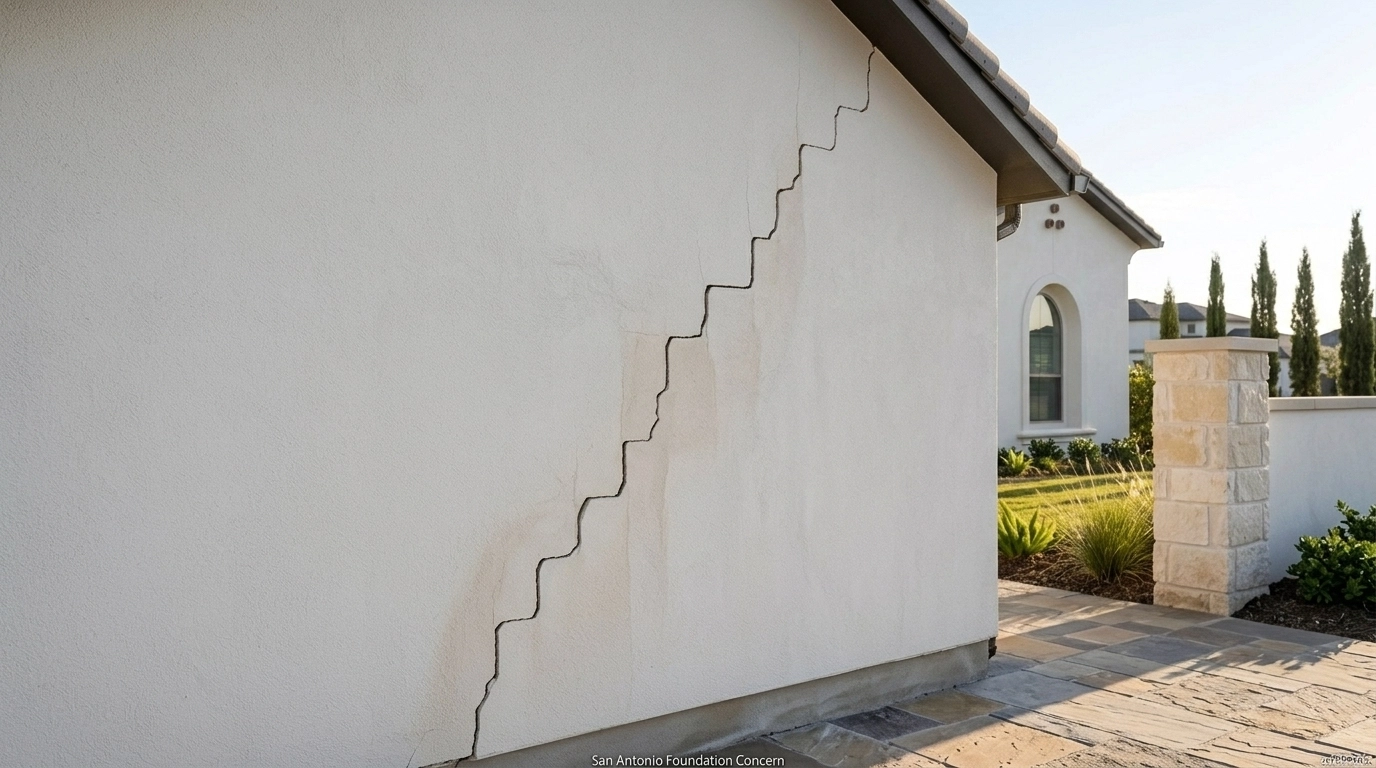
One of the most concerning patterns an inspector looks for is the "stair-step" crack. This occurs when the stucco is applied over concrete blocks or a masonry base. As the foundation shifts, the stress follows the mortar lines of the blocks underneath, creating a jagged, step-like pattern.

Stair-step crack pattern on a stucco wall

If you see stair-step cracks, it is a clear indicator that the ground beneath your home is moving in a way that the structure cannot accommodate. Ignoring these signs can lead to windows that won't open, doors that stick, and eventually, expensive foundation repairs.

Moisture: The Silent Stucco Killer

In San Antonio, moisture is the most significant threat to a stucco home. Unlike brick, which is porous and "breathes," stucco is designed to shed water. If water gets behind the stucco through a crack or poor flashing, it becomes trapped.

Signs of Moisture Infiltration:

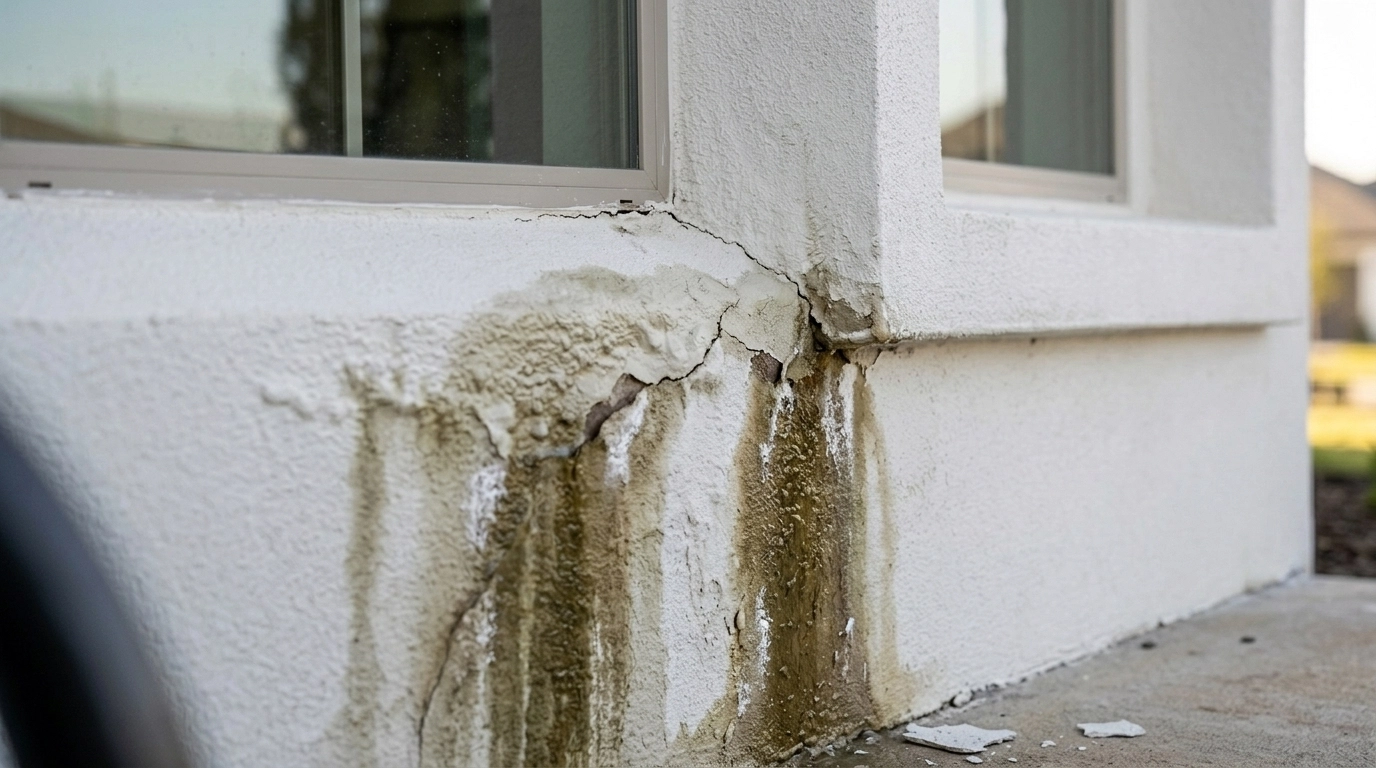
  • Staining and Streaking: Look for dark, brownish, or greenish streaks emanating from a crack. This is often "stucco tears," indicating that water is washing minerals and contaminants out from behind the wall.
  • Bubbling and Peeling: If the paint or the stucco itself is starting to bubble or "spall" (flake off), there is likely high hydrostatic pressure from moisture trapped inside.
  • Mold and Odors: If you notice a musty smell near an exterior wall or see visible mold growth on the stucco surface, the internal wood framing may already be rotting.

Moisture staining and damage on a stucco exterior

Moisture damage is particularly prevalent in EIFS (Exterior Insulation and Finish Systems), often called "synthetic stucco." While beautiful, EIFS requires expert installation and perfect sealing. If you suspect moisture issues, a mold inspection and testing service is the only way to confirm the extent of the growth behind your walls.

Thermal Imaging: Seeing Through the Surface

The challenge with stucco is that it hides its secrets well. You might have a massive pocket of moisture or a rotting stud behind a wall that looks perfectly fine to the naked eye. This is where professional technology becomes indispensable.

At Veteran Home Inspections, we utilize thermal imaging (infrared) technology to identify temperature anomalies. Because water-saturated materials retain heat differently than dry ones, an infrared camera can "see" the moisture hidden behind your stucco. This allows us to pinpoint the exact location of a leak without having to tear into your walls, saving you thousands of dollars in exploratory demolition.

The Veteran Home Inspections Advantage

When you are dealing with a material as complex as stucco, you cannot afford a "checkbox" inspection. You need an inspector who understands construction from the ground up.

As a Certified Master Inspector and a veteran-owned business, I bring a level of discipline and technical expertise to every job that goes beyond the standard. My background in construction management means I don't just tell you there is a crack; I explain why it happened and what the likely repair path will look like.

We serve the entire Texas Hill Country, including:

  • Boerne
  • San Antonio
  • Bandera
  • Kerrville

Whether you are buying a new home or noticing new cracks in your current residence, getting an authoritative assessment is the only way to protect your home's value. We provide detailed, easy-to-read reports within 24 hours, giving you the facts you need to make an informed decision.

Take Action Before the Next Storm

Don't wait for a heavy San Antonio rainstorm to find out if your stucco cracks are leaking. A proactive inspection today can prevent a structural failure or a mold colony tomorrow.

Ensure your home is safe, dry, and structurally sound.

Request Your Inspection Online or call us today to speak with a professional about your stucco concerns. At Veteran Home Inspections, we look deeper so you can sleep easier.